


 Deutsch
 English
 Español
 Français
 Nederlands
 Português


 Share
Share




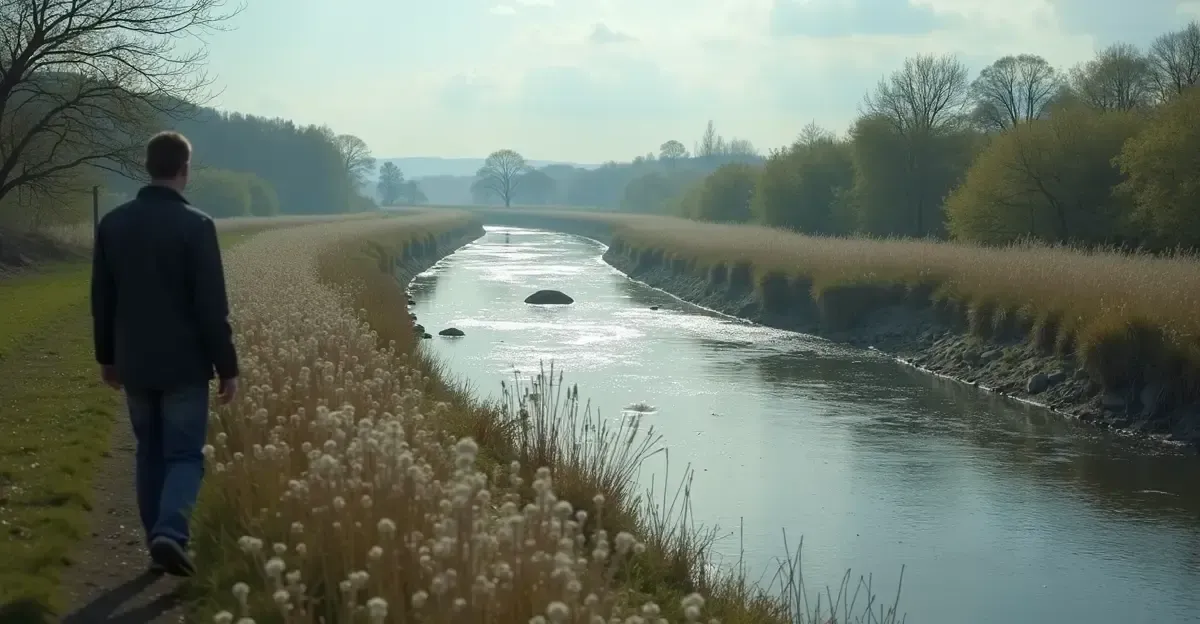
The Rhine river has hit a new record low at Cologne, with the water level dropping to just 42 centimeters on September 27, 2026 — three centimeters below the previous August low point. This historic Rhine low water has already caused a Dutch river cruise to run aground in the city center, highlighting the deepening disruption to Europe's busiest inland waterway and its shipping, ferry, and tourism sectors.
What is happening on the Rhine?
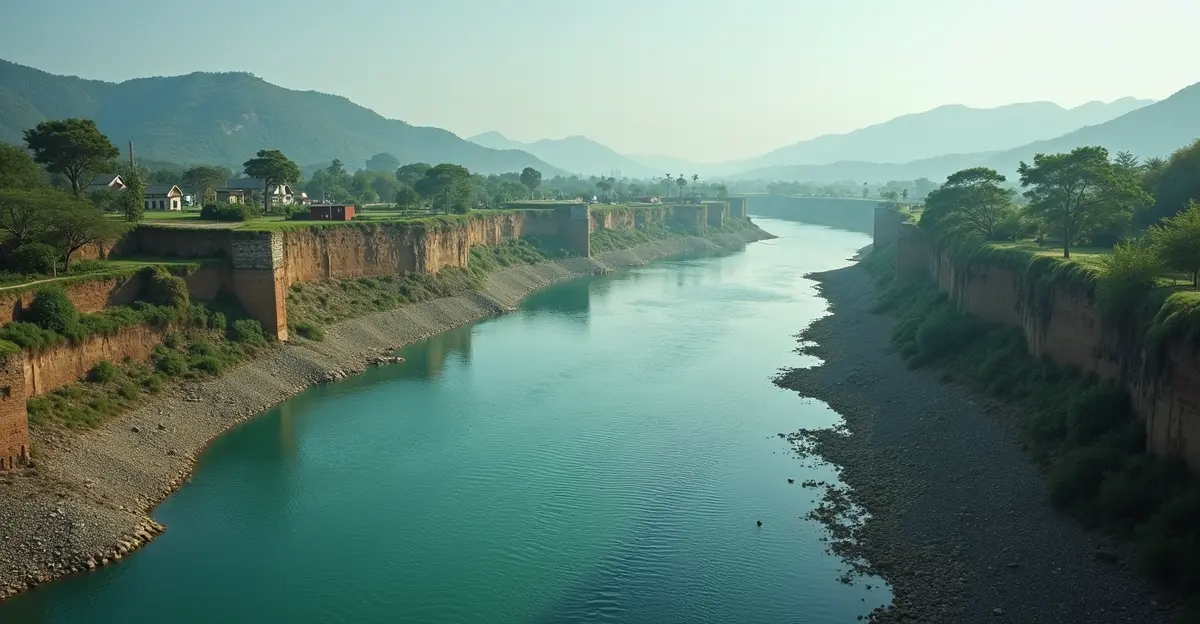
At Cologne, the gauge reading of 42 cm means the navigable channel is now only about 1.20 meters deep. Even more critical is the situation upstream at Kaub in the Middle Rhine gorge, where the gauge has fallen to -2 centimeters — a negative value that still indicates flowing water but signals extreme low-water conditions. Rain in late August and early September brought temporary relief, but weeks of almost no rainfall in Switzerland and southern Germany have reduced the river's discharge again.
This is part of a wider pattern of European drought and climate change that has made low-water summers increasingly common on the Rhine. According to the International Commission for the Hydrology of the Rhine Basin, climate change could sharply reduce the river's volume within decades, and record lows in 2018, 2022, and 2026 suggest a new normal.
Record Low at Cologne and Kaub
The water level at Cologne is the height measured against a fixed reference point, not the actual river depth. At Cologne, that depth in the shipping channel is now around 1.20 m, while at Kaub the fairway is less than one meter deep. In early August 2026, the Kaub gauge briefly fell to 6 cm, the lowest since records began in 1880, according to freight analysts. The current negative reading at Kaub is even more striking, though water is still flowing.
These numbers matter because the Rhine carries an estimated 6,900 vessels and about 10 million tonnes of cargo capacity. When depth falls, barges must light-load or stop entirely, pushing freight costs up and straining supply chains for chemicals, fuels, ores, and building materials.
Dutch River Cruise Runs Aground in Cologne
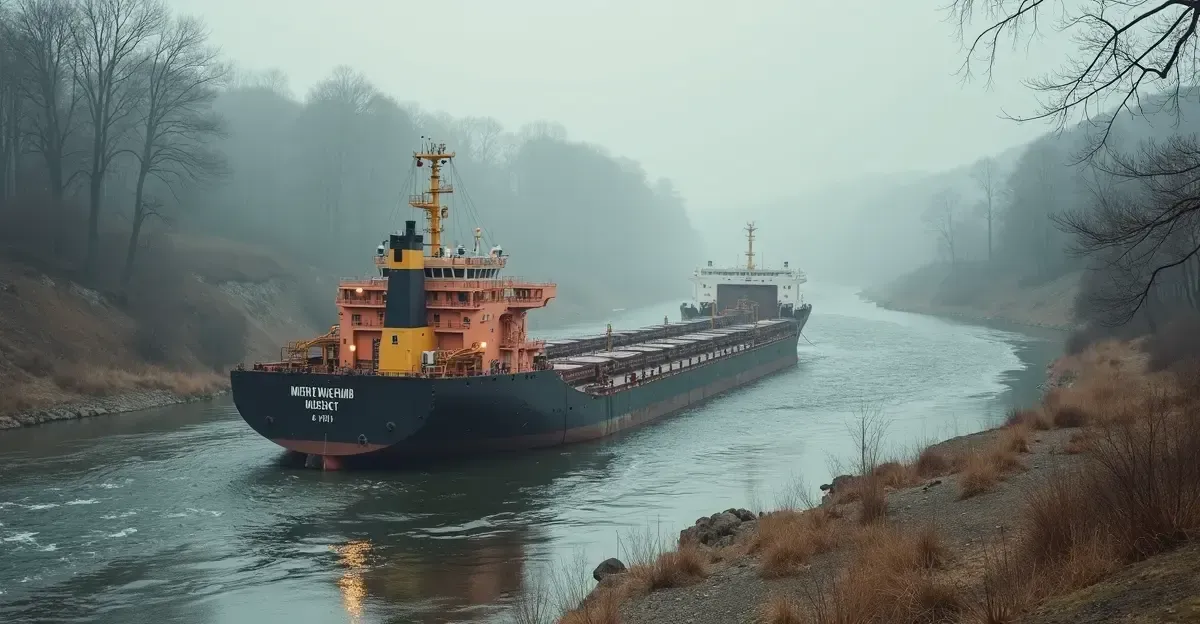
On September 26, the Dutch river cruise ship Dutch Melody ran aground near a bridge in central Cologne. German broadcaster WDR reported, citing police, that the ship was sailing in the normal navigation channel, but that channel turned out not to be deep enough. 'The ship was simply in the shipping lane, but that lane was too shallow,' the report indicated. The vessel was able to continue after some time and was expected in Nijmegen on the afternoon of September 27. The Dutch owner declined to comment on the incident.
River cruise operators have increasingly resorted to river cruise itinerary changes such as ship swaps, bus bridges, and shortened sailings as low water disrupts routes between Amsterdam and Basel. The Kaub bottleneck is the first stretch to become impassable, and some Cologne docking berths are now unusable at current levels.
Shipping, Ferries, and the Netherlands
The low water is also being felt downstream in the Netherlands. Average discharge at Lobith, where the Rhine enters the country, was 590 cubic meters per second on September 27 and is expected to fall toward 570 m³/s in the coming days — far below the early August record low. On the IJssel, one-way traffic has been introduced for vessels this week: sailing from Arnhem to Zutphen is prohibited, forcing ships to detour up to 200 kilometers. Rail is often not an alternative because there is no extra capacity.
Ferry services are also affected. Last week the Culemborg–Schalkwijk ferry was taken out of service because the water was so low that the ferry's ramps could no longer reach the quays. Many cargo ships can now carry only a fraction of their normal load, and low-water surcharges have been activated by major operators such as Maersk, Hapag-Lloyd, and Contargo.
What the Low Water Means for Industry and Supply Chains
The Rhine is a critical artery for Germany's industrial supply chain, moving chemicals, fuels, ores, coal, and building materials. When the Kaub gauge falls below its 77 cm low-water reference, disruption begins long before any formal closure. Analysts warn that prolonged low water could trim Germany's third-quarter GDP by 0.1–0.2 percentage points. The impact extends to inland navigation and freight logistics across the ARA ports and routes into western and southern Germany, eastern France, and Switzerland.
FAQ: Rhine Low Water 2026
Why is the Rhine water level so low?
Weeks of little rainfall in Switzerland and southern Germany have reduced the river's discharge after brief late-August relief, pushing gauges to record or near-record lows.
How deep is the Rhine at Cologne now?
The gauge reads 42 cm, but the navigable channel is about 1.20 meters deep. At Kaub, the fairway is less than one meter deep.
Has a river cruise ship been affected?
Yes, the Dutch Dutch Melody ran aground near a Cologne bridge on September 26, 2026, but was able to continue and was expected in Nijmegen the next afternoon.
What does low water mean for shipping costs?
Barges must carry lighter loads, raising per-ton freight costs and triggering low-water surcharges across inland navigation and port logistics.


Follow Discussion