


 Deutsch
 English
 Español
 Français
 Nederlands
 Português


 Share
Share




AI data center power demand is no longer a future concern—it is the binding constraint on the artificial intelligence boom in 2026. The International Monetary Fund's April 2026 World Economic Outlook and multiple industry reports confirm that electricity availability, not chip supply, now determines how fast AI can scale. With global data center power demand on pace to double and interconnection waits stretching from four to ten years, up to half of planned hyperscaler projects face delays.
The Shift From Chips to Power
In 2023 and 2024, the shortage of GPUs and advanced semiconductors dominated headlines. By 2026, the bottleneck has moved downstream to the physical grid. The IEA projects global data center electricity use will climb from 415 TWh in 2024 to 945 TWh by 2030, with AI-accelerated servers growing about 30% annually. Goldman Sachs forecasts U.S. data center power demand doubling from 31 GW in 2025 to 66 GW by 2027. Yet only 5 GW of 16 GW targeted for 2026 had entered active construction by early 2026, according to industry tracking, with 30–50% of the remaining capacity likely to slip to 2027 or beyond.
The grid interconnection queues in Texas surged from 63 GW to 226 GW in a single year, underscoring the mismatch between AI ambitions and physical infrastructure.
Why the Grid Is the New Bottleneck
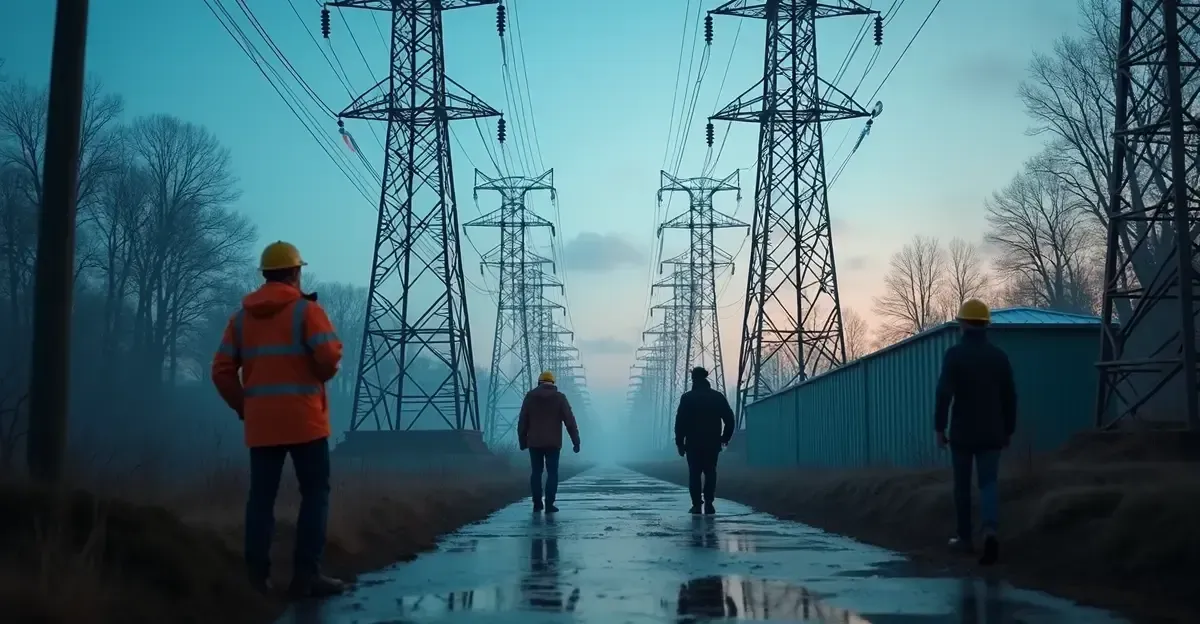
Two physical constraints dominate: interconnection delays and transformer shortages. High-voltage transformer lead times have stretched from 24–30 months before 2020 to three to five years, with generator step-up units requiring up to 144 weeks. Dominion Energy in Northern Virginia says it cannot accommodate more large-load requests through 2030, even as contracted data center capacity jumped from 16.5 GW in July 2023 to about 51 GW by March 2026. In Ireland, data centers consumed 22% of national electricity in 2024, prompting a 2021 moratorium that was only partially unwound in late 2025.
Bring-Your-Own-Power and the Nuclear Pivot
Facing four-to-ten-year waits, hyperscalers are turning to bring-your-own-power strategies. As of May 2026, tech giants had signed 13 nuclear projects totaling over 9.8 GW of committed capacity. Microsoft secured a $16 billion, 20-year power purchase agreement to restart Three Mile Island Unit 1 (835 MW), with full power targeted for 2027. Google committed to 500 MW from Kairos Power's fluoride salt reactors by 2030, Amazon invested $700 million in X-energy, and Meta leads with up to 6.6 GW across TerraPower, Oklo and others.
The small modular reactors market is maturing rapidly, with the NRC issuing its first advanced reactor construction permit to TerraPower in March 2026. Behind-the-meter gas generation and fuel cells are also proliferating as bridge solutions while nuclear capacity comes online.
Regional Grid Saturation: Northern Virginia and Ireland
Northern Virginia's colocation vacancy hit 0.3% in Q1 2026, effectively closing the market for large 50 MW+ deployments. Pricing reached $170–215 per kW-month, according to CBRE's Q1 2026 report. Dublin remains Europe's second-largest data center cluster, but grid constraints forced the CRU to require new hyperscale facilities to provide 100% of their maximum import capacity via dispatchable generation or storage. The Ireland data centre policy reopens a path, but new allocations in the Greater Dublin Area are unlikely before 2027.
Geopolitics of Critical Minerals
Grid access is only half the story. The electrical equipment needed to expand grids—transformers, switchgear, cables—depends on copper, rare earths, and specialty steel. China controls roughly 90% of rare earth processing and 60% of lithium refining, and has used export controls on gallium and germanium as leverage. The U.S. and allies responded with a $12 billion strategic rare earth reserve plan and the $1.8 billion Orion Critical Mineral Consortium. Experts warn Western nations have a narrow 12–18 month window to secure critical minerals for electrical equipment before dependency becomes irreversible.
What Happens Next
The collision of AI scaling and energy infrastructure is reshaping global strategy. Utilities are shifting costs onto data centers through large-user rate classes and minimum billing. Federal rulemaking in the U.S. to expedite interconnections targets April 2026. Whether the energy transition accelerates or natural gas remains the bridge fuel depends on how quickly grid buildout, nuclear deployment and mineral supply can catch up to AI's appetite. The Northern Virginia data center market and other saturated hubs will likely see the most dramatic policy and pricing shifts through 2027.
Frequently Asked Questions
What is the primary constraint on AI deployment in 2026?
Electricity grid capacity is the binding constraint. Interconnection waits of 4–10 years and transformer lead times of 3–5 years are delaying up to 50% of planned data center projects, according to industry reports.
Why are data center projects being delayed?
Projects are delayed by grid interconnection backlogs, transmission congestion, and a global shortage of high-voltage transformers and switchgear. In Northern Virginia, vacancy is near zero, and Dominion Energy cannot accommodate new large-load requests through 2030.
How are tech giants responding to grid bottlenecks?
They are adopting bring-your-own-power strategies, including 13 nuclear projects totaling over 9.8 GW, behind-the-meter gas generation, fuel cells, and on-site microgrids.
Which regions face the most grid saturation?
Northern Virginia and Ireland are the most constrained. Northern Virginia's vacancy hit 0.3% in Q1 2026, while Ireland required new data centers to provide 100% of their maximum import capacity via dispatchable generation or storage.
What role do critical minerals play in the data center power crunch?
Grid expansion requires copper, rare earths, and specialty steel. China controls about 90% of rare earth processing, creating geopolitical risks. The U.S. has launched a $12 billion rare earth reserve and the $1.8 billion Orion Critical Mineral Consortium.

Follow Discussion