


 Deutsch
 English
 Español
 Français
 Nederlands
 Português


 Share
Share




The February 2026 closure of the Strait of Hormuz—the first complete blockade in history—has removed nearly 20% of global oil supply from markets, sent Brent crude surging 65% to over $118 per barrel, and exposed the extreme vulnerability of energy-importing developing economies. This unprecedented supply shock, which the Dallas Federal Reserve estimates could reduce global GDP growth by up to 2.9 percentage points in the second quarter of 2026, has fundamentally transformed the debate around renewable energy investment from a climate imperative into an urgent economic security strategy.
The Largest Oil Supply Shock in History
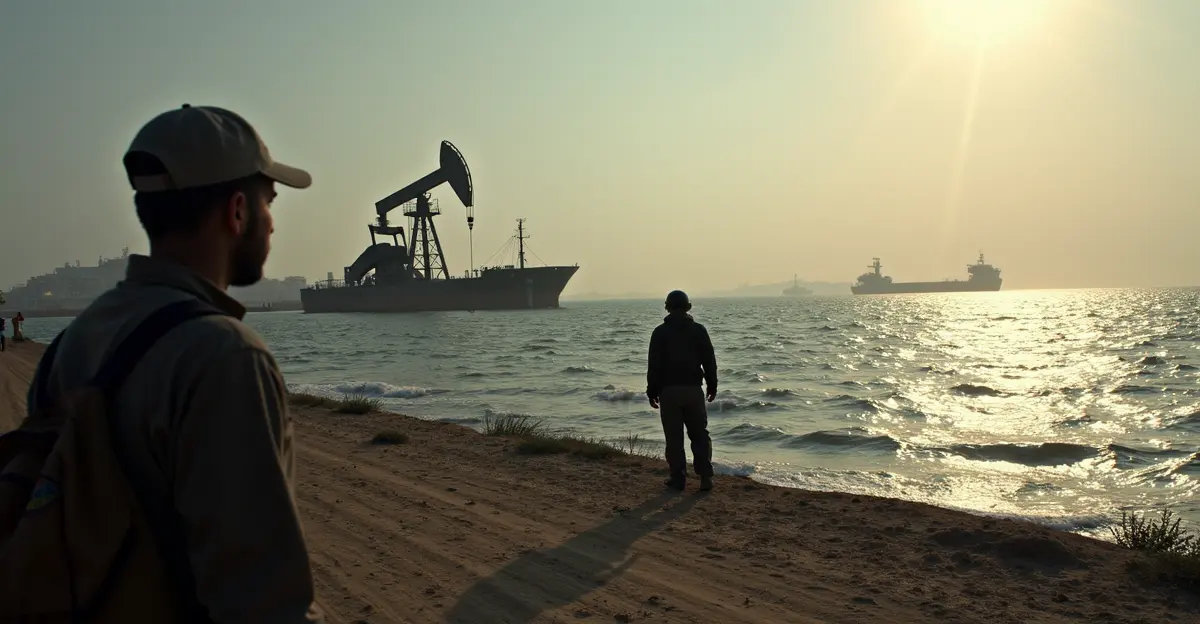
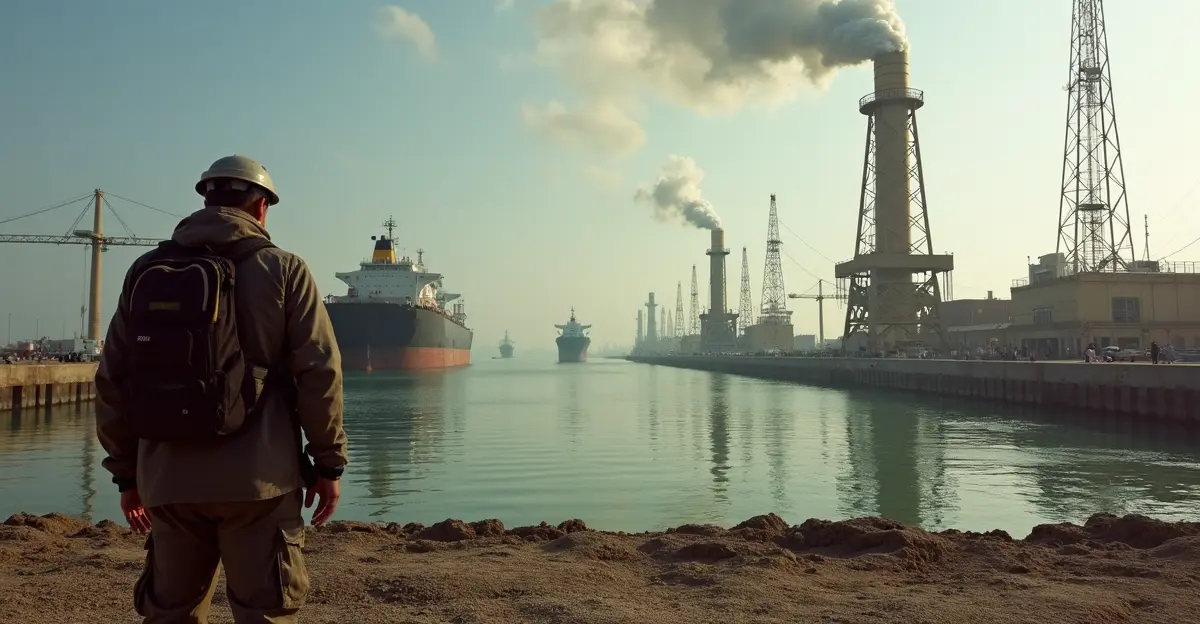
On February 28, 2026, following the outbreak of military conflict between the United States, Israel, and Iran, the Islamic Revolutionary Guard Corps issued warnings forbidding passage through the Strait of Hormuz, boarded and attacked merchant ships, and laid sea mines in the waterway. Tanker traffic through the 34-kilometer-wide chokepoint—which normally carries about 20 million barrels of oil per day, representing roughly one-fifth of global seaborne oil trade—dropped by 70% within days and soon fell to near zero.
According to the U.S. Energy Information Administration, Brent crude oil prices surged from $61 per barrel at the start of 2026 to $118 per barrel by the end of the first quarter—the largest inflation-adjusted quarterly increase since 1988. The World Bank reported that global oil supply crashed by 10.1 million barrels per day in March 2026, with global oil output expected to fall 6.6% year-on-year in the second quarter. The Dallas Fed's analysis warns that even after reopening, GDP levels may remain below pre-closure levels for years.
The crisis has hit developing economies hardest. UNCTAD's World Economic Situation and Prospects 2026 report notes that energy-importing developing economies are bearing the brunt, with high debt and limited fiscal space constraining governments' ability to respond. Countries like Pakistan, which relies on Gulf nations for 99% of its LNG imports, and India, which sources over half its LNG from the region, face both physical shortages and crippling cost inflation. The vulnerability of energy-importing developing economies has never been more starkly illustrated.
Renewables: From Climate Choice to Economic Necessity
Even before the Hormuz crisis, the economic case for renewable energy was overwhelming. According to the International Renewable Energy Agency (IRENA), 91% of all new utility-scale renewable projects commissioned in 2024 produced electricity at a lower cost than the cheapest fossil fuel alternative. Onshore wind averaged just $0.034 per kilowatt-hour, while solar PV reached $0.043/kWh—41% cheaper than the cheapest fossil fuel option. Global renewable additions surged to 582 GW in 2024, a nearly 20% increase over 2023, and renewables avoided an estimated $467 billion in fossil fuel costs.
Yet the Hormuz crisis has added a new dimension: energy security. The geopolitical risks of fossil fuel dependence are no longer theoretical. Every barrel of oil imported from the Persian Gulf carries not just a market price but a strategic vulnerability that can be weaponized overnight. The Dallas Fed survey of 120 oil and gas executives found that 48% believe future disruptions of the Strait of Hormuz are "very likely" within five years, even after the current crisis resolves.
The Africa Paradox: 60% Solar Resources, 2% Investment
Nowhere is the disconnect between renewable potential and investment more glaring than in Africa. The continent holds 60% of the world's best solar resources, yet receives just 2% of global clean energy investment, according to the IEA's World Energy Investment 2025 report. Home to 20% of the world's population, Africa attracted only about $40 billion in clean energy investment in 2024—a fraction of the $2.2 trillion spent globally on low-carbon technologies.
This investment gap represents a systemic risk to global stability. As UNCTAD's Trade and Development Foresights 2026 warns, developing economies' heavy dependence on imported fuels makes them acutely vulnerable to geopolitical shocks. The Hormuz crisis has driven home that energy security cannot be achieved through supply diversification alone—it requires a fundamental shift toward domestically produced renewable energy.
The renewable energy investment gap in Africa is not just an equity issue; it is a global security concern. When 600 million Africans lack electricity access and over 1 billion lack clean cooking, and when those same populations are most exposed to oil price shocks, the case for accelerated renewable deployment becomes overwhelming.
The Economic Case for Radical Rethink
The Dallas Fed's modeling provides a stark quantification of the stakes. A one-quarter closure of the Strait of Hormuz would raise average WTI oil prices to $98 per barrel and lower global real GDP growth by an annualized 2.9 percentage points in Q2 2026. If the closure extends to two quarters, oil prices could reach $115 per barrel, with growth remaining negative for longer. A three-quarter closure could push oil as high as $132 per barrel.
Compare these costs to the investment needed to build renewable energy infrastructure in developing economies. The IEA estimates that global clean energy investment needs to reach $4.5 trillion annually by 2030 to meet climate goals—but the cost of inaction, as measured by GDP losses from a single supply shock, already runs into the trillions.
The economic impact of the Strait of Hormuz closure has created an immediate strategic window to reframe the debate. UN Secretary-General António Guterres has called clean energy "smart economics," and the World Bank and UNCTAD have both issued urgent assessments in March 2026 calling for accelerated investment in renewable energy and critical technologies to reduce exposure to future energy and geopolitical shocks.
Expert Perspectives
"The Strait of Hormuz crisis has done what decades of climate advocacy could not: it has made energy security the primary lens through which investment decisions are made," said Dr. Fatima Al-Zahra, energy security analyst at the Oxford Institute for Energy Studies. "Every dollar invested in solar panels in sub-Saharan Africa is now also a dollar invested in insulating those economies from the next geopolitical shock."
Claver Gatete, Executive Secretary of the UN Economic Commission for Africa, described the continent as a "paradox of potential and neglect"—rich in solar, wind, hydro, and geothermal resources but bypassed by international investment. Speaking at the High-Level Political Forum in July 2025, he called for a "new deal on energy finance" to support innovation, strengthen grids, and build clean energy industries.
FAQ
What caused the Strait of Hormuz closure in 2026?
The closure was triggered by the outbreak of military conflict between the United States, Israel, and Iran on February 28, 2026. Iran's Revolutionary Guard Corps blocked the strait by issuing warnings, attacking vessels, and laying sea mines, effectively halting nearly all maritime traffic through the critical chokepoint.
How much did oil prices rise due to the Hormuz crisis?
Brent crude oil prices surged approximately 65%, from $61 per barrel at the start of 2026 to $118 per barrel by the end of the first quarter—the largest inflation-adjusted quarterly increase since 1988, according to the U.S. Energy Information Administration.
What is the economic impact of the Strait of Hormuz closure?
The Dallas Federal Reserve estimates that a one-quarter closure could reduce global real GDP growth by an annualized 2.9 percentage points in Q2 2026. Even after reopening, GDP levels may remain below pre-closure levels for years.
Why does Africa receive so little renewable energy investment?
Despite holding 60% of the world's best solar resources, Africa receives only 2% of global clean energy investment. Key barriers include high perceived political and currency risks, lack of bankable project pipelines, declining development finance (especially from Chinese DFIs), and insufficient grid infrastructure.
How does the Hormuz crisis change the case for renewable energy?
The crisis transforms renewable energy from a climate imperative into an urgent economic security strategy. Every barrel of oil imported from volatile regions carries strategic vulnerability. Investing in domestic renewable energy reduces exposure to geopolitical supply shocks while providing cheaper electricity—a dual benefit that the Hormuz crisis has made impossible to ignore.
Conclusion: A Strategic Window
The Strait of Hormuz shock of 2026 is the most consequential energy security event of the year, creating an immediate strategic window to reframe the renewables investment debate. The future of global energy security depends on whether policymakers, investors, and multilateral institutions can seize this moment to redirect capital toward the regions and technologies that need it most. With renewables already cheaper than fossil fuels in 91% of cases, the economic argument is clear. The security argument is now undeniable.



Follow Discussion