
 Deutsch
 English
 Español
 Français
 Nederlands
 Português






COP29 Climate Finance Deal: Geopolitical Analysis of $300 Billion Agreement
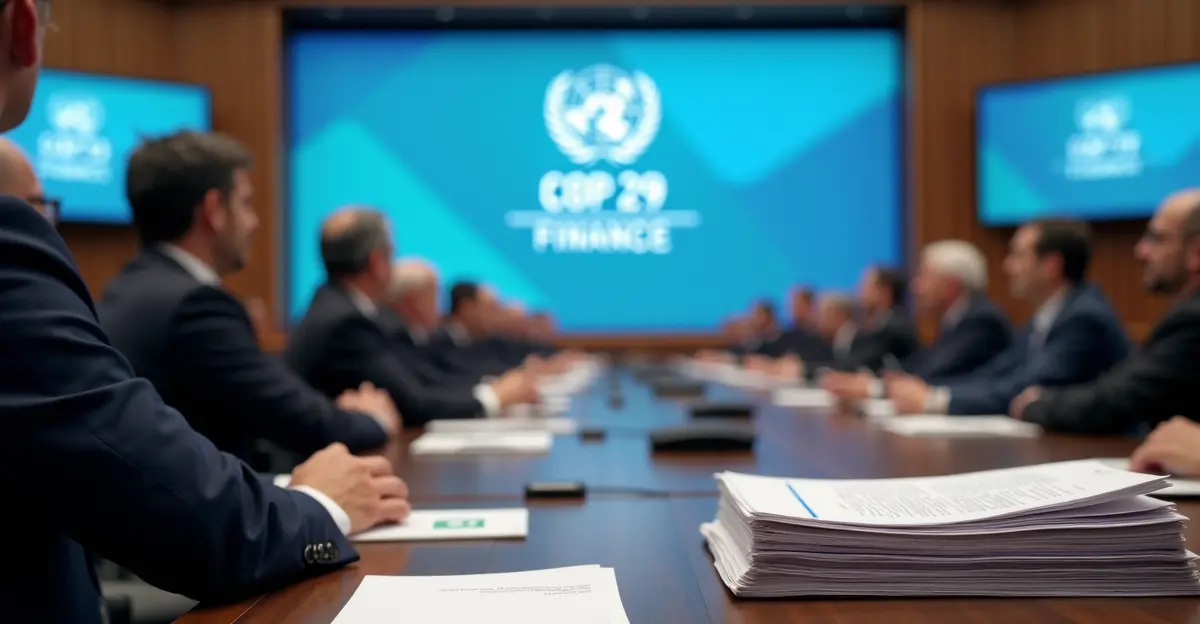
The landmark $300 billion annual climate finance agreement reached at COP29 in November 2024 has created immediate strategic implications for global climate policy, reshaping North-South relations and climate diplomacy at a critical juncture. As developed nations committed to tripling climate finance from $100 billion to $300 billion annually by 2035, the deal represents both progress and profound geopolitical tensions, arriving just as the U.S. election results threaten to reshape international climate cooperation. This comprehensive analysis examines how the New Collective Quantified Goal (NCQG) creates both opportunities and fault lines in global geopolitics.
What is the COP29 Climate Finance Agreement?
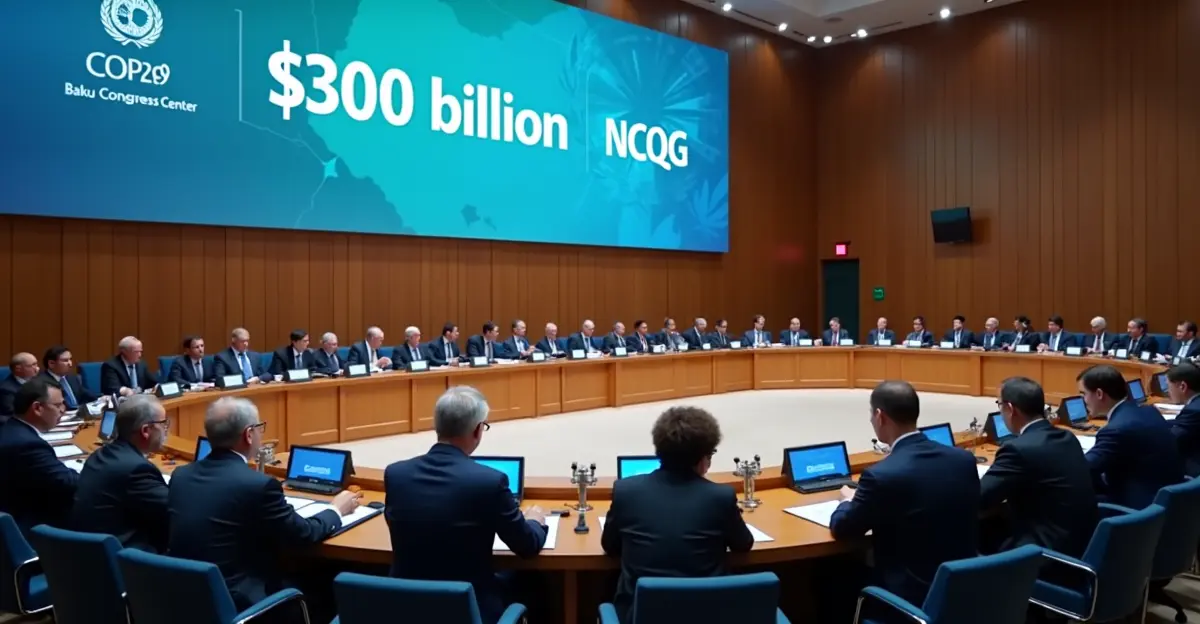
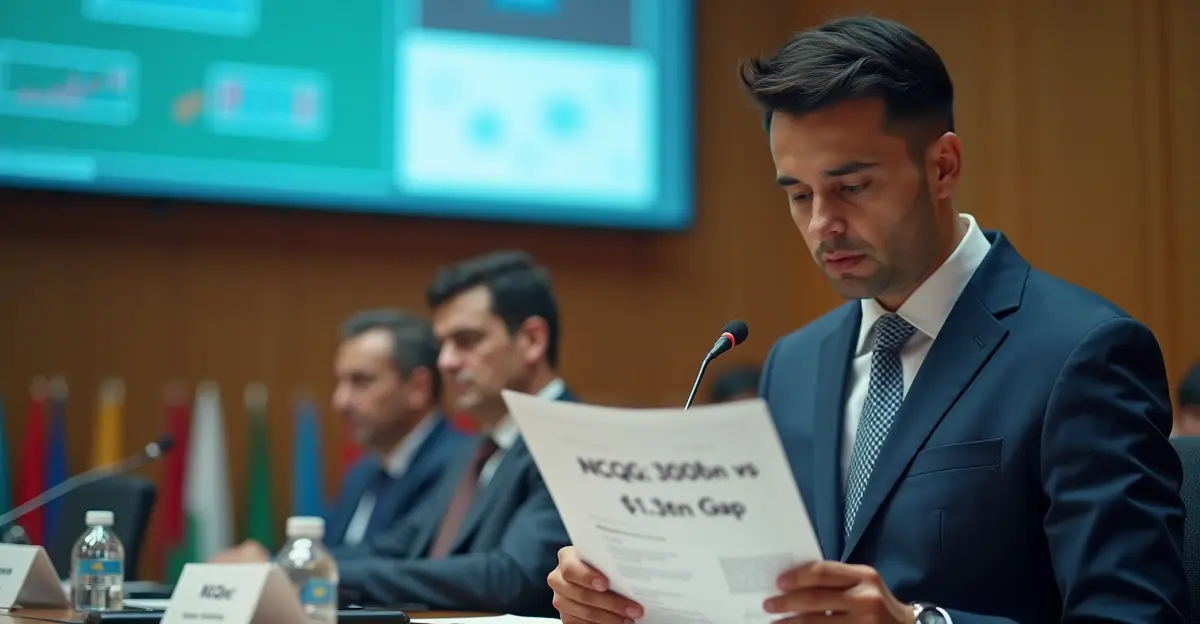
The COP29 agreement, finalized in Baku, Azerbaijan, establishes a New Collective Quantified Goal (NCQG) of at least $300 billion annually in climate finance for developing countries by 2035. This triples the previous $100 billion target and fully operationalizes Article 6 of the Paris Agreement, establishing comprehensive rules for international carbon markets. However, the compromise emerged from intense negotiations where developing nations had demanded $1.3 trillion annually, creating a strategic gap that reveals deep geopolitical tensions in North-South climate relations. The agreement also includes the "Baku to Belém Roadmap" outlining a plan to mobilize the full $1.3 trillion by 2035 through five priority action areas.
North-South Relations and Climate Diplomacy Reshaped
The tripling of climate finance fundamentally alters the dynamics between developed and developing nations. While representing progress, the $300 billion figure falls dramatically short of the $1.3 trillion demanded by developing countries, creating what climate diplomats call a "strategic disappointment gap." According to analysis from the World Resources Institute, this shortfall reflects persistent inequities in climate negotiations where historical emitters continue to underfund adaptation and mitigation needs in vulnerable nations.
The agreement's structure reveals deeper tensions: only 40% of the pledged amount represents grants, with the majority being loans that could exacerbate debt burdens in developing economies. This financing mix has drawn criticism from climate justice advocates who argue it perpetuates colonial-era economic relationships. As noted in a recent UNCTAD report, "The quality of climate finance matters as much as quantity, with grants reaching only 25% of vulnerable communities despite representing their most urgent need."
U.S. Political Shifts and Paris Agreement Uncertainty
The COP29 agreement arrives amid significant political uncertainty following the 2024 U.S. election. With President-elect Trump signaling potential withdrawal from the Paris Agreement, the $300 billion commitment faces immediate implementation challenges. According to Congressional Research Service analysis, U.S. withdrawal would trigger a multi-year process but could immediately freeze American contributions to climate funds.
"The agreement was partly designed to be 'Trump-proof,' with commitments extending to 2035 to outlast a potential second Trump administration," notes climate policy analyst Dr. Elena Rodriguez. However, this strategic planning faces reality: the U.S. historically contributed approximately 20% of climate finance, and its withdrawal would create a $60 billion annual gap in the COP29 commitments.
Climate Action vs. Protectionist Industrial Policies
Emerging fault lines between climate action and protectionist industrial policies complicate the finance agreement's implementation. China's WTO complaint against U.S. Inflation Reduction Act tax credits and the EU's Carbon Border Adjustment Mechanism (CBAM) represent competing approaches to climate policy that could undermine cooperation.
The EU's CBAM, fully implemented in January 2025, imposes carbon costs on imports to prevent "carbon leakage," affecting major trading partners. Meanwhile, China's WTO case (number 623) challenges U.S. green industrial policy measures, alleging discrimination and subsidy violations. These trade conflicts create what experts call "climate policy fragmentation" where national industrial interests compete with global climate goals.
China's Emerging Climate Leadership Role
COP29 marked a significant shift as China revealed its climate finance contributions for the first time, positioning itself as a potential climate leader amid U.S. uncertainty. Beijing pledged $3.1 billion to the South-South Climate Cooperation Fund, representing a strategic move to fill the leadership vacuum. This development, combined with China's dominance in clean energy manufacturing, creates complex geopolitical dynamics where climate leadership intersects with economic competition.
The Baku to Belém Roadmap: Bridging the Trillion-Dollar Gap
The "Baku to Belém Roadmap" represents the strategic framework to bridge the $1 trillion gap between the $300 billion commitment and developing countries' $1.3 trillion needs. The roadmap outlines five priority action areas (5Rs): replenishing grants and concessional finance, rebalancing fiscal space and debt sustainability, rechanneling private finance, revamping capacity for scaled climate portfolios, and reshaping systems for equitable capital flows.
According to the World Resources Institute, "The roadmap shifts focus from modest public climate funding to a holistic strategy that leverages public finance and policy shifts to unlock larger private investment flows." Early actions from 2026-2028 will focus on improving data, driving reform debates, and strengthening transparency to build momentum toward this critical climate finance target.
Geopolitical Implications and Future Outlook
The COP29 agreement creates immediate geopolitical implications that will shape climate diplomacy through 2035. The $300 billion commitment establishes a new baseline for climate finance negotiations but falls short of addressing historical responsibilities and current needs. As developing countries express frustration with the deal, the risk of climate negotiation fragmentation increases, potentially undermining the Paris Agreement framework.
Climate finance expert Dr. Marcus Johnson notes, "The geopolitical fallout extends beyond dollar amounts to questions of trust and equity in international relations. When developed countries pledge $300 billion against a $1.3 trillion need, it signals continued undervaluation of Global South priorities."
The intersection with U.S. political shifts creates additional uncertainty, with potential withdrawal threatening to unravel the delicate compromise reached in Baku. Meanwhile, trade conflicts over green industrial policies risk creating parallel climate governance systems that could undermine multilateral cooperation.
Frequently Asked Questions
What is the COP29 climate finance agreement?
The COP29 agreement commits developed nations to provide at least $300 billion annually in climate finance to developing countries by 2035, tripling the previous $100 billion target and establishing a New Collective Quantified Goal (NCQG).
Why are developing countries unhappy with the $300 billion deal?
Developing countries demanded $1.3 trillion annually based on their climate adaptation and mitigation needs, making the $300 billion commitment represent only 23% of their requested amount, with concerns about the mix of grants versus loans.
How does the U.S. election affect the COP29 agreement?
President-elect Trump's potential withdrawal from the Paris Agreement could freeze U.S. climate finance contributions, creating a $60 billion annual gap in the COP29 commitments and undermining the agreement's implementation.
What is the Baku to Belém Roadmap?
The roadmap outlines a strategic pathway to mobilize $1.3 trillion annually in climate finance by 2035 through five priority action areas, aiming to bridge the gap between the $300 billion commitment and developing countries' needs.
How do trade conflicts affect climate finance?
China's WTO complaint against U.S. green subsidies and the EU's Carbon Border Adjustment Mechanism create "climate policy fragmentation" where national industrial interests compete with global climate cooperation goals.
Sources
COP29 Climate Finance Compromise: Strategic Implications 2024
World Resources Institute: COP29 Outcomes and Next Steps
BBC: COP29 Climate Finance Deal Analysis
Congressional Research Service: U.S. Paris Agreement Withdrawal
Follow Discussion