


 Deutsch
 English
 Español
 Français
 Nederlands
 Português


 Share
Share




The $300 Billion Climate Finance Gap: Why COP29's Compromise Fails to Meet Developing World Needs
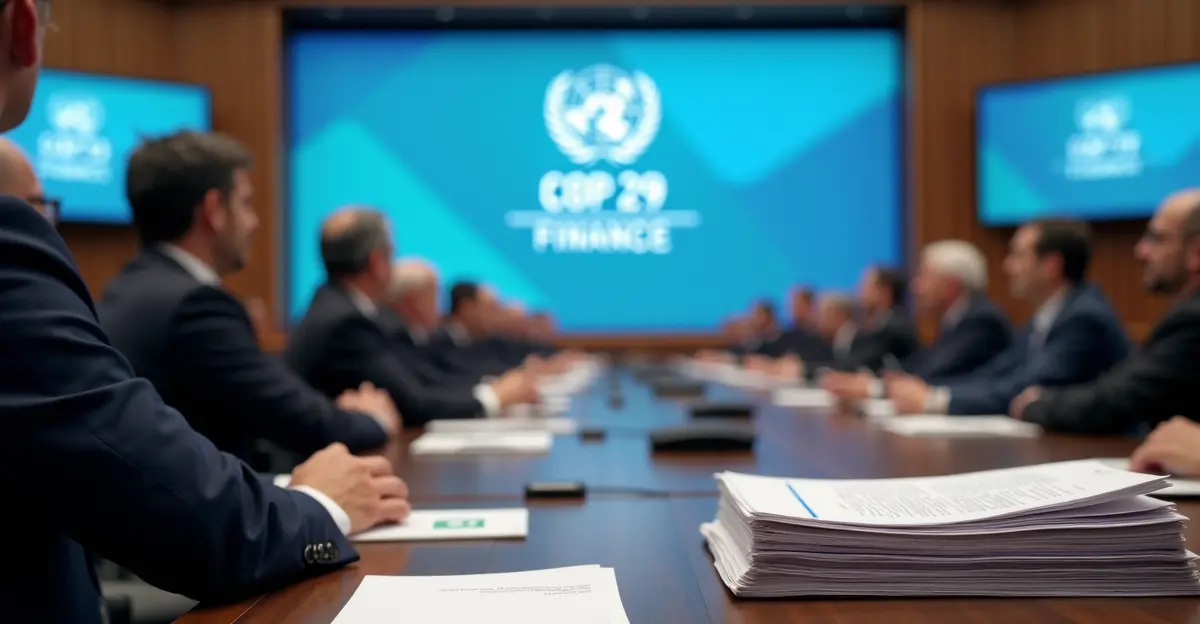
The COP29 climate conference concluded in November 2024 with a landmark agreement securing $300 billion annually in climate finance by 2035, but this compromise fell dramatically short of developing nations' $1.3 trillion demand, creating a critical climate finance gap that threatens to derail global climate goals. As nations begin operationalizing the deal in early 2025, implementation challenges and geopolitical tensions are becoming increasingly apparent, exposing fundamental flaws in the international climate finance architecture that could undermine the Paris Agreement's objectives.
Understanding the COP29 Climate Finance Agreement
The COP29 agreement established two key climate finance targets: a $300 billion annual commitment from developed countries to developing nations by 2035, and a broader $1.3 trillion total mobilization goal from all actors over the same period. This New Collective Quantified Goal (NCQG) replaces the previous $100 billion target that expires in 2025, representing a significant increase but still falling far short of actual needs. According to UN estimates, developing countries require approximately $2.7 trillion annually by 2030 to adequately address climate adaptation and mitigation, making the COP29 commitment less than 15% of what's actually needed.
The agreement emerged from intense negotiations in Baku, Azerbaijan, where developing nations argued passionately for a $1 trillion annual commitment. "The $300 billion figure is insultingly low compared to the climate devastation our nations face daily," said one African delegate who requested anonymity. The compromise reflects the political realities of developed nations' budgetary constraints but creates what experts call a "climate investment trap" for emerging economies.
Geopolitical Implications of the Funding Shortfall
North-South Tensions Escalate
The climate finance gap has reignited historical tensions between developed and developing nations, threatening the fragile consensus underpinning the Paris Agreement framework. Developing countries argue that wealthy nations, responsible for the majority of historical emissions, have a moral obligation to finance climate action in vulnerable regions. This $1 trillion gap represents more than just numbers—it symbolizes what many see as broken promises and unequal burden-sharing in the global climate response.
The shortfall is particularly acute for adaptation finance, where developing nations need over $310 billion annually until 2035 but received only $26 billion in international adaptation finance in 2023. This adaptation gap has widened despite 87% of countries having national adaptation plans, creating what UNEP calls a "dangerous disconnect" between planning and implementation.
Strategic Vulnerabilities in Global Cooperation
The insufficient climate finance threatens to create parallel climate governance systems outside UN frameworks. Several developing nations are already exploring bilateral agreements and regional financing mechanisms that bypass the contentious UNFCCC process. This fragmentation could undermine the collective action needed to address global warming, creating what climate diplomats call a "spaghetti bowl" of competing initiatives that lack coordination and accountability.
The global carbon market mechanisms established at COP29, while potentially valuable, cannot compensate for direct climate finance shortfalls. Carbon credit trading faces its own challenges with integrity concerns and market volatility, making it an unreliable substitute for predictable, grant-based climate funding.
Regional Impacts and Energy Transition Timelines
Most Affected Nations and Regions
African nations face the most severe consequences of the climate finance gap, requiring approximately $277 billion annually for climate action but receiving only a fraction of that amount. Small Island Developing States (SIDS), already experiencing existential threats from sea-level rise, need urgent adaptation funding that the COP29 agreement cannot provide. South Asian nations, particularly Bangladesh and Pakistan, face similar challenges with flooding and extreme weather events overwhelming their limited adaptation capacities.
The finance shortfall hits hardest in countries with limited fiscal space and high debt burdens, creating what the World Bank calls a "climate-debt trap" where nations must choose between climate action and economic stability. This dilemma is particularly acute in Sub-Saharan Africa, where many countries spend more on debt servicing than on climate adaptation.
Energy Transition Delays in Emerging Economies
The climate finance gap directly impacts energy transition timelines in emerging economies, where capital costs for renewable projects are more than twice those in advanced economies. This disparity creates what researchers call a "climate investment trap" that delays the clean energy transition precisely where it's most needed. Without adequate financing, developing nations may continue relying on fossil fuels or pursue slower, less ambitious decarbonization pathways.
Current trends show only 20% of global clean energy investments go to emerging markets and developing economies outside China, despite these regions representing two-thirds of the world's population. This investment imbalance threatens to create a "green divide" where wealthy nations accelerate their energy transitions while developing countries lag behind, potentially locking in carbon-intensive development pathways for decades.
Alternative Financing Mechanisms Emerging
Frustrated with UN processes, several developing nations are exploring alternative climate financing mechanisms outside traditional frameworks. These include:
- South-South Climate Finance Initiatives: Regional cooperation among developing countries, pooling resources and expertise to address shared climate challenges without relying on Northern funding.
- Climate-Debt Swaps: Innovative financial instruments that convert portions of national debt into climate investments, providing fiscal relief while funding green projects.
- Blended Finance Models: Public-private partnerships that use limited public funds to leverage larger private investments through risk-sharing mechanisms and guarantees.
- Carbon Border Adjustment Mechanisms: Revenue from carbon border taxes could be redirected to climate finance, though this remains politically contentious.
The World Economic Forum has identified creative de-risking through multilateral development bank guarantees as particularly promising, citing Chile's Green Climate Fund mobilizing $60 million to attract $1.1 billion in private investment. Similarly, jurisdictional approaches to carbon credits, like the US Energy Transition Accelerator launched at COP28, offer potential pathways for mobilizing private finance at scale.
Expert Perspectives on the Crisis
Climate finance experts warn that the COP29 agreement represents a missed opportunity to align financial flows with climate needs. "The $300 billion target is a political compromise that ignores climate reality," says Dr. Amina Mohammed, climate economist at the Center for Global Development. "We're setting up developing nations for failure by providing insufficient resources while expecting ambitious climate action."
Implementation challenges are already emerging in early 2025, with developing nations struggling to access even the limited funds available. Complex application processes, conditionalities, and reporting requirements create barriers that delay project implementation and increase transaction costs, reducing the effectiveness of available climate finance.
Frequently Asked Questions
What is the climate finance gap?
The climate finance gap refers to the difference between the funding developing countries need for climate action ($2.7 trillion annually by 2030) and what they're receiving through international commitments ($300 billion annually by 2035 under COP29).
Why does the $300 billion fall short?
The $300 billion represents only about 15% of actual needs, ignores adaptation requirements (over $310 billion needed annually), and doesn't account for loss and damage financing for climate impacts that can't be adapted to.
Which countries are most affected?
African nations, Small Island Developing States, and South Asian countries face the most severe impacts due to high vulnerability, limited fiscal space, and urgent adaptation needs.
What are alternative financing mechanisms?
South-South initiatives, climate-debt swaps, blended finance models, and carbon border adjustment revenues offer potential pathways outside traditional UN frameworks.
How does this affect Paris Agreement goals?
Insufficient finance threatens to delay energy transitions in emerging economies, potentially undermining global emissions reduction targets and the 1.5°C warming limit.
Future Outlook and Conclusion
The COP29 climate finance agreement, while representing progress from previous commitments, fails to address the scale and urgency of developing nations' needs. As implementation proceeds through 2025, the $1 trillion gap will likely exacerbate North-South tensions and push vulnerable nations toward alternative financing mechanisms outside UN frameworks. The success of the Paris Agreement now depends not just on emission reduction pledges but on closing this finance gap through innovative mechanisms, increased ambition from developed nations, and more equitable burden-sharing in the global climate response.
The Baku-to-Belém Roadmap established at COP29 provides a framework for progress tracking, but without substantial increases in climate finance quantity and quality, developing nations may struggle to implement their climate plans. The coming years will test whether the international community can bridge this divide or whether climate finance will become another arena of geopolitical competition rather than cooperation.





Follow Discussion