


 Deutsch
 English
 Español
 Français
 Nederlands
 Português


 Share
Share




The Geopolitical Stalemate at COP29: Climate Finance as Proxy for Global Power Dynamics
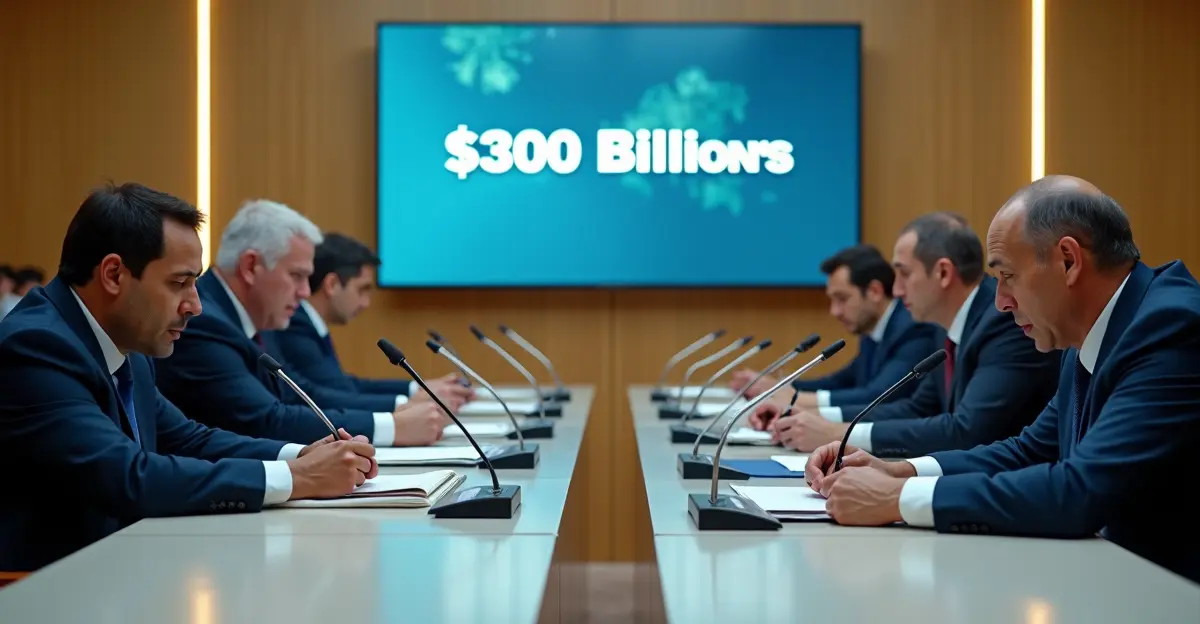
The 2024 United Nations Climate Change Conference (COP29) concluded in Baku, Azerbaijan with a controversial $300 billion annual climate finance agreement that has exposed deepening geopolitical rifts between developed and developing nations. While wealthy countries hailed the deal as a significant step forward, developing nations immediately rejected it as 'too little, too late,' revealing how climate finance has become a proxy for broader global power struggles. The Paris Agreement implementation now faces unprecedented challenges as the Global South demands greater representation and funding while developed nations grapple with domestic political constraints.
What is the COP29 Climate Finance Agreement?
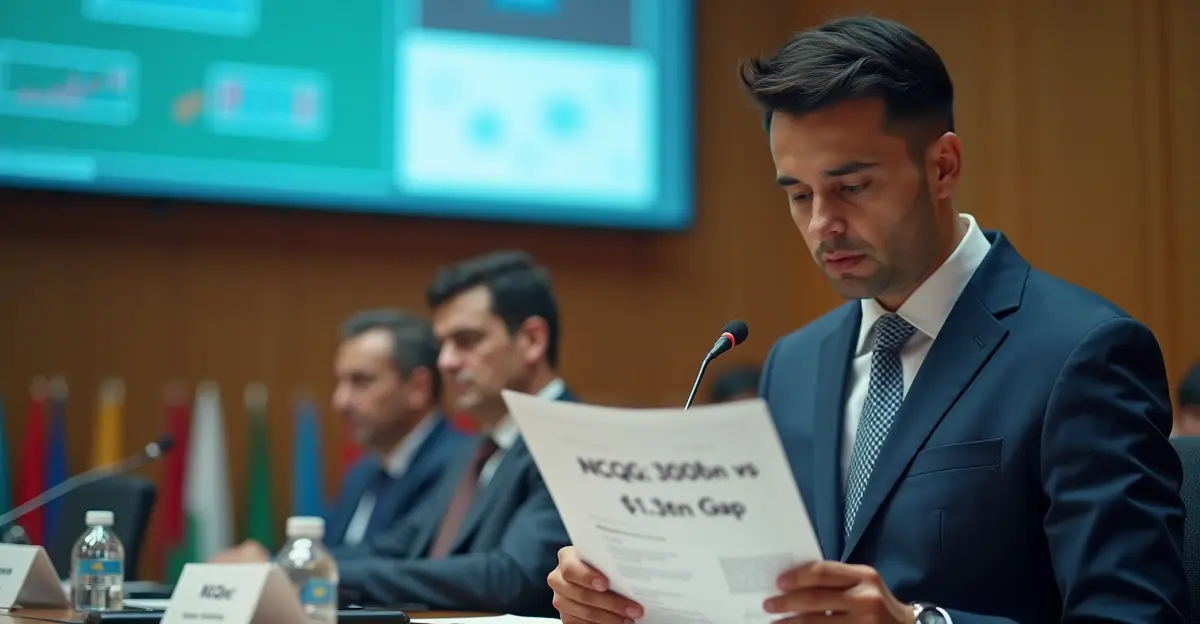
The COP29 agreement established a target of $300 billion in annual climate finance by 2035, representing a substantial increase from previous commitments. However, this figure falls dramatically short of the $1.3 trillion that developing countries argue is actually needed to address climate impacts effectively. According to Earth.org reports, developing nations like India, Panama, and Nigeria criticized the amount as 'abysmally poor' and 'insultingly low,' with India's negotiator calling it a 'paltry sum' that won't enable necessary climate action for survival.
The North-South Divide: Why Developing Nations Rejected the Deal
The rejection of the $300 billion agreement reflects fundamental disagreements about climate justice and historical responsibility. Developing countries argue that wealthy nations, responsible for the majority of historical emissions, must provide adequate funding for adaptation and mitigation in vulnerable regions. The current deal represents only about 23% of the estimated $1.3 trillion needed annually, creating what experts call a 'climate finance gap' that threatens global climate goals.
Key Reasons for Rejection:
- Inadequate Funding: $300 billion represents less than one-quarter of actual needs
- Unfair Terms: Too much reliance on loans rather than grants
- Process Concerns: Deal pushed through despite objections from developing nations
- Timing Issues: 2035 target considered too distant for urgent climate action
Geopolitical Factors Complicating Climate Finance
US Election Uncertainty and Climate Commitments
The 2024 US presidential election has created significant uncertainty around climate commitments, with Politico reporting that US officials are racing to finalize agreements before potential policy reversals. This uncertainty has made developing nations skeptical of long-term commitments from Western countries, particularly as the US climate policy landscape remains volatile.
China's Dual Role: Developing Nation or Climate Finance Contributor?
China's positioning as a 'developing nation' while being the world's largest emitter and second-largest economy has complicated climate finance mechanisms. According to Policy Circle analysis, China contributes approximately $4.5 billion annually to climate finance (6% of the global total) but maintains its developing country status under the UNFCCC's principle of 'common but differentiated responsibilities.' This dual identity creates tensions with developed nations who argue China should assume greater financial responsibilities.
The Baku to Belém Roadmap: Strategic Implications for COP30
In response to the inadequate $300 billion agreement, developing nations secured language for a 'Baku to Belém Roadmap to $1.3 trillion' that aims to work toward the actual funding needed. This roadmap, presented by Azerbaijan's Mukhtar Babayev and Brazil's André Corrêa do Lago, outlines five priority action areas (5Rs) to mobilize at least $1.3 trillion annually by 2035. The COP30 Brazil preparations will now focus on implementing this ambitious plan, which emphasizes:
- Replenishing grants and concessional finance
- Rebalancing fiscal space and debt sustainability
- Rechanneling private finance
- Revamping capacity for climate portfolios
- Reshaping systems for equitable capital flows
Climate Finance as Geopolitical Competition
The COP29 stalemate reveals how climate negotiations are increasingly becoming an arena for geopolitical competition rather than cooperation. Developing nations are leveraging their collective bargaining power through groups like the G77+China, while developed nations face domestic political constraints that limit their ability to commit substantial funding. This dynamic mirrors broader global economic tensions and reflects shifting power balances in the international system.
Expert Perspectives on the Stalemate
'The $300 billion figure represents a classic case of developed nations offering the minimum they think they can get away with, while developing countries are demanding what they actually need to survive,' says climate finance analyst Dr. Maria Chen. 'This isn't just about money—it's about power, justice, and who gets to define the rules of the global climate regime.'
Impact and Implications for Global Climate Action
The COP29 stalemate has significant implications for global climate action. With developing nations rejecting the current finance framework, implementation of the Paris Agreement faces serious obstacles. The failure to agree on adequate funding could delay critical adaptation projects in vulnerable regions and undermine trust in multilateral climate negotiations. As countries prepare for COP30 in Belém, Brazil, the pressure is mounting to bridge this divide before it derails global climate goals entirely.
Frequently Asked Questions (FAQ)
What was the main outcome of COP29?
COP29 resulted in a $300 billion annual climate finance agreement by 2035, but this was rejected by developing nations as insufficient, leading to the creation of the Baku to Belém Roadmap aiming for $1.3 trillion annually.
Why did developing countries reject the $300 billion deal?
Developing nations argue the amount represents less than one-quarter of actual needs ($1.3 trillion annually), contains unfavorable terms (too many loans), and was negotiated without adequate representation from vulnerable countries.
How does China's status affect climate finance negotiations?
China maintains developing nation status while being the world's largest emitter, contributing $4.5 billion annually to climate finance. This creates tension with developed nations who argue China should assume greater financial responsibilities.
What is the Baku to Belém Roadmap?
The roadmap is a strategic plan to mobilize $1.3 trillion in annual climate finance by 2035 through five priority action areas, developed as a response to the inadequate $300 billion COP29 agreement.
How will US election results impact climate finance?
The 2024 US election created uncertainty, with potential policy reversals threatening existing commitments and making developing nations skeptical of long-term Western climate finance promises.
Conclusion: The Road to COP30
The COP29 climate finance stalemate reveals fundamental tensions in the global climate governance system. As nations prepare for COP30 in Brazil, the challenge will be to transform climate finance from a geopolitical battleground into a genuine mechanism for climate justice. The success of the Paris Agreement goals now depends on bridging the North-South divide and creating financing mechanisms that reflect both historical responsibility and current capabilities.


Follow Discussion