


 Deutsch
 English
 Español
 Français
 Nederlands
 Português


 Share
Share




The $300 Billion Climate Finance Gap: Why COP29's Historic Deal Falls Short of Global Needs
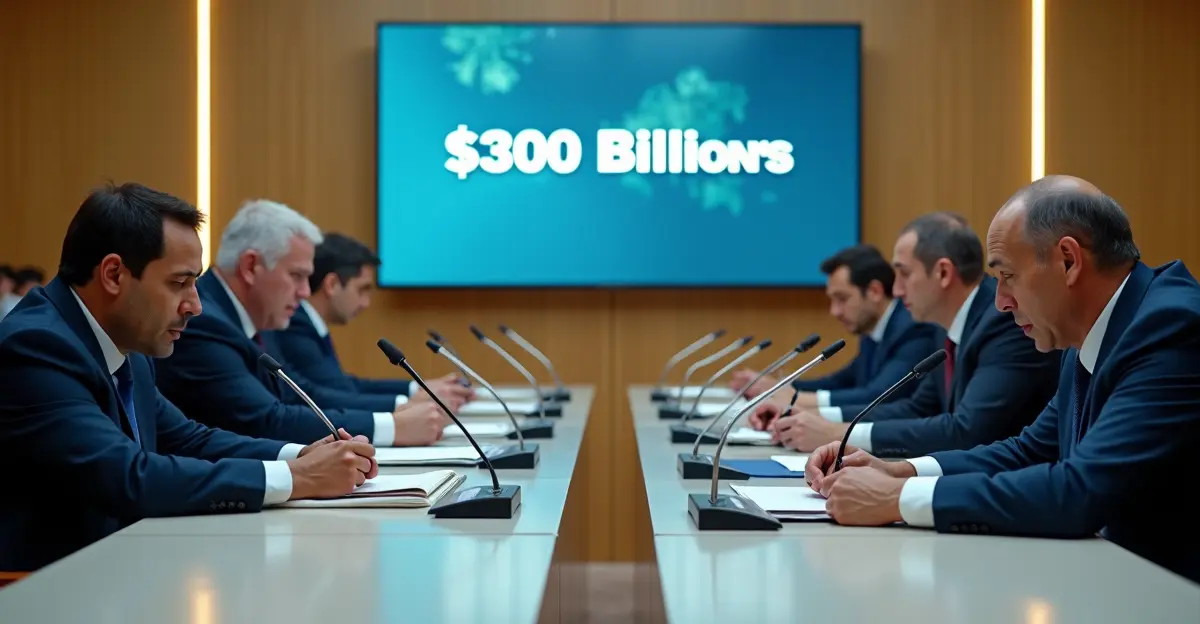
The landmark COP29 agreement to triple climate finance to $300 billion annually by 2035 represents a significant diplomatic achievement, yet it falls dramatically short of the $1.3 trillion annual needs identified by developing nations, creating immediate strategic tensions and implementation challenges that could undermine global climate goals. This $1 trillion gap between commitment and necessity exposes fundamental geopolitical divides and raises urgent questions about how the international community will mobilize sufficient resources to support vulnerable countries facing escalating climate impacts.
What is the COP29 Climate Finance Agreement?
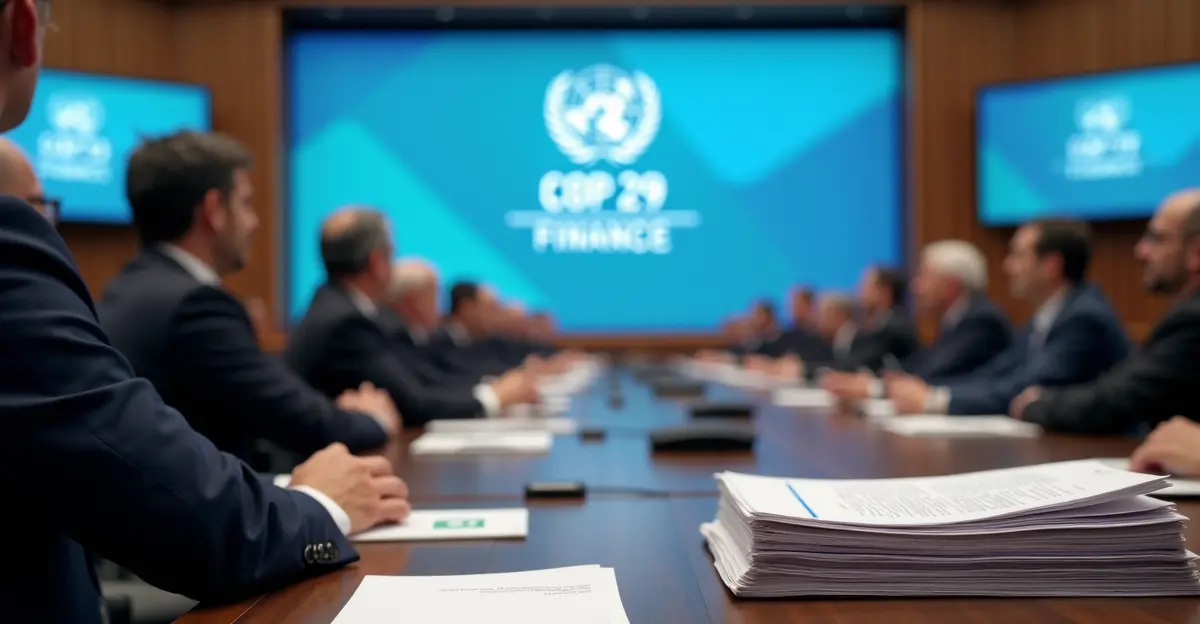
The New Collective Quantified Goal (NCQG) established at COP29 in Baku, Azerbaijan, sets two interconnected targets: a binding commitment for developed countries to provide $300 billion annually to developing nations by 2035, and a broader aspiration to mobilize $1.3 trillion in total international climate finance over the same period. This represents a tripling from the previous $100 billion annual goal that had been in place since 2009, but still falls far short of actual requirements. According to UNCTAD analysis, developing countries' actual climate finance needs should be closer to $900 billion annually from 2025, reaching $1.46 trillion by 2030.
Geopolitical Tensions Between Developed and Developing Economies
The COP29 negotiations revealed deepening fault lines between developed and developing nations, with many Global South countries expressing frustration over what they perceive as insufficient financial commitments from wealthier nations responsible for historical emissions. The Paris Agreement implementation has consistently highlighted these tensions, with developing economies arguing that the $300 billion target represents less than a quarter of their actual requirements for both mitigation and adaptation efforts.
The North-South Divide in Climate Responsibility
Developing nations, particularly those in Africa, Asia, and small island states, have emphasized that they face disproportionate climate impacts despite contributing minimally to historical greenhouse gas emissions. The global carbon budget allocation debate has intensified, with many countries arguing that developed nations must provide substantially more financial support to enable equitable transitions. "The $300 billion commitment is a step forward, but it's like offering a bucket of water to put out a forest fire," noted one African negotiator who requested anonymity due to diplomatic sensitivities.
Practical Challenges of Mobilizing Private Capital
Reaching the $1.3 trillion annual target will require unprecedented mobilization of private capital, presenting significant structural and regulatory challenges. Current climate finance flows to developing countries stand at approximately $116 billion annually, meaning the international community must increase funding by more than tenfold within a decade.
Key Barriers to Private Investment
- Risk Perception: Many developing countries face higher perceived investment risks, including political instability, currency volatility, and regulatory uncertainty
- Limited Project Pipeline: Insufficient bankable climate projects with clear revenue streams and risk mitigation frameworks
- Institutional Capacity: Weak domestic financial institutions and regulatory frameworks in many recipient countries
- Blended Finance Limitations: Current public-private partnership models have struggled to achieve scale and efficiency
According to a World Economic Forum report, traditional sources could contribute $170-353 billion annually by 2035, while alternative mechanisms including carbon markets might generate up to $472 billion. However, this still leaves a significant gap that must be addressed through innovative financing approaches.
Impact on Global Climate Goals and Energy Transition
The climate finance gap has direct implications for achieving the Paris Agreement's 1.5°C warming limit and accelerating the global energy transition. Without adequate funding, developing countries may struggle to implement their Nationally Determined Contributions (NDCs), potentially delaying emissions reductions and adaptation efforts by years.
Energy Transition Timelines at Risk
The renewable energy deployment timeline in developing regions could face significant delays without sufficient climate finance. Many countries require substantial external support to phase out fossil fuel infrastructure, build renewable energy capacity, and develop green industries. The current funding shortfall threatens to create a two-speed transition where developed economies decarbonize faster while developing nations lag behind due to financial constraints.
Geopolitical Stability in Vulnerable Regions
Inadequate climate finance could exacerbate existing vulnerabilities in regions already facing climate-related stresses, potentially leading to increased migration, resource conflicts, and political instability. The climate security implications are particularly acute in regions like the Sahel, South Asia, and small island developing states, where climate impacts intersect with existing socioeconomic challenges.
Expert Perspectives on the Finance Gap
Climate finance experts emphasize that while the COP29 agreement represents progress, much more ambitious action is needed. "The $300 billion target is politically significant but practically insufficient," explains Dr. Maria Chen, climate finance researcher at the World Resources Institute. "We need to think beyond traditional donor-recipient models and develop innovative mechanisms that can mobilize capital at the scale required."
The WRI analysis suggests that multilateral development banks could potentially raise their contributions to $240 billion annually, covering 80% of the $300 billion goal, but this still leaves the larger $1.3 trillion target largely unaddressed.
Frequently Asked Questions
What is the difference between the $300 billion and $1.3 trillion climate finance targets?
The $300 billion represents a binding commitment from developed countries to provide climate finance to developing nations by 2035, while the $1.3 trillion is a broader goal for total international climate finance mobilization from all sources, including private investment, multilateral banks, and bilateral aid.
Why do developing countries need $1.3 trillion annually for climate action?
Developing nations require substantial funding for both mitigation (reducing emissions through renewable energy, energy efficiency, and sustainable transport) and adaptation (building resilience to climate impacts like sea-level rise, droughts, and extreme weather). UNCTAD estimates actual needs could reach $1.46 trillion annually by 2030.
How can the private sector help close the climate finance gap?
Private capital can be mobilized through blended finance models, green bonds, climate-focused investment funds, and carbon markets. However, this requires improved risk mitigation, stronger regulatory frameworks, and better project preparation in developing countries.
What happens if the climate finance gap isn't addressed?
Failure to provide adequate climate finance could delay global emissions reductions, increase climate-related losses and damages in vulnerable countries, exacerbate geopolitical tensions, and undermine trust in international climate cooperation.
What are the next steps after COP29?
The "Baku to Belém Roadmap" established at COP29 provides operational guidance for achieving the climate finance targets, with implementation discussions continuing at COP30 in Brazil in 2025. Countries will also submit updated climate plans in February 2025, which will test their commitment to aligning finance with climate ambition.
Conclusion: The Road Ahead
The COP29 climate finance agreement represents both progress and profound challenge. While tripling climate finance to $300 billion annually marks a significant diplomatic achievement, the $1 trillion gap between this commitment and developing countries' actual needs threatens to undermine global climate goals and exacerbate geopolitical tensions. Closing this gap will require unprecedented cooperation, innovative financing mechanisms, and a fundamental rethinking of how the international community supports climate action in the Global South. As countries prepare for COP30 in Brazil, the translation of commitments into concrete action will determine whether the world can mobilize the resources needed to address the climate crisis equitably and effectively.
Sources
UNFCCC COP29 Agreement, UNCTAD Climate Finance Analysis 2025, World Resources Institute NCQG Explanation, World Economic Forum Climate Finance Report 2026, BloombergNEF Energy Transition Investment Trends 2026



Follow Discussion