


 Deutsch
 English
 Español
 Français
 Nederlands
 Português


 Share
Share




The collision between China's critical minerals squeeze and the 2026 AI boom is no longer a theoretical risk. As hyperscalers race to deploy data centers at an unprecedented clip, demand for gallium, germanium, copper, and rare earth elements is surging — precisely the minerals where Beijing controls roughly 90% of global processing. With China's temporary suspension of export controls on gallium, germanium, antimony, and superhard materials set to expire on November 27, 2026, Western AI ambitions face a structural bottleneck that could define the geoeconomic landscape of mid-2026.
What Is the AI-Critical Minerals Collision?
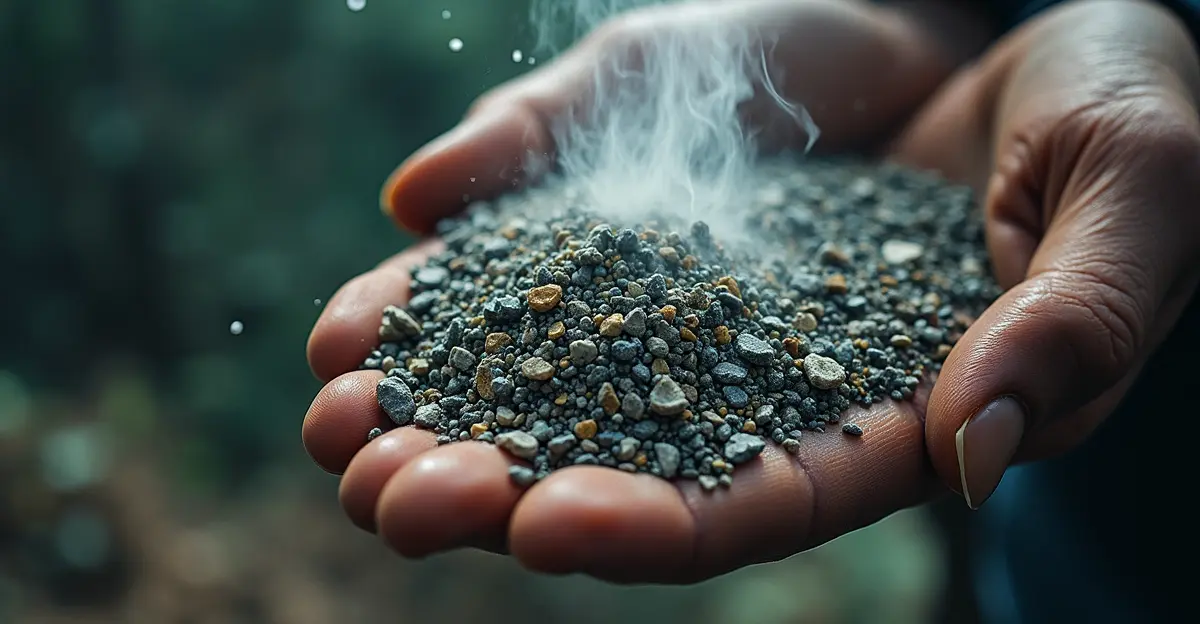
The AI-critical minerals collision describes the convergence of two megatrends: exponential growth in artificial intelligence infrastructure and Beijing's tightening grip on the raw materials that make that infrastructure possible. Gallium arsenide and gallium nitride are essential for high-frequency, high-power chips; germanium is used in fiber optics and infrared optics; copper underpins every electrical connection; and rare earth magnets cool servers and power electric motors. China's dominance in processing these materials — combined with export licensing that analysts describe as a tool of 'managed dependence' — means the rare earth processing dominance is no longer a commodity issue but a strategic chokepoint.
China's Export Controls and the November 2026 Cliff
In November 2025, Beijing suspended its earlier export ban on gallium, germanium, antimony, and superhard materials to the United States for one year, following a meeting between former President Trump and President Xi Jinping. The suspension, formalized in MOFCOM Announcement 72, runs through November 27, 2026. However, analysts at the Foundation for Defense of Democracies and Global Trade Alert emphasize that the military end-use ban was never lifted, and the civilian licensing regime remains restrictive, with quota-style volume ceilings below pre-control levels. 'This is a pause, not a resolution,' one trade analyst told Materials Dispatch. 'Buyers need a plan before the cliff.'
Gallium prices illustrate the pressure: spot prices jumped from roughly $240 per kilogram to $575 per kilogram after the initial restrictions, and non-Chinese capacity remains at pilot scale. The gallium arsenide semiconductor supply chain, critical for radar, 5G, and satellite communications, is especially exposed.
Why AI Demand Makes the Squeeze Acute
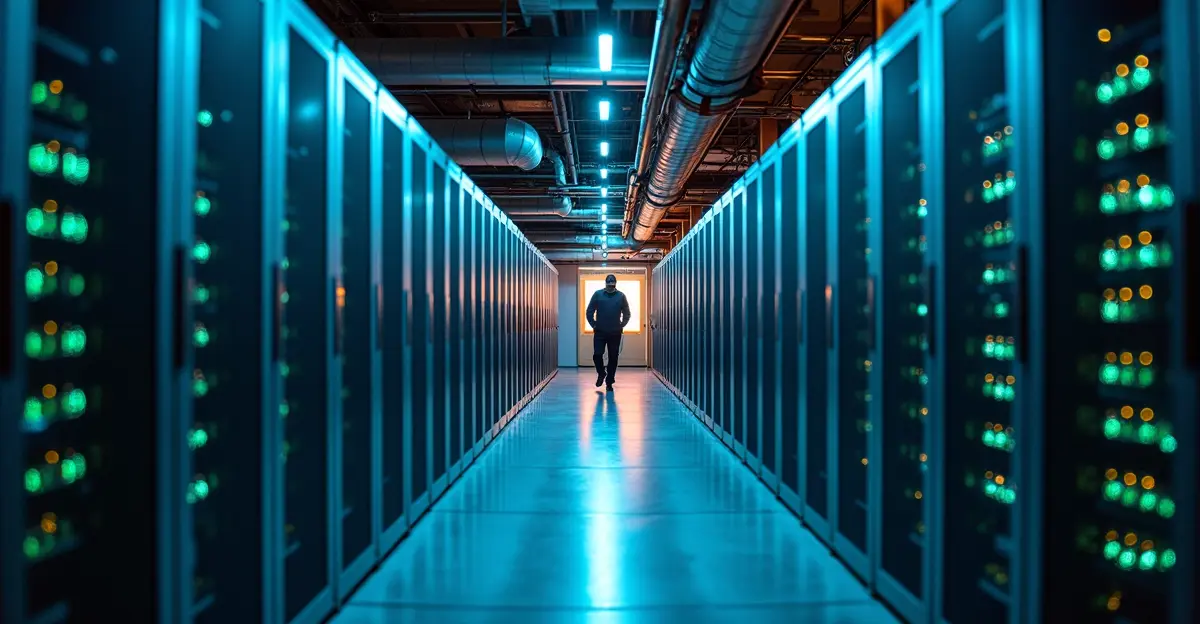
The timing could hardly be worse. AI data centers are forecast to consume 1,000 terawatt-hours by 2026, and each megawatt of data center capacity requires 27–33 tonnes of copper. Wood Mackenzie projects a 304,000-tonne refined-copper deficit for 2025, widening in 2026. Meanwhile, rare earth magnets — used in cooling systems, power supplies, and electric vehicles — face the same Chinese processing bottleneck. The International Energy Agency warns that existing and planned mines will meet only about 70% of projected 2035 demand for critical minerals, while the AI data center energy demand accelerates the crunch.
Western Countermeasures: FORGE and Project Vault
Western governments are scrambling to diversify. In February 2026, the United States hosted the Critical Minerals Ministerial with 54 countries, launching FORGE and announcing Project Vault, a $10 billion EXIM-backed strategic reserve with nearly $2 billion in private capital. The EU's Critical Raw Materials Act and ReSourceEU plan add €3 billion in financing. But analysts caution that new mining and processing projects take five to ten years to reach production, while the strategic window is 12–18 months. The critical minerals strategic reserve may buffer short-term shocks but cannot replace Chinese scale.
Impact on Defense, Tech, and Energy Transition
The collision extends beyond data centers. Gallium and germanium are used in military radar, electronic warfare, and infrared optics; rare earth magnets are critical for F-35 components, missile guidance, and wind turbines. The IEA estimates that full enforcement of China's controls could put $6.5 trillion of downstream production at risk, with the U.S. and Europe bearing nearly half the exposure. Even consumer electronics and electric vehicles face cost increases — roughly $500 per EV from magnet and battery material pressures. The semiconductor supply chain resilience now hinges on mineral access, not just chip design.
Expert Perspectives
'Western nations face a narrowing 12–18 month window before dependency becomes irreversible,' warns a report from Informed Clearly, citing analysts across government and industry. 'China is weaponizing control rather than scarcity, extracting concessions while the West builds alternatives that are years away.' Wood Mackenzie's Charles Cooper adds that copper, in particular, has become 'a practical bottleneck for data-centre expansion,' with prices above $11,000 per tonne and transformer lead times in the U.S. reaching 128 weeks.
FAQ
What minerals does China control for AI technology?
China controls roughly 90% of rare earth processing, 98% of low-purity gallium output, and over 50% of copper refining — all essential for semiconductors, magnets, and electrical infrastructure.
When does China's export suspension expire?
China's suspension of export controls on gallium, germanium, antimony, and superhard materials to the U.S. expires on November 27, 2026.
How much copper do AI data centers need?
AI data centers require 27–33 tonnes of copper per megawatt, contributing to a projected 304,000-tonne refined-copper deficit in 2025.
What is Project Vault?
Project Vault is a U.S. Strategic Critical Minerals Reserve backed by a $10 billion EXIM loan and nearly $2 billion in private capital, announced in February 2026.
Can the West diversify fast enough?
Most analysts say no; new mining and processing projects take 5–10 years, while the strategic window to avoid irreversible dependence is 12–18 months.
Conclusion
As November 2026 approaches, the collision between AI's insatiable demand and China's mineral leverage will test whether Western diversification can outpace dependency. The answer will shape not just the tech boom but the balance of geoeconomic power for the next decade.




Follow Discussion