


 Deutsch
 English
 Español
 Français
 Nederlands
 Português


 Share
Share




AI shoplifting detection is transforming how British supermarkets respond to a surge in retail theft. With the industry estimating 20 million theft incidents per year—far above the official figure of around 500,000—retailers from Wales to London are installing AI-powered surveillance cameras and facial recognition systems to protect their shelves and staff.
What is AI-powered shoplifting detection?
AI-powered shoplifting detection uses computer vision to analyze live security camera footage in real time. The software is trained to recognize specific suspicious behaviours, such as placing an item in a trouser pocket, hiding goods under a shirt, or slipping products into a bag. When the system identifies such a movement, it sends an alert to staff phones or tablets within seconds, allowing employees to intervene before the customer leaves the store.
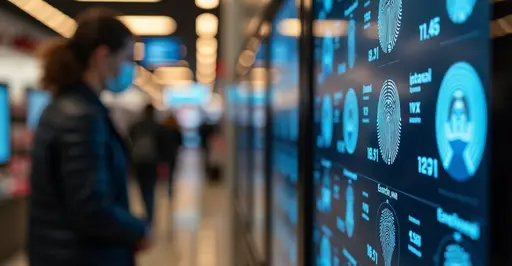
Some chains go further with facial recognition. The technology scans faces as shoppers enter and compares them against a database of people previously caught stealing. If a match is found, staff receive a notification and can refuse entry.
Why are UK supermarkets turning to AI?
The scale of retail crime has become unsustainable. Nathan Walmsley, manager of supermarket chain Filco in Wales, says bluntly: “If we don’t do it, we’ll go bankrupt.” He adds that theft happens every day and that without significant security investment, losses would be too high to survive.
Official UK statistics record about 500,000 shoplifting incidents annually, but the retail sector believes the true number is closer to 20 million. Contributing factors include limited police capacity and a 2014 law that effectively gave lower priority to thefts under £200, creating what former detective David Spencer calls a “climate of impunity.” This has also led to organized theft gangs that steal goods for resale, echoing wider concerns about retail crime and organized gangs across Europe.
How facial recognition works in UK shops
Under British privacy law, retailers can use facial recognition for security because the “legitimate interest” of preventing theft is accepted as a legal basis. This differs from the European Union, where such use is not permitted for commercial security. In the Netherlands, for example, shops are not allowed to deploy facial recognition for these purposes.
The footage and recorded incidents are shared with police, helping officers map criminal networks. David Spencer, a former detective and advisor at the think tank Policy Exchange, argues that retailers lose €4.5 billion per year to theft. “Ultimately it is not the technology that decides whether someone is arrested; a police officer must look first, and then a judge if necessary,” he says.
Privacy concerns and known mistakes
Civil rights organizations warn that ordinary customers could end up on “blacklists” without police or judicial oversight. Facial recognition systems have already produced errors: Sainsbury’s, a major British chain, recently apologized after an innocent shopper was wrongly escorted out of a store by security. Critics also point to evidence that the technology has larger error margins for certain skin tones because training data is not equally diverse.
These concerns echo wider debates about facial recognition privacy risks and the need for regulation. Yet Spencer insists that the technology is essential for tackling organized retail crime and that human oversight remains central to any arrest decision.
Impact: fewer thefts and safer staff
At Filco, Walmsley reports that theft has fallen by at least half since installing AI cameras, and staff feel safer. The chain has deployed the systems across all branches. Beyond individual stores, the data can help police identify and dismantle criminal networks, according to Spencer.
For British retailers, the message is clear: without investment in AI-driven security, many small and independent shops risk financial collapse. The debate over privacy versus security is likely to intensify as more supermarkets adopt facial recognition, making this a key issue in UK retail technology regulation in 2026.
Frequently Asked Questions
What is AI shoplifting detection?
AI shoplifting detection uses computer vision to spot suspicious behaviours like hiding items and instantly alerts store staff.
Is facial recognition legal in UK supermarkets?
Yes, UK privacy law accepts “legitimate interest” (preventing theft) as a legal basis, unlike the EU where commercial facial recognition is not allowed.
How many shoplifting incidents happen in the UK each year?
Official figures count about 500,000, but the retail industry estimates the real number is around 20 million.
Can AI facial recognition make mistakes?
Yes. There have been cases of wrongful identification, including a Sainsbury’s customer mistakenly removed from a store, and concerns about bias across skin tones.
How much do UK retailers lose to theft?
Retailers lose an estimated €4.5 billion annually to shoplifting and organized theft, according to Policy Exchange advisor David Spencer.




Follow Discussion