


 Deutsch
 English
 Español
 Français
 Nederlands
 Português


 Share
Share




In 2026, the global race to power artificial intelligence has triggered a seismic shift in energy strategy. Hyperscale data center operators — Microsoft, Google, Amazon, Meta, and Oracle — are abandoning traditional grid dependency as electricity costs soar to 20–30% of operating expenses and transformer lead times stretch beyond two years. With global data center power demand projected to reach 945 TWh by 2030, these tech giants are signing direct behind-the-meter deals worth tens of billions of dollars, fundamentally redrawing the map of global energy investment.
The Grid Bottleneck Crisis
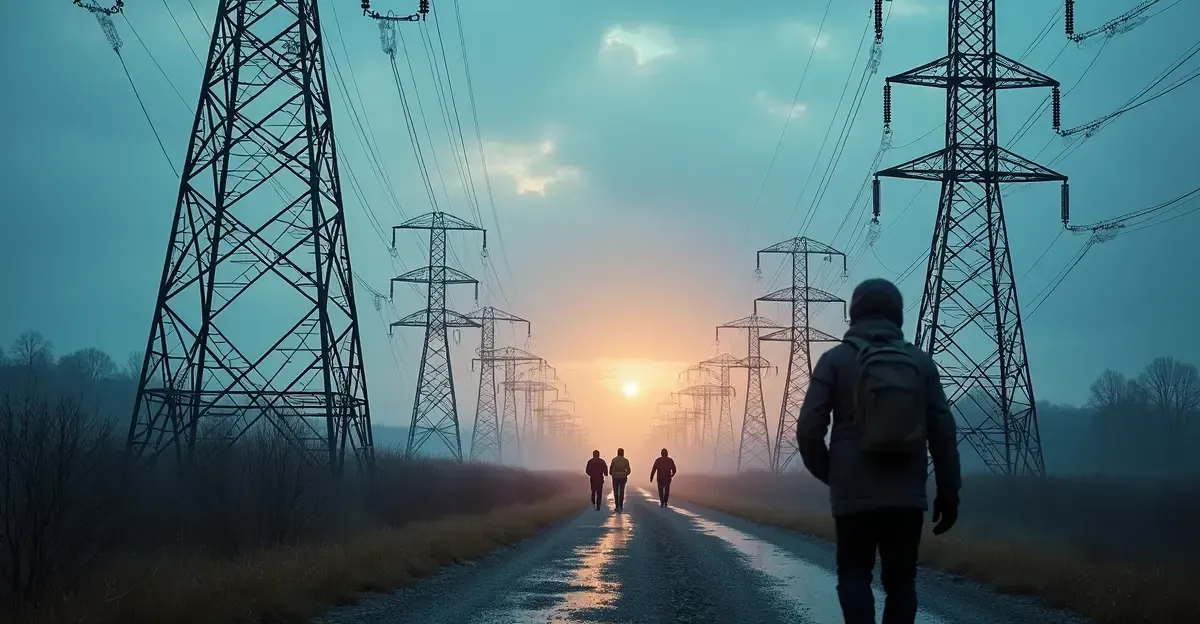
The root cause of this pivot is a broken interconnection system. As of mid-2025, more than 36 data center projects representing $162 billion in investment were delayed or blocked due to power availability and equipment lead times. Transformer delivery times have ballooned to 128 weeks, and of the 16 GW of planned capacity, only 5 GW entered construction. The global data center power demand doubling every few years has overwhelmed aging utility infrastructure, forcing hyperscalers to take matters into their own hands.
"The public grid simply cannot support gigawatt-scale AI demands in the timelines required," said an Oracle executive in early 2026. "We are moving from passive consumers to active infrastructure developers."
Nuclear Renaissance: Microsoft, Google, and Amazon Go Direct
Three Mile Island Restart
Microsoft's $16 billion, 20-year power purchase agreement to restart Three Mile Island Unit 1 is the most emblematic deal of this new era. Constellation Energy signed the agreement in September 2024, and the Trump administration approved a $1 billion federal loan in November 2025. The 835 MW plant is expected to come online in 2027, with all output dedicated to Microsoft data centers in the PJM grid region. This marks the first restart of a retired U.S. nuclear plant specifically for AI computing.
Google's SMR Fleet
Google took a different route, signing the first corporate small modular reactor (SMR) fleet deal with Kairos Power in October 2024. The Master Plant Development Agreement targets 500 MW of capacity by 2035, with the first reactor operational by 2030. Kairos Power's KP-FHR design uses fluoride salt-cooled, pebble-bed technology, offering passive safety and factory fabrication. The small modular reactor deployment timeline remains a challenge, but Google's commitment provides critical commercial validation.
Amazon's Nuclear AI Campus
Amazon has invested over $700 million in X-energy for up to 12 Xe-100 SMRs (960 MW) and is converting the Susquehanna site into a nuclear-powered AI campus worth $20 billion. Meta has also entered the fray, issuing an RFPs for 1–4 GW of new nuclear and signing deals with TerraPower and Oklo for up to 6.6 GW. In total, hyperscalers have committed to over 9.8 GW of nuclear capacity across 13 announced projects as of May 2026.
Fuel Cells and Gas: The Immediate Bridge
While nuclear offers long-term baseload power, the immediate need is being met by natural gas and fuel cells. Bloom Energy secured $7.65 billion in data center contracts in early 2026, including a 2.8 GW master agreement with Oracle, a $5 billion financing partnership with Brookfield, and a $2.65 billion, 1 GW offtake agreement with American Electric Power. Bloom's solid oxide fuel cells can be installed in 55–90 days — versus years for grid connections — and operate at 50–60% electrical efficiency with zero water usage. Oracle plans to spend about $50 billion in 2026 on AI infrastructure, with a dual approach of using fossil fuels for rapid scaling while exploring SMRs for long-term sustainability.
Oracle has also partnered with Volta Grid to deploy 2.3 GW of modular natural gas generation. The behind-the-meter power generation model allows hyperscalers to bypass interconnection queues entirely, a critical advantage when grid delays threaten project viability.
Geopolitical and Market Implications
This structural shift is creating new geopolitical fault lines. Nations with reliable, clean power — such as those with abundant nuclear, hydro, or natural gas resources — are becoming magnets for AI infrastructure investment. The United States leads with its PJM grid and nuclear fleet, but countries like Saudi Arabia, Malaysia, and Chile are also attracting AWS expansions. Conversely, regions with constrained grids risk being left out of the AI boom.
The financial scale is staggering. Major operators — AWS, Microsoft, Google, Meta, and Oracle — are projected to spend over $600 billion in 2026 on AI-driven expansions. The $500 billion Stargate AI project with OpenAI further underscores the AI infrastructure investment trends reshaping global capital flows.
Expert Perspectives
"Hyperscalers are no longer just energy buyers; they are energy developers," said a senior analyst at EnkiAI. "This shift from efficiency to power independence will have profound implications for utility business models, grid planning, and national energy security."
Industry observers note that less than 10% of the needed new nuclear capacity will be available by 2030, ensuring continued reliance on natural gas and renewables through the decade. However, the energy transition for data centers is accelerating, with sodium-ion battery storage and AI-driven grid management emerging as complementary technologies.
FAQ
Why are hyperscalers bypassing the grid?
Grid interconnection delays of 4–7+ years, transformer lead times exceeding two years, and soaring electricity costs (20–30% of OpEx) make grid dependency untenable for AI data centers that need power immediately.
What is behind-the-meter power generation?
Behind-the-meter generation refers to on-site power production — such as fuel cells, natural gas generators, or small nuclear reactors — that directly supplies a facility without going through the public grid, bypassing interconnection queues.
How much nuclear capacity have hyperscalers committed to?
As of May 2026, hyperscalers have announced 13 nuclear projects totaling over 9.8 GW, including Microsoft's Three Mile Island restart (835 MW), Google's Kairos Power fleet (500 MW), and Amazon's X-energy investment (960 MW).
What role do fuel cells play in AI data center power?
Fuel cells, particularly Bloom Energy's solid oxide technology, provide rapidly deployable (55–90 days), efficient (50–60%) on-site power that can run on natural gas today and hydrogen in the future. Oracle has committed to nearly 3 GW of Bloom fuel cells.
Will this shift affect electricity prices for consumers?
Yes. As hyperscalers remove large loads from the grid, remaining customers may face higher transmission costs. However, new generation capacity built by hyperscalers could eventually benefit the grid through power purchase agreements and infrastructure investments.
Conclusion
The year 2026 marks the first major wave of hyperscaler direct investment in nuclear, gas-with-CCS, and on-site generation. This strategic pivot from efficiency to power independence is not merely a response to grid bottlenecks — it is a fundamental restructuring of the relationship between computing and energy. As AI demand continues to surge, the companies that control their own power supply will hold a decisive competitive advantage, redrawing the map of global energy investment and creating new geopolitical fault lines between nations with reliable clean power and those without.

Follow Discussion