


 Deutsch
 English
 Español
 Français
 Nederlands
 Português


 Share
Share




Ukraine Strikes Key Russian Oil Refinery in Latest Deep-Strike Campaign
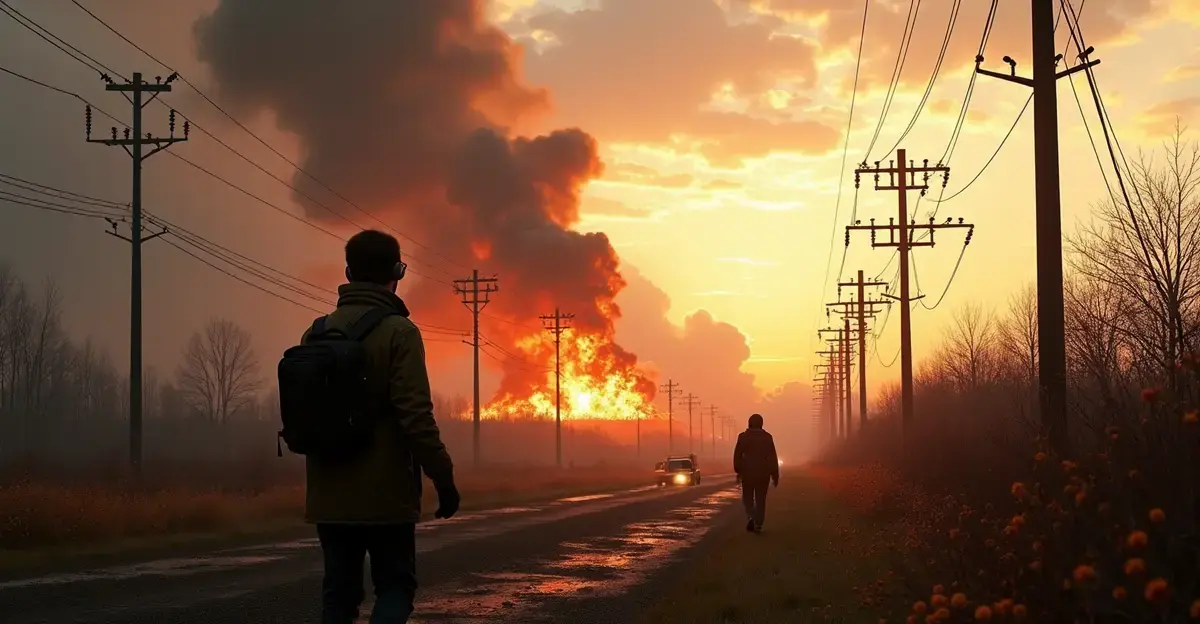
Ukrainian drones struck the Ilsky oil refinery in Russia's Krasnodar region overnight on June 2, 2026, igniting a large fire at one of southern Russia's largest fuel processing facilities. The attack marks the 16th time the refinery has been targeted since the full-scale invasion began, as Kyiv intensifies its campaign to disrupt Russian energy infrastructure and military logistics. The strike on the Ilsky refinery, located approximately 500 kilometers from Ukrainian-controlled territory, is part of a broader strategy to degrade Russia's ability to fuel its war machine and generate revenue from oil exports.
According to Ukraine's General Staff, the attack caused a massive blaze at the facility, with local residents reporting explosions after 3 a.m. local time. Thick plumes of smoke were visible from over 10 kilometers away, and the Krasnodar emergency headquarters confirmed that the fire was caused by a drone strike. The Ilsky refinery, operated by LLC KNGK-INPZ, has an annual capacity of approximately 6.6 million tonnes of crude oil, producing diesel, gasoline, fuel oil, and bitumen. It is considered a critical component of the fuel supply chain for Russian military units in the Southern Military District and Russian-occupied areas of Ukraine.
Context: Ukraine's Expanding Drone Campaign
The attack on the Ilsky refinery is part of a sustained Ukrainian effort to strike deep into Russian territory using long-range drones. Since 2022, Ukrainian forces have hit 24 of Russia's 33 major oil refineries, knocking out roughly a quarter of national fuel production and a third of refining capacity, according to independent analysts. The Ukraine drone campaign against Russian oil refineries has forced Moscow to ration fuel and import gasoline from Belarus, while seaborne oil exports dropped by nearly 10% in 2024. Russian oil refining fell to its lowest level in 12 years as a direct result of these repeated strikes.
In the latest attack, the Russian Ministry of Defense claimed that air defense systems intercepted 148 drones overnight across eight Russian regions, as well as over the occupied Crimea peninsula, the Black Sea, and the Sea of Azov. However, at least one drone successfully struck the Ilsky refinery, causing significant damage. The facility had been previously hit in February 2026 and multiple times in 2024 and 2025, according to the independent Russian media outlet Astra.
How the Attack Unfolded
Precision Strike on Critical Infrastructure
The Ukrainian General Staff reported that the strike was coordinated by the newly established Center for Deep Destruction of the Unmanned Systems Forces. In a Telegram post, the commander of the Unmanned Systems Forces stated: 'The targets are coordinated by the Center for Deep Destruction. You have no rear in operational depth.' This statement underscores Ukraine's growing capability to strike strategic assets far behind the front lines, a development that is reshaping the dynamics of the war.
In addition to the Ilsky refinery, Ukrainian forces also struck two Pantsir air defense systems, a command post of the Russian 3rd Army Corps, and a tugboat on the occupied Crimea peninsula. The Pantsir systems and the tugboat were hit in Crimea, while the command post was struck in the village of Shyrokyne in the Donetsk region. These simultaneous attacks demonstrate the increasing sophistication and coordination of Ukraine's drone operations.
Strategic Significance of the Ilsky Refinery
The Ilsky refinery is one of the largest private oil processing enterprises in southern Russia. Its annual output of 6.6 million tonnes of fuel is critical for supplying Russian military operations in Ukraine, as well as civilian fuel needs in the region. Repeated strikes on this facility have forced Russia to divert resources to repair damage and relocate fuel storage further from the front lines. The impact of drone strikes on Russian military logistics has been profound, with Russian forces struggling to maintain fuel supplies for their armored units and aviation assets.
According to the Caspian Policy Center, which maintains a live map of Russian refinery strikes, at least 40 of the 61 drone attacks on Russian refineries since January 2024 caused fires or lasting damage. The campaign has reduced Russia's refining capacity by an estimated 20-25%, leading to higher domestic fuel prices and occasional shortages. In response, Moscow has imposed fuel export restrictions and sought alternative supply routes, but the damage to its energy infrastructure continues to mount.
Impact on the War and Global Energy Markets
Disrupting Russia's War Economy
Ukraine's deep-strike drone campaign is designed to achieve multiple strategic objectives. By targeting oil refineries, Kyiv aims to reduce Russia's ability to generate revenue from fuel exports, which fund the war effort. The strikes also disrupt the supply chain for military fuel, forcing Russian commanders to make difficult choices about resource allocation. As one Ukrainian official noted, 'Every ton of fuel that burns in a refinery is a ton that cannot reach a Russian tank or aircraft.'
The economic impact has been significant. Russia's oil refining revenues have declined sharply, and the country has been forced to import gasoline from Belarus for the first time in decades. The global energy market impact of the Russia-Ukraine war has been exacerbated by these supply disruptions, contributing to higher oil prices and volatility in international markets. However, the long-term effect on global supply has been partially offset by increased production from other major exporters, including OPEC+ members.
Military Implications
On the battlefield, the disruption of Russian fuel supplies has created logistical challenges for Moscow's forces. Ukrainian commanders have reported that Russian units are increasingly constrained by fuel shortages, limiting their ability to conduct large-scale offensive operations. The strikes on fuel depots and refineries have forced Russia to relocate storage facilities further from the front, increasing the distance that fuel must be transported and making supply convoys more vulnerable to attack.
The repeated strikes on the Ilsky refinery also demonstrate Ukraine's ability to sustain a long-range strike campaign despite Russian air defense improvements. While Moscow has deployed additional Pantsir and S-400 systems to protect critical infrastructure, the sheer volume of drone attacks has overwhelmed defenses in some areas. Ukrainian forces have adapted their tactics, using swarms of inexpensive drones to saturate air defenses and increase the probability of successful strikes.
Frequently Asked Questions
How many times has the Ilsky refinery been attacked?
According to Ukrainian and independent Russian sources, the Ilsky refinery has been hit at least 16 times since the start of the full-scale invasion in February 2022. The most recent attack occurred on June 2, 2026.
What is the strategic importance of the Ilsky refinery?
The Ilsky refinery is one of the largest fuel processing facilities in southern Russia, with an annual capacity of 6.6 million tonnes. It supplies diesel, gasoline, and other fuels to Russian military units operating in Ukraine and the Southern Military District.
How has Russia responded to these drone attacks?
Russia has deployed additional air defense systems, including Pantsir and S-400 systems, to protect critical infrastructure. However, the volume of drone attacks has overwhelmed defenses in some areas. Moscow has also imposed fuel export restrictions and sought alternative supply routes.
What is the broader impact of Ukraine's drone campaign?
Ukraine's strikes on Russian oil refineries have reduced Russia's refining capacity by an estimated 20-25%, leading to higher domestic fuel prices, fuel rationing, and a decline in seaborne oil exports. The campaign has also disrupted military logistics, limiting Russian offensive capabilities.
Are there any international legal implications?
The strikes on Russian oil refineries are part of Ukraine's right to self-defense under international law, as recognized by the UN Charter. However, attacks on energy infrastructure have raised concerns about potential environmental damage and humanitarian impact on civilian populations.
Sources
This article is based on reporting from The Kyiv Independent, the Ukrainian General Staff, the Russian Ministry of Defense, the independent Russian media outlet Astra, the Caspian Policy Center, and the Associated Press. Additional context was provided by the Militarnyi news agency and MSN News.




Follow Discussion