


 Deutsch
 English
 Español
 Français
 Nederlands
 Português


 Share
Share




Massive Drone Strike on Moscow Refinery Marks Turning Point in Ukraine War
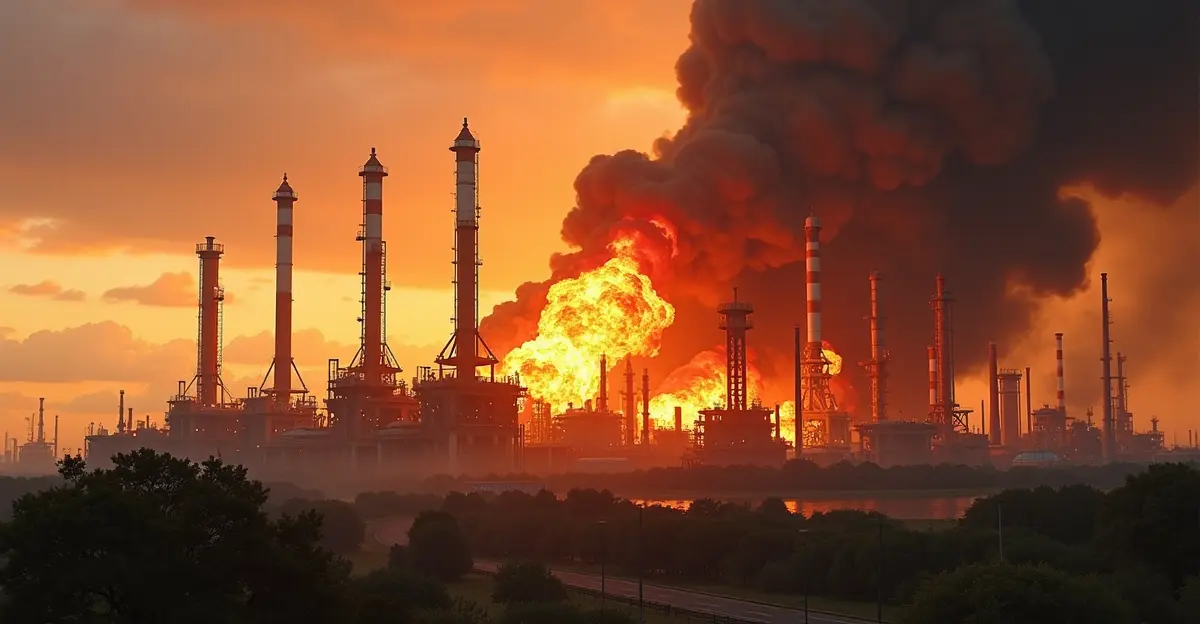
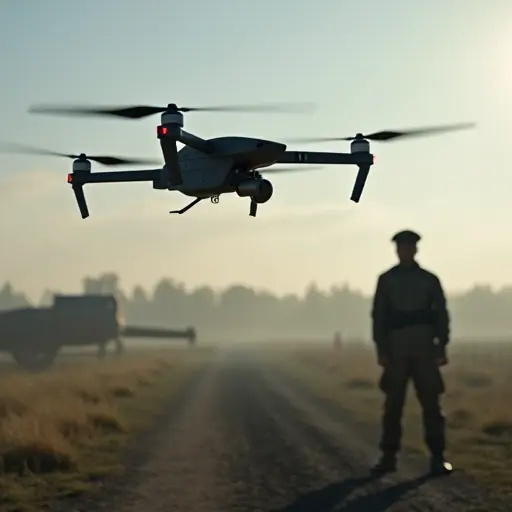
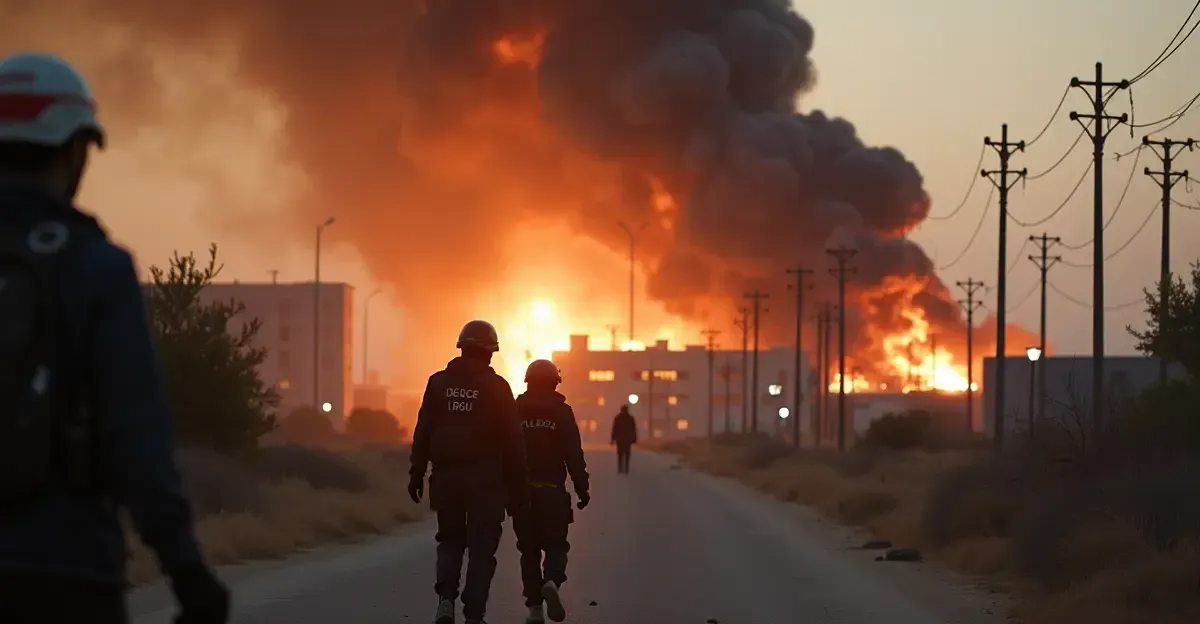
On June 18, 2026, Ukraine launched its largest-ever drone attack on Moscow, striking the Kapotnya oil refinery just 15 kilometers from the Kremlin. The attack, which involved nearly 200 drones, set the Gazprom Neft-owned refinery ablaze and sent thick black smoke over the Russian capital. According to Russian authorities, at least 194 Ukrainian drones were intercepted, but multiple fires broke out at the refinery, which supplies approximately 35-40% of Moscow's fuel needs. The attack represents a devastating blow to President Vladimir Putin's carefully cultivated image of security and invincibility, bringing the war directly to the heart of Russia.
Background: Ukraine's Strategic Drone Campaign
Since early 2025, Ukraine has systematically targeted Russian oil infrastructure in what Kyiv calls a campaign of 'long-range sanctions.' The Ukraine drone warfare strategy has evolved significantly, with over 40 strikes degrading roughly 40% of Russia's primary oil refining capacity. The Kapotnya attack is part of this broader effort, hitting the critical ELOU AVT-6 atmospheric vacuum distillation unit — the facility's irreplaceable core that processes crude oil into usable fuel. Ukrainian President Volodymyr Zelensky confirmed the strike as a direct response to ongoing Russian attacks on Ukrainian cities.
The Scale of the Attack
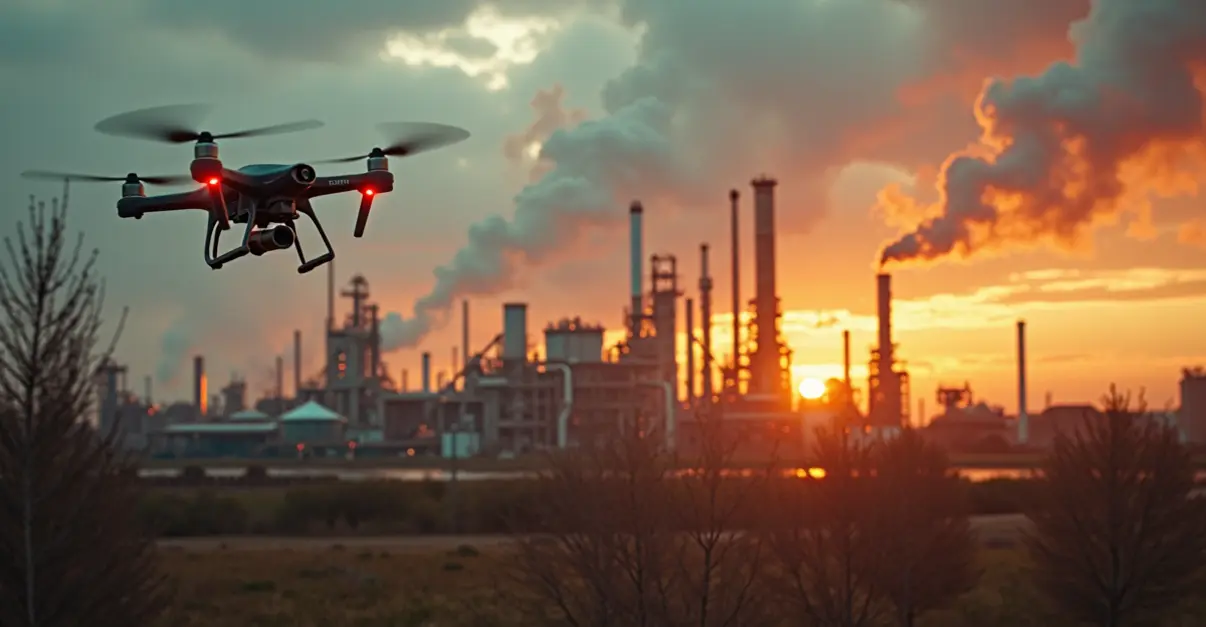
The June 18 assault eclipsed all previous records. Moscow Mayor Sergei Sobyanin reported that air defenses intercepted nearly 200 drones, surpassing the previous record of 74. The attack involved multiple drone types, including AN-196 Lyutyi, Fire Point FP-1, Morok, and jet-powered Bars drones, along with decoys, demonstrating sophisticated multi-organization coordination. Sheremetyevo Airport suspended flights and evacuated passengers, with over 170 flights canceled. Seventeen people, including two children, were wounded in the Moscow region.
Impact on Putin's Image and the Social Contract
The attack has shattered the concept of a 'safe Moscow,' a cornerstone of Putin's domestic legitimacy. For years, the Kremlin maintained an unwritten social contract with urban Russians: the regime would guarantee stability, security, and rising living standards in exchange for political passivity. That contract is now in tatters. Roman Parkhanov, a senior Ukrainian drone commander, told Interfax: 'The visible fires change the reality of war from an abstract television broadcast into a direct and tangible domestic danger for the capital's residents.'
The Putin social contract Russia has been under strain since the full-scale invasion began in 2022, but the drone attacks on Moscow represent an unprecedented psychological breach. Analysts note that the Kremlin can no longer shield its urban population from the consequences of the war. According to a June 2026 analysis by the Atlantic Council, while economic pressures mount, a domestic revolt remains unlikely due to repression and elite co-optation. However, the visible destruction in Moscow changes the dynamics.
Fuel Crisis and Rationing Loom
The loss of the Kapotnya refinery's production capacity creates an immediate fuel crisis. Parkhanov stated that the refinery provided approximately 35% of Moscow's fuel needs, and for certain categories like gasoline and diesel, up to half of the city's total consumption. Russia now faces two unpalatable scenarios, as outlined by Ukrainian military analysts:
- Scenario 1: Divert fuel from other regions to Moscow, artificially maintaining the capital's supply but worsening shortages across the rest of Russia.
- Scenario 2: Implement formal fuel rationing in Moscow using a coupon system, similar to what already exists in occupied Crimea and some regions.
Both options carry severe political risks. Rationing in Moscow would effectively end the social contract between the state and its citizens. Fuel shortages have already led to long lines at gas stations in dozens of Russian regions, and the Russia fuel rationing 2026 crisis is deepening. Russia banned gasoline exports on April 1 and aviation fuel exports on June 1, 2026, as domestic shortages worsened.
Strategic Implications for the War
The attack demonstrates Ukraine's growing capability to strike high-value targets deep inside Russia with sophisticated drone swarms. Forbes defense analyst David Hambling described the operation as 'a landmark in complex drone strikes,' noting that Moscow's air defenses proved largely ineffective against low-flying threats. One Russian missile even hit an oil tank instead of a drone. The strike potentially disabled the refinery's entire 12 million ton per year capacity.
President Zelensky, speaking at the Ramstein-format meeting in Brussels on June 18, warned that Putin is growing weaker politically, militarily, and economically. 'And that is why he could intensify attacks on us, on our population, with missiles and drones,' Zelensky cautioned. Russian Foreign Minister Sergei Lavrov responded by promising major retaliatory strikes against Ukrainian critical infrastructure.
The economic toll is mounting. Russian oil companies have suffered over $13 billion in combined losses from drone strikes. The International Energy Agency expects suppressed Russian refinery processing rates until at least mid-2027. Russia's 2026 defense budget has already been cut by 11% due to collapsing hydrocarbon revenues.
What Comes Next
The Kremlin faces a strategic dilemma. Retaliating with massive strikes on Ukrainian cities risks further international condemnation and may not restore the perception of security at home. Failing to respond decisively, however, emboldens Ukraine and signals weakness. The attack on Moscow has fundamentally altered the domestic political landscape in Russia, bringing the war home in a way that propaganda cannot easily spin away.
As one Russian analyst told RBC Ukraine in spring 2026: 'For the first time since 2023, Russia's economy has contracted. Ultra-pro-war propagandists, elites, big business, and previously apolitical citizens are increasingly united around the idea that life cannot go on like this.' Whether that discontent translates into political change remains uncertain, but the drone attack on Moscow has cracked the facade of Kremlin invincibility.
Frequently Asked Questions
What was the target of the June 18, 2026 drone attack on Moscow?
The primary target was the Kapotnya oil refinery (Moscow Refinery), located about 15 km southeast of the Kremlin. It is one of Russia's ten largest refineries, processing ~11 million tons of oil per year and supplying 35-40% of Moscow's fuel needs.
How many drones were used in the attack?
Russian officials reported intercepting nearly 200 drones, making it the largest drone attack on Moscow since the war began. Ukrainian sources indicated the attack involved multiple drone types including jet-powered Bars drones and decoys.
What damage was caused?
The attack hit the critical AVT-6 distillation unit, causing multiple fires. Thick black smoke rose over Moscow, flights were suspended at major airports, and 17 people were injured. The refinery's processing capacity was severely impacted.
How does this affect Putin's position?
The attack shatters the perception of Moscow as a safe haven from the war. It undermines the social contract that exchanged political passivity for security and prosperity. Fuel rationing in Moscow would mark an unprecedented domestic crisis for Putin's regime.
Will Russia retaliate?
Russian Foreign Minister Lavrov promised large-scale retaliatory strikes on Ukrainian critical infrastructure. President Zelensky warned that Putin, feeling weaker, may escalate missile and drone attacks on Ukrainian cities.
Sources
Information in this article is sourced from: AP News, The Guardian, Forbes, The Moscow Times, Kyiv Independent, Atlantic Council, ArmyInform (Ukraine), and official statements from Ukrainian and Russian authorities.
Follow Discussion