


 Deutsch
 English
 Español
 Français
 Nederlands
 Português


 Share
Share




Putin Dismisses Zelensky's Call for Direct Negotiations
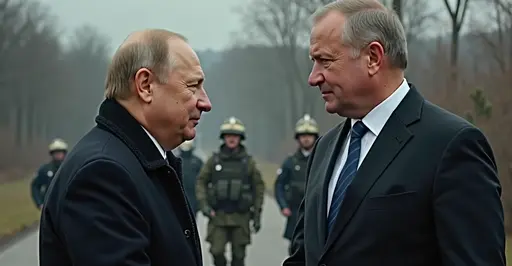
Russian President Vladimir Putin has rejected an invitation from Ukrainian President Volodymyr Zelensky for face-to-face peace negotiations, stating he sees 'no point' in such a meeting. Speaking at the closing of the St. Petersburg International Economic Forum (SPIEF) on June 5, 2026, Putin said he would only consider meeting Zelensky once a deal is ready to be signed. The rejection marks a significant setback in diplomatic efforts to end the ongoing war in Ukraine, now in its fifth year.
Zelensky had published an open letter to Putin on June 4, 2026, proposing direct talks in a neutral country such as Switzerland or Turkey, with a full ceasefire during negotiations. The letter, which combined peace overtures with pointed criticism of Russia's war aims, was described by Putin as 'boorish' in tone. The Russian president notably refrained from naming Zelensky directly, referring to him only as 'the author of the letter.'
Context: SPIEF 2026 and the Ukraine War
The exchange took place against the backdrop of SPIEF 2026, Russia's premier annual business event often called the 'Russian Davos.' The forum, held in St. Petersburg from June 3-5, drew over 20,000 participants from more than 100 countries, with Saudi Arabia as the guest of honor. Notably, a US delegation led by Rodney Mims Cook Jr., chairman of the US Commission of Fine Arts, attended for the first time in a decade, signaling potential renewed engagement between Washington and Moscow.
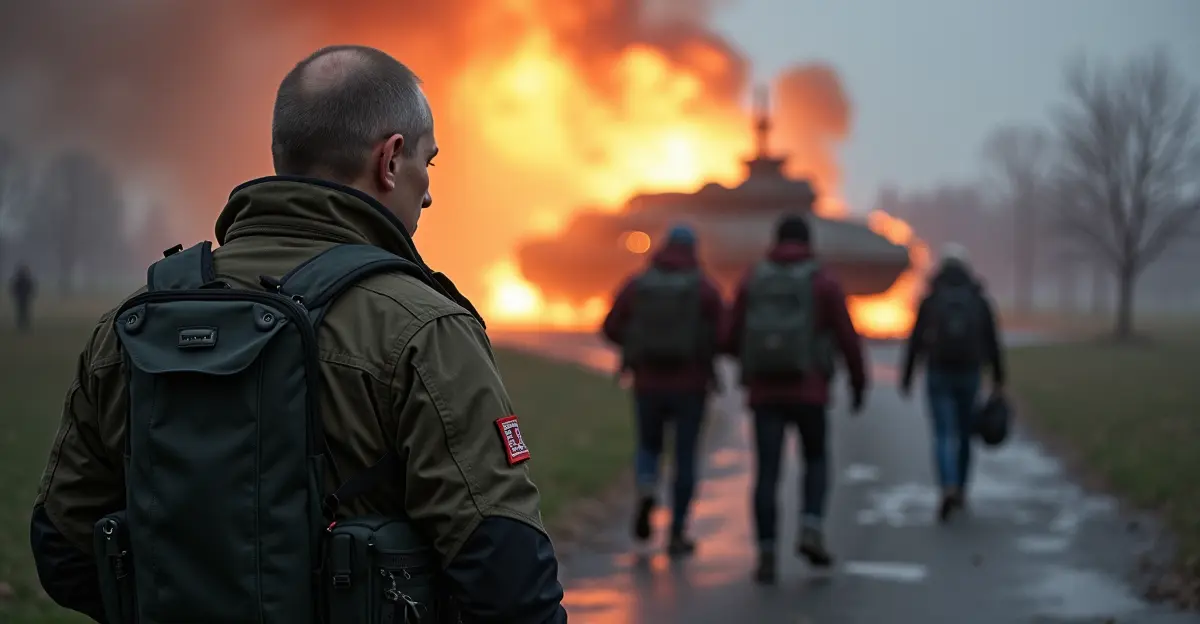
The forum opened just hours after Ukraine launched a major drone attack on St. Petersburg on June 3, striking an oil terminal and a naval corvette at the Kronstadt port. Two firefighters were killed extinguishing the blaze at the terminal. Zelensky referenced the attack in his letter, writing: 'Our drones have visited the opening of your summit in St. Petersburg, over 1,000 kilometers away. As you know, that distance is not the limit of our reach.'
Putin's speech at SPIEF focused on Russia's economic resilience and the shift toward a multipolar world order led by BRICS nations. He highlighted artificial intelligence, autonomous systems, and digital platforms as key future technologies. Notably, he made no mention of the war in Ukraine. Russia's wartime economy has shown signs of strain, with GDP contracting 0.2% in Q1 2026 and growth forecast at just 0.4%, according to The Moscow Times.
Zelensky's Response and the Diplomatic Impasse
Zelensky reacted swiftly to Putin's rejection, calling the Russian leader's response 'weak' and accusing Moscow of choosing war. In a post on X, the Ukrainian president wrote: 'Helaas kiest de Russische kant opnieuw voor oorlog. Hij wil de oorlog gewoon niet beëindigen.' He reiterated his call for increased international pressure on Russia and expressed disappointment that the Kremlin was unwilling to engage in meaningful dialogue.
The diplomatic standoff highlights the deep divisions between the two sides. US-mediated peace talks have made little progress, with Russia demanding Ukraine cede the entire Donbas region and drop its NATO aspirations, while Kyiv insists on a full withdrawal of Russian troops and security guarantees from Western allies. The Trump administration has been pushing for a negotiated settlement, but the gap between the parties remains wide.
Putin's Conditions for Talks
Putin laid out several conditions for any future negotiations. He stated that Russia seeks a 'comprehensive settlement,' not a temporary truce, and urged Ukraine to accept compromises discussed at his 2025 summit with Trump in Alaska. He also cited a May 22 drone attack by Ukraine on a college dormitory in Russian-controlled Luhansk that killed 21 people as evidence that Ukraine is not serious about peace. 'What is the point of such a meeting?' Putin asked. 'Is it meant to pave the way for personal meetings and negotiations, or to create an atmosphere in which holding such meetings becomes practically impossible?'
Impact and Implications
The rejection of Zelensky's offer has significant implications for the trajectory of the war. Ukrainian forces have been intensifying long-range drone strikes on Russian energy infrastructure, including the recent attack on St. Petersburg, while Russian troops continue to advance slowly in eastern Ukraine. The role of European military aid remains crucial for Kyiv's defense, with European countries pledging $90 billion in support for 2026-2027.
Analysts suggest that Putin's refusal to engage directly with Zelensky reflects a strategic calculation that time is on Russia's side. With Western attention divided and Ukraine facing manpower shortages, the Kremlin may believe it can achieve its military objectives without making concessions at the negotiating table. However, the economic costs of the war are mounting, and the SPIEF forum's focus on attracting foreign investment underscores Russia's need for economic partners beyond the West.
Wessel de Jong, a Russia and Ukraine correspondent, noted that Putin's SPIEF speech was disconnected from reality: 'He spoke about low unemployment without mentioning that all men are being sent to the front. He said industrial production is growing strongly without noting that a large part goes directly to the front. That doesn't contribute to the Russian economy — it goes straight up in smoke.'
Frequently Asked Questions
Why did Putin reject Zelensky's meeting invitation?
Putin stated he sees no point in a meeting with Zelensky, calling the Ukrainian president's open letter 'boorish' in tone. He said he would only consider talks once a deal is ready to be signed, and accused Ukraine of not being serious about peace.
What did Zelensky propose in his open letter?
Zelensky proposed a face-to-face meeting in a neutral country such as Switzerland or Turkey, with a full ceasefire during negotiations. He also offered a prisoner exchange and the involvement of the US and Europe in the talks.
What is SPIEF and why is it important?
The St. Petersburg International Economic Forum (SPIEF) is Russia's premier annual business event, often called the 'Russian Davos.' It brings together government leaders, CEOs, and experts to discuss economic policy and attract foreign investment. The 2026 forum drew 20,000 participants from over 100 countries.
How has the war in Ukraine affected Russia's economy?
Russia's GDP contracted 0.2% in Q1 2026 with growth forecast at just 0.4%. The country faces labor shortages due to military mobilization, and industrial production is increasingly directed toward the war effort rather than civilian economic growth.
What are the prospects for peace negotiations?
Prospects remain dim, with both sides far apart on key issues. Russia demands territorial concessions and neutrality from Ukraine, while Kyiv insists on full withdrawal of Russian troops and security guarantees. US-mediated talks have made little progress.
Follow Discussion