


 Deutsch
 English
 Español
 Français
 Nederlands
 Português


 Share
Share




Another Lethal Strike in the Eastern Pacific
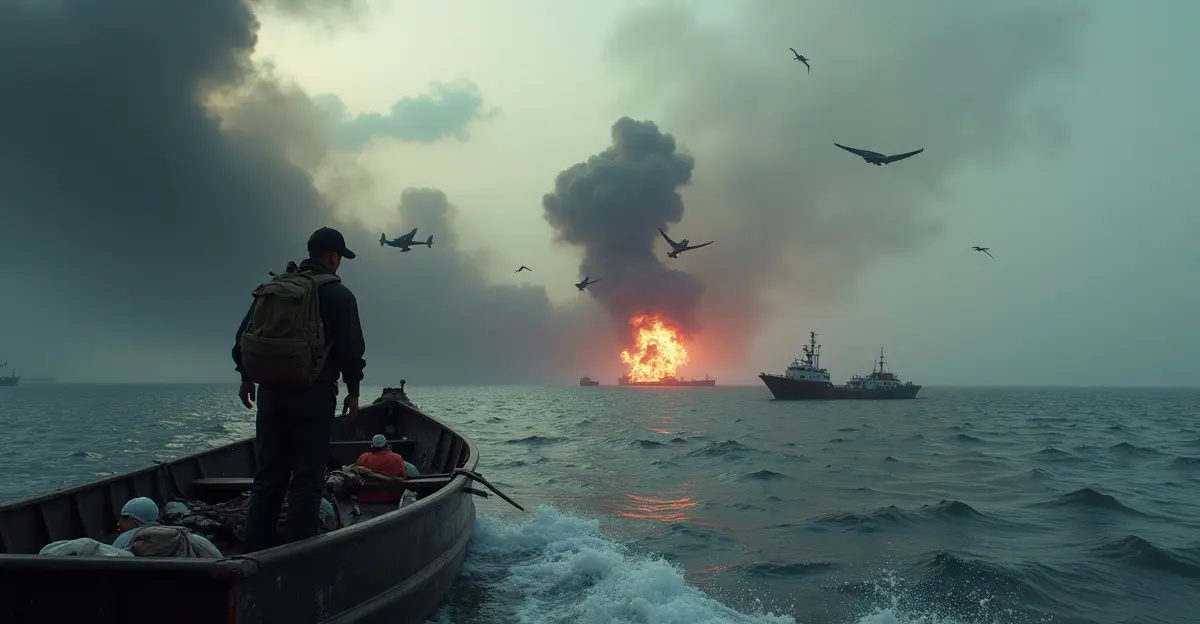
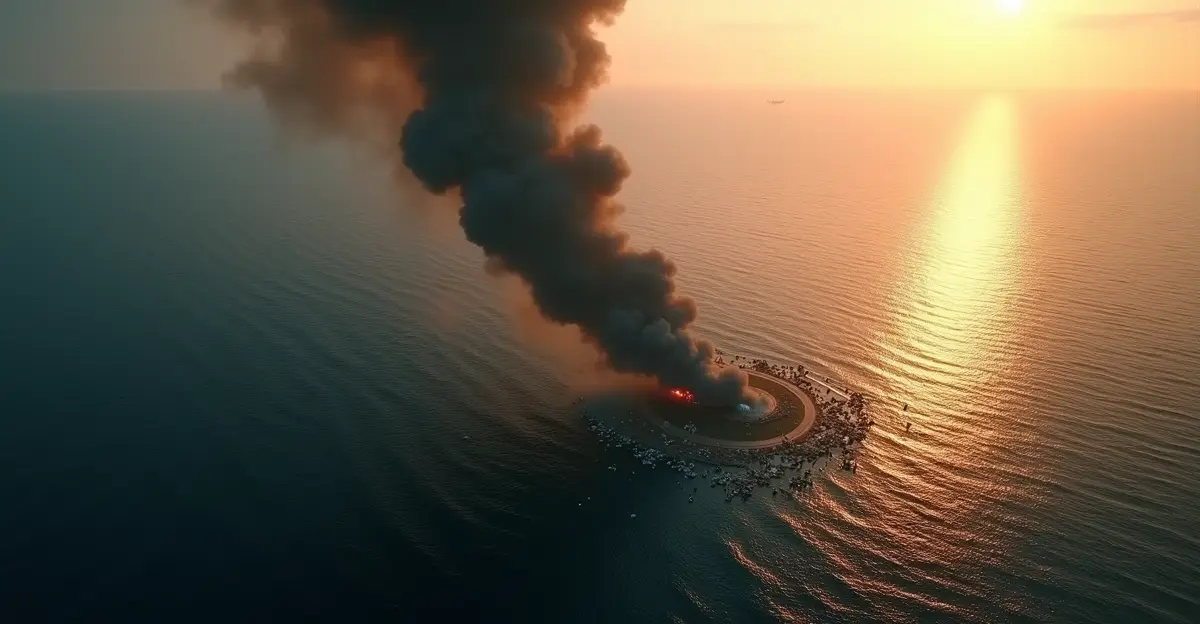
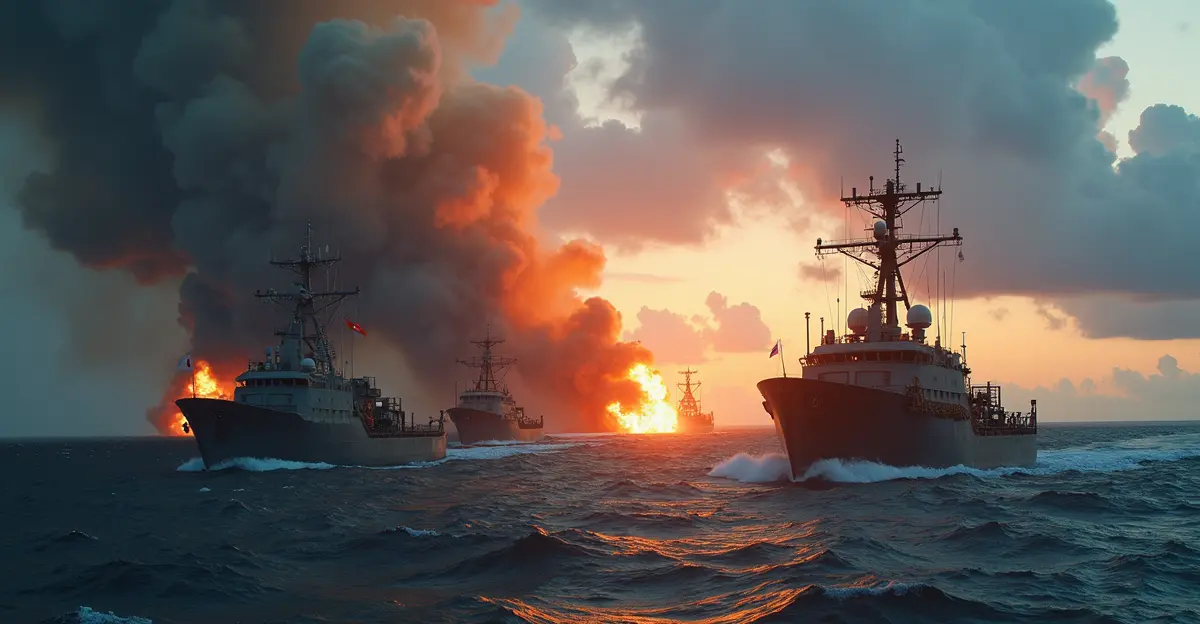
The United States military has carried out another strike on a suspected drug-smuggling vessel in the eastern Pacific Ocean, killing three men and pushing the overall death toll of the Trump administration's campaign above 200 people since September 2025. U.S. Southern Command (SOUTHCOM) announced the attack on May 30, 2026, stating that intelligence indicated the vessel was traveling along a known drug-smuggling route and was engaged in narco-trafficking operations by a designated terrorist organization. However, no public evidence has been provided to substantiate these claims.
This marks the second such attack in two days and the third this week, underscoring the intensifying pace of the US military strikes on drug boats in Latin American waters. Video footage released by SOUTHCOM, notably in color for the first time, shows the vessel being hit by an explosion that engulfed it in flames, with debris scattered across the water.
Background: The Campaign Since September 2025
President Donald Trump initiated the campaign in early September 2025, declaring that the United States is in a formal 'armed conflict' with Latin American drug cartels. The administration has designated several cartels as foreign terrorist organizations, including Venezuela's Tren de Aragua, and has authorized the military to use lethal force against vessels suspected of drug trafficking in the Caribbean Sea and eastern Pacific Ocean.
According to data tracked by The New York Times and confirmed by multiple news outlets, U.S. forces have conducted over 60 strikes since the campaign began, destroying at least 63 vessels and killing more than 200 people. The legal controversy over US boat strikes has intensified as the death toll has climbed, with critics arguing that the strikes amount to extrajudicial killings under international law.
Legal and Ethical Controversy
The legality of the strikes has been widely questioned by legal experts, human rights organizations, and members of Congress. Under international law, including the United Nations Convention on the Law of the Sea (UNCLOS) and the UN Charter, bombing vessels on the high seas without flag-state consent or Security Council authorization is likely unlawful. The Trump administration's reliance on self-defense arguments under Article 51 of the UN Charter has been described as 'extraordinarily thin' by maritime law experts.
Extrajudicial Killings Allegations
Human Rights Watch has documented at least 47 strikes as of March 2026, calling the deliberate use of lethal force outside of an armed conflict 'extrajudicial executions.' The organization argues that since there is no recognized armed conflict between the U.S. and drug-trafficking organizations in the region, lethal force is only lawful when strictly necessary to protect life — a standard the strikes do not meet.
Political scientist Friso Dubbelboer, a specialist in maritime conflicts, told Dutch broadcaster NOS that the administration's legal justification is 'extremely thin, if not absent,' and that Trump is undermining the law of the sea. Similarly, Senator Ruben Gallego (D-AZ) has called the strikes 'sanctioned murder,' while Senator Rand Paul (R-KY) described them as 'extrajudicial killings.'
Congressional Oversight and Pentagon Review
The Pentagon's internal watchdog has announced a self-initiated review to evaluate whether the military followed the established Joint Targeting Cycle framework during the strikes. However, the review will not examine the legality of the operations. Some lawmakers have raised concerns that a 'double tap' strike on September 2, 2025, which killed two survivors of an initial attack, could constitute a war crime.
Human Cost and Lack of Evidence
Despite the high death toll, the U.S. government has provided little to no public evidence linking the targeted vessels to drug trafficking or cartel affiliations. In several cases, survivors have been detained briefly and then returned to their home countries rather than prosecuted in U.S. courts. Colombian President Gustavo Petro has stated that at least one strike killed a fisherman, not a cartel member, calling the attacks 'murder.'
The impact of US drug boat strikes on regional relations has been significant, with Latin American governments expressing concern over the unilateral use of force in their waters. Brazil, Mexico, and Spain have pledged increased aid to Cuba, which has been affected by U.S. blockades in the region.
Strategic Implications and Cartel Response
While the Trump administration claims the strikes are necessary to stem the flow of drugs into the United States, analysts note that cocaine prices in U.S. cities have remained unchanged, and cartels have adapted by using alternative smuggling routes. Some experts suggest the real motive may be creating conditions for political change in Venezuela, whose interim government has begun cooperating with the U.S. on economic matters following the capture of former President Nicolás Maduro in January 2026.
The U.S. military's Southern Command, headed by General Francis L. Donovan, continues to conduct operations under the campaign codenamed Operation Southern Spear. Strikes have increased in frequency after a lull following Maduro's capture.
Frequently Asked Questions
What is the legal basis for US strikes on drug boats?
The Trump administration claims the U.S. is in a formal 'non-international armed conflict' with drug cartels designated as foreign terrorist organizations, and that strikes are justified under self-defense (Article 51 of the UN Charter). Critics argue this basis is legally unsound and that the strikes violate international humanitarian law and human rights law.
How many people have been killed in US drug boat strikes?
More than 200 people have been killed since the campaign began in September 2025, with at least 63 vessels destroyed. The death toll includes the three men killed in the May 30, 2026 strike.
Has the US provided evidence that the boats were smuggling drugs?
No. The U.S. government has not released any public evidence linking the targeted vessels to narcotics trafficking or cartel affiliations. Intelligence assessments remain classified, and no cargo has been publicly documented.
What is Operation Southern Spear?
Operation Southern Spear is the Pentagon's campaign against drug trafficking in Latin America, involving lethal kinetic strikes by U.S. Southern Command on vessels suspected of smuggling drugs in the Caribbean Sea and eastern Pacific Ocean.
Are the strikes legal under international law?
Most legal experts say no. The strikes likely violate the UN Charter (prohibition on use of force), the Law of the Sea (flag-state sovereignty), and international human rights law (right to life). The U.S. has not obtained Security Council authorization or flag-state consent.
Follow Discussion