


 Deutsch
 English
 Español
 Français
 Nederlands
 Português


 Share
Share




Latest Casualties in Trump's Drug War Campaign
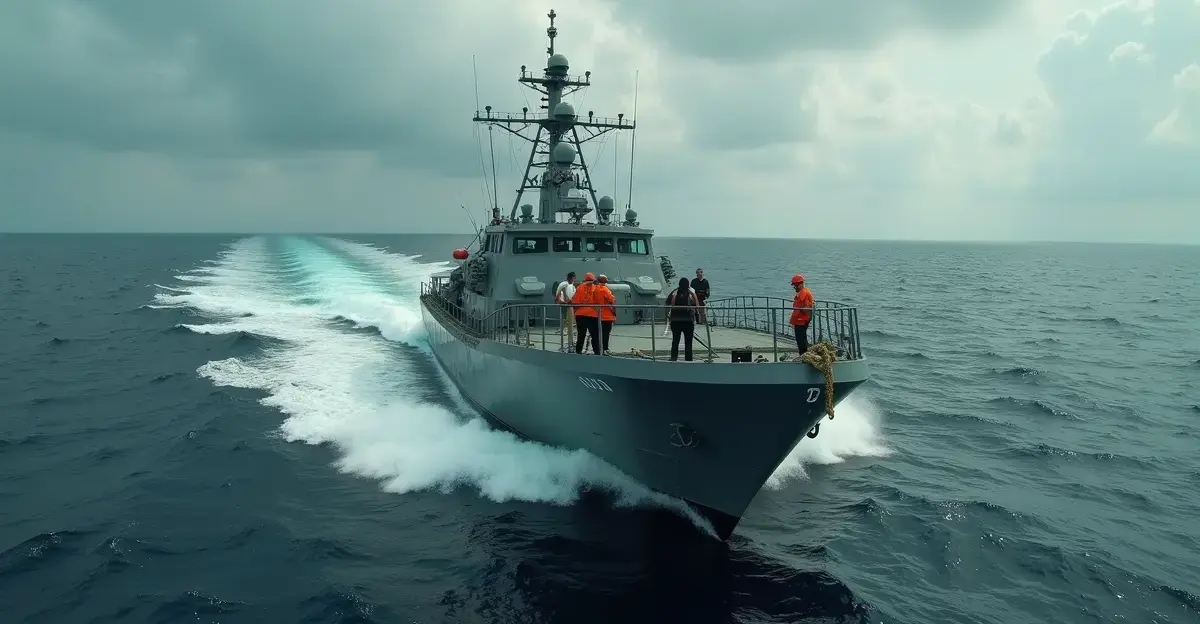
In the latest escalation of the United States' controversial maritime drug interdiction campaign, American forces conducted a lethal strike on an alleged drug-trafficking vessel in the eastern Pacific Ocean on February 5, 2026, killing two people. This marks the 38th vessel targeted since September 2025 as part of Operation Southern Spear, bringing the total death toll to at least 128 people.
Military Claims vs. Legal Concerns
U.S. Southern Command stated the boat was operating on 'known narco-trafficking routes' and was operated by what they called 'drugs-terrorists.' Defense Secretary Hegseth claimed that 'some major drug traffickers have decided to stop their activities because of the recent - very effective - attacks in the Caribbean.' However, military officials have acknowledged they don't know the identities of everyone on board the destroyed vessels.
'We are at war with drug cartels from Latin America, and that's why it's necessary to attack the boats,' President Trump has previously stated, framing the operations as part of a broader conflict against narcotics trafficking.
Growing Controversy and Casualties
The strikes have sparked intense debate about their legality and effectiveness. According to CNN reporting, military lawyers have stated the strikes 'don't appear lawful' under current legal frameworks. Critics argue that suspected traffickers should face prosecution rather than lethal force without due process.
The operations began in September 2025 when Trump announced the first strike on a Venezuelan speedboat that killed 11 people. Since then, the campaign has expanded from the Caribbean to the Eastern Pacific, with strikes occurring approximately every few weeks.
International and Domestic Backlash
Human rights organizations and international bodies have condemned the strikes as potential violations of international law. The Venezuelan and Colombian governments have accused the U.S. of extrajudicial murder, while some experts question whether the operations constitute a legitimate armed conflict under international law.
Congress has shown rare bipartisan concern, with lawmakers from both parties questioning the legal basis and transparency of the operations. 'These strikes represent a dangerous expansion of presidential power without proper congressional oversight,' noted one Democratic senator who spoke on condition of anonymity.
The latest attack comes amid heightened tensions in the region following the U.S. capture of Venezuelan President Nicolás Maduro in January 2026, which has further complicated the geopolitical landscape of Latin American drug interdiction efforts.
Follow Discussion