


 Deutsch
 English
 Español
 Français
 Nederlands
 Português


 Share
Share




China's 2026 export controls on rare earths and critical minerals have triggered price spikes of up to sixfold on key materials, with European licensing approval rates falling below 25%. As Beijing controls roughly 90% of global rare earth processing, 80% of tungsten, and 60% of antimony, Western nations face a strategic vulnerability that analysts warn could take 20–30 years to independently rebuild. This article examines how China is weaponizing control rather than scarcity, the U.S. response via FORGE and Project Vault's $10 billion strategic reserve, and the narrowing 12–18 month window for allies to act before dependency becomes entrenched.
China's Export Control Regime: Weaponizing Processing Dominance
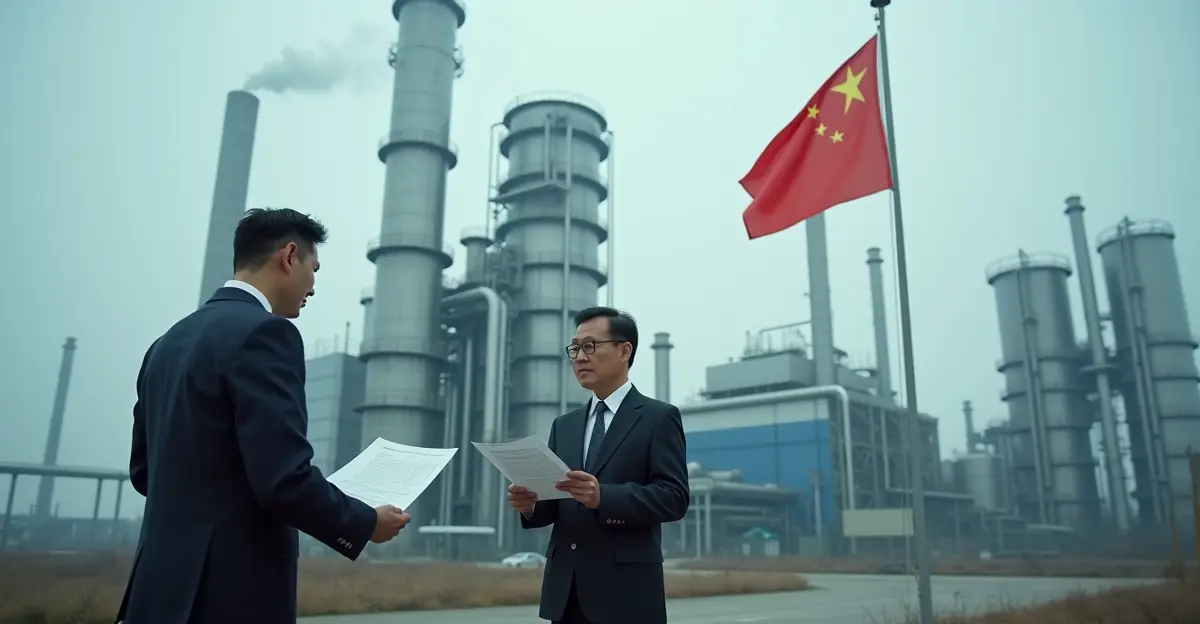
In 2025, China introduced two waves of export controls on rare earth elements and related technologies, with the second wave suspended until November 2026. These measures built on restrictions first implemented in 2016, but the 2025–2026 controls are far more aggressive. According to a multi-institutional analysis published in early 2026, the controls have driven price spikes of up to sixfold outside China for key rare earth oxides and metals. European companies now face licensing approval rates below 25%, effectively cutting off supply for many downstream manufacturers.
The global rare earth supply chain is dominated by China at every stage. The International Energy Agency estimated that China accounted for about 91% of global separation and refining production and 94% of sintered permanent magnet production in 2024. The United States Geological Survey reported China's reserves at 44 million tonnes of rare earth oxide equivalent in its February 2026 Mineral Commodity Summaries. China also holds 81% of rare-earth-related patent families filed globally between 2014 and 2024.
Analysts argue that Beijing is weaponizing control rather than scarcity. By using temporary, reversible restrictions, China maintains pricing power and extracts strategic concessions without permanently damaging its own export industry. Over 80% of European firms depend on Chinese supply chains for materials essential to defense, electric vehicles, and renewable energy. European defense contractors face shortages of magnets for missile guidance systems and F-35 components, while EV production costs outside China have risen by an estimated $500 per vehicle.
The U.S. Response: FORGE and Project Vault
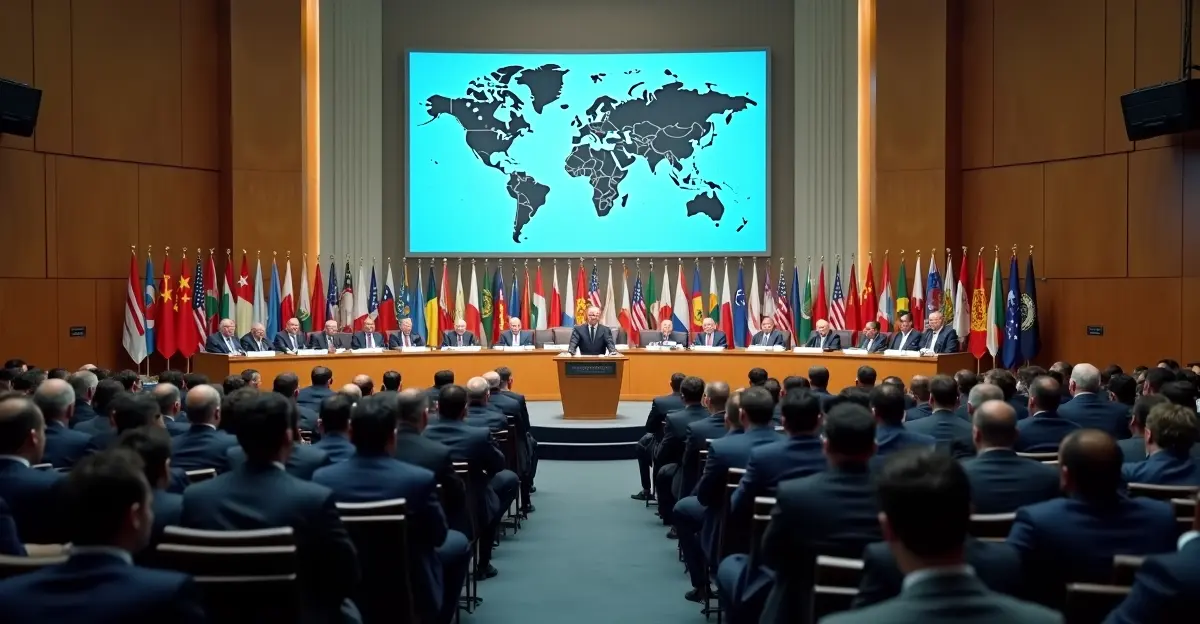
On February 4, 2026, the U.S. Department of State hosted the inaugural Critical Minerals Ministerial, led by Secretary Marco Rubio and Vice President JD Vance, with representatives from 54 countries and the European Commission. The centerpiece was the launch of the Forum on Resource Geostrategic Engagement (FORGE), a plurilateral coalition creating a preferential trade-and-investment zone with coordinated price floors to counter adversarial market manipulation. FORGE succeeds the Minerals Security Partnership with sharper enforcement mechanisms, including adjustable tariffs to uphold pricing integrity. South Korea will chair FORGE through June 2026.
The ministerial produced eleven new bilateral critical minerals framework agreements with countries including Argentina, Morocco, Peru, the Philippines, the UAE, and the UK, bringing the total to twenty-one deals in five months. The U.S. has mobilized over $30 billion in investments and support for critical mineral projects worldwide.
Alongside FORGE, the Export-Import Bank of the United States launched Project Vault critical minerals reserve, a $12 billion initiative backed by a $10 billion EXIM loan and nearly $2 billion in private investment. Project Vault establishes the U.S. Strategic Critical Minerals Reserve, a public-private partnership that will store essential raw materials in secure facilities across the United States. Modeled after the Strategic Petroleum Reserve, it aims to reduce supply disruptions and price volatility by allowing companies to secure minerals at fixed prices. Industry leaders from GE Vernova, Mercuria, Traxys, Hartree, Clarios, and Boeing have praised the initiative as transformative for American manufacturing and energy security.
The OECD Warning and the 12–18 Month Window
The OECD's 2026 Inventory of Export Restrictions on Critical Raw Materials warns that export curbs are tightening control over global trade of critical minerals essential for batteries, electronics, and renewable energy systems. The OECD emphasizes the need for coordinated international strategies, recycling of rare earths, diversification of supply sources, and responsible mining practices. Even as U.S. allies ramp up new mining and processing projects in Australia, Canada, and Europe, the OECD cautions that these efforts carry significant environmental, financial, and geopolitical risks, including high costs, long timelines, and the risk of oversupply.
Analysts warn that Western nations face a narrowing 12–18 month window to act decisively before dependency on Chinese processing becomes entrenched. Building new processing facilities takes a minimum of 12–18 months, with full-scale independence requiring 5–7 years. Rebuilding the entire rare earth supply chain outside China could take 20–30 years. Three strategic paths exist: managed dependence, costly independence, or a hybrid model balancing resilience and realism.
The critical minerals geopolitical race is accelerating. China's export controls have already reshaped global supply chains in real time, and the U.S. response through FORGE and Project Vault represents the most ambitious Western effort to date. However, the gap between ambition and execution remains wide. As one analyst noted, "The next 12 to 18 months will determine whether Western diversification efforts can break Beijing's entrenched processing monopoly or whether the world accepts a new era of strategic dependence."
Impact on Key Industries
The effects of China's export controls ripple across multiple sectors. In defense, European contractors face shortages of rare earth magnets critical for missile guidance systems, F-35 components, and precision munitions. In electric vehicles, production costs outside China have risen by an estimated $500 per vehicle, threatening the competitiveness of Western automakers. Renewable energy projects relying on wind turbines with permanent magnet generators face delays and cost overruns. Consumer electronics manufacturers are scrambling to secure supply of neodymium, praseodymium, and dysprosium for hard drives, speakers, and vibration motors.
The rare earth magnet supply chain is particularly vulnerable. China controls 94% of sintered permanent magnet production, and no Western country has a commercially viable magnet manufacturing facility at scale. The U.S. Department of Defense has identified permanent magnets as a critical national security risk, and several startups are racing to build domestic magnet production capacity, but commercial-scale operations remain years away.
Expert Perspectives
Industry experts and policymakers have weighed in on the crisis. EXIM Chairman Jovanovic stated that Project Vault is "a transformative step for American manufacturing, energy security, and economic competitiveness." However, analysts at the Center for Strategic and International Studies (CSIS) caution that while the U.S. response is significant, the country remains far from true resilience. A CSIS report from early 2026 notes that the United States still lacks commercial-scale rare earth processing capacity and remains dependent on China for intermediate and finished products.
European officials have expressed frustration with the pace of diversification. The European Commission has proposed a Critical Raw Materials Act with targets for domestic processing capacity, but implementation lags. European defense contractors have warned that without immediate action, weapons production could be disrupted within 12 months.
Frequently Asked Questions
What are China's 2026 rare earth export controls?
China's 2026 export controls are restrictions on the export of rare earth elements, tungsten, antimony, and related processing technologies. They include licensing requirements, quotas, and outright bans on certain materials. The controls were introduced in two waves in 2025, with the second wave suspended until November 2026.
Why is China's rare earth processing dominance a strategic vulnerability?
China controls approximately 90% of global rare earth processing and 94% of permanent magnet production. This concentration means that any disruption to Chinese supply — whether from export controls, geopolitical tensions, or natural disasters — could cripple industries from defense to electronics to renewable energy in Western countries.
What is FORGE?
The Forum on Resource Geostrategic Engagement (FORGE) is a plurilateral coalition launched by the United States in February 2026. It creates a preferential trade-and-investment zone with coordinated price floors to counter adversarial market manipulation. FORGE includes 54 countries and is chaired by South Korea through June 2026.
What is Project Vault?
Project Vault is a $12 billion initiative backed by the U.S. Export-Import Bank to establish the U.S. Strategic Critical Minerals Reserve. It is a public-private partnership that will store essential raw materials in secure facilities across the United States, modeled after the Strategic Petroleum Reserve.
How long will it take to rebuild rare earth supply chains outside China?
Analysts estimate that building new processing facilities takes 12–18 months minimum, with full-scale independence requiring 5–7 years. Rebuilding the entire rare earth supply chain outside China — from mining to magnet manufacturing — could take 20–30 years.
Conclusion: The Window Is Closing
China's 2026 export controls represent the most aggressive use of rare earth leverage in history. By weaponizing processing dominance rather than resource scarcity, Beijing has created a strategic vulnerability that Western nations are only beginning to address. The U.S. response through FORGE and Project Vault is ambitious, but the gap between announced plans and operational capacity remains vast. The next 12–18 months will be critical. If Western nations fail to build alternative processing capacity and secure supply chains, the world may face a prolonged period of strategic dependence on China for the materials that power modern technology, defense, and clean energy.
For further reading, see the OECD critical raw materials report 2026 and the CSIS rare earth export restrictions analysis.




Follow Discussion