


 Deutsch
 English
 Español
 Français
 Nederlands
 Português


 Share
Share




NASA Launches Unprecedented Rescue Mission for Aging Swift Telescope
NASA is preparing a groundbreaking rescue mission to save its aging Swift Gamma-Ray Burst Explorer, a space telescope that has been slowly falling back to Earth due to atmospheric drag. The mission, involving a specially designed spacecraft named Link, aims to boost the telescope into a higher orbit and extend its scientific life. This unprecedented operation could mark a turning point in satellite servicing and space sustainability.
Launched in 2004, the Swift telescope has been instrumental in detecting gamma-ray bursts, the most powerful explosions in the universe. After 22 years in orbit, Swift's instruments remain functional, but its altitude has dropped from approximately 600 kilometers to around 400 kilometers due to collisions with atmospheric particles. Without intervention, the 840-kilogram observatory could re-enter Earth's atmosphere within months.
Why Swift Needs a Rescue
Swift was originally designed for a two-year mission but has far exceeded expectations. However, its low orbit makes it vulnerable to atmospheric drag, which accelerated significantly during solar storms in 2024. Unlike many modern satellites, Swift lacks a propulsion system, making it unable to raise its own orbit.
NASA's Goddard Space Flight Center, which operates the mission, recognized the urgency. "If Swift drops below 300 kilometers, re-entry could happen very quickly," said Shawn Domagal-Goldman, a NASA manager overseeing the rescue. The agency contracted Katalyst Space, an American aerospace company, to develop a solution in record time.
The Link Spacecraft: A Robotic Tugboat
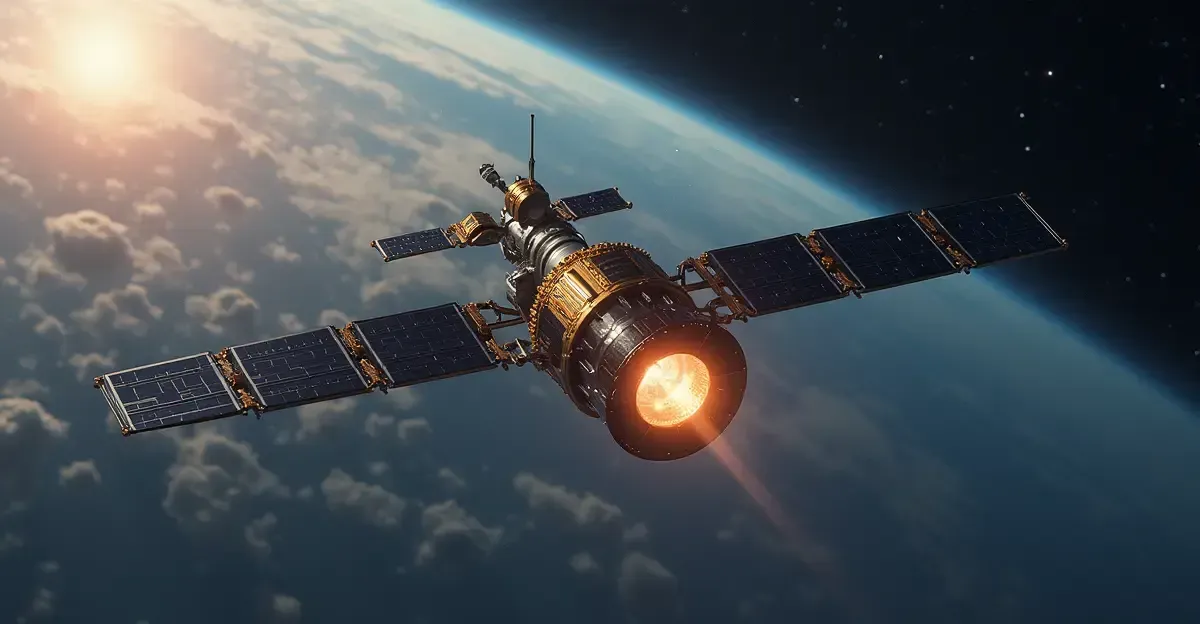
The rescue vehicle, named Link, is designed to act as a space tugboat. Unlike typical docking missions, Swift was not built for rendezvous or attachment. Link will use three robotic arms to grasp the telescope securely. The spacecraft will then fire its thrusters to lift Swift back to a safer orbit.
Rob Line of Katalyst Space explained the ambition: "We want to end the throwaway culture in space. We want to refuel, relocate, and repair satellites, even if they weren't built for it."
This mission is the first of its kind for an uncrewed, non-cooperative satellite. The challenge is immense: Link must approach Swift, match its orbit, and physically clamp onto a structure never intended for grappling.
Launch and Timeline
The rescue mission is scheduled to launch as soon as Tuesday. Link will ride a Pegasus XL rocket, which is air-launched from beneath a carrier aircraft. This method allows for greater flexibility in reaching Swift's orbital plane. After launch, Link will take approximately two weeks to rendezvous with the telescope. It will first conduct a photographic survey to assess any damage before attempting attachment.
If successful, Link will boost Swift to its original operational altitude, potentially extending its mission for several more years.
Implications for Space Sustainability
The Swift rescue is more than a single mission; it represents a paradigm shift in how humanity manages space assets. With thousands of satellites in low Earth orbit, the ability to service and reposition them could reduce space debris and lower replacement costs. Similar to the growing problem of orbital debris, this mission could pave the way for routine satellite maintenance.
NASA's Domagal-Goldman noted the rapid development: "Honestly, nobody thought it would be possible. Nobody thought we would get this far as we have today."
The success of Link could inspire a new industry of in-orbit servicing, with companies like Katalyst Space leading the charge. The technology could also be adapted for future missions to the Lunar Gateway or Mars spacecraft, where repair capabilities will be essential.
What's Next for Swift?
If the rescue succeeds, Swift will continue its scientific observations, focusing on gamma-ray bursts, supernovae, and other transient phenomena. The telescope has already contributed to thousands of scientific papers and remains a critical asset for multi-wavelength astronomy.
NASA and Katalyst Space will monitor the mission closely. The data gathered from this operation will inform future satellite designs, potentially including standardized docking ports for all new spacecraft.
Frequently Asked Questions
What is the Swift telescope?
The Neil Gehrels Swift Observatory, formerly the Swift Gamma-Ray Burst Explorer, is a NASA space telescope launched in 2004 to study gamma-ray bursts and other cosmic explosions.
Why is Swift falling to Earth?
Swift orbits at an altitude where residual atmospheric particles create drag, slowing the telescope and causing its orbit to decay. Solar storms in 2024 accelerated this process.
How will the Link spacecraft rescue Swift?
Link will rendezvous with Swift, use three robotic arms to grip the telescope, and then fire its thrusters to raise Swift's orbit.
When will the rescue mission launch?
The launch is scheduled for as early as Tuesday, using a Pegasus XL rocket air-launched from a carrier aircraft.
Could this technology be used for other satellites?
Yes, Katalyst Space aims to demonstrate that in-orbit servicing is viable for satellites not originally designed for it, potentially reducing space debris and extending satellite lifespans.





Follow Discussion