


 Deutsch
 English
 Español
 Français
 Nederlands
 Português


 Share
Share




Port Automation Pilot Demonstrates Throughput Gains: Operational Efficiency Meets Workforce Transition
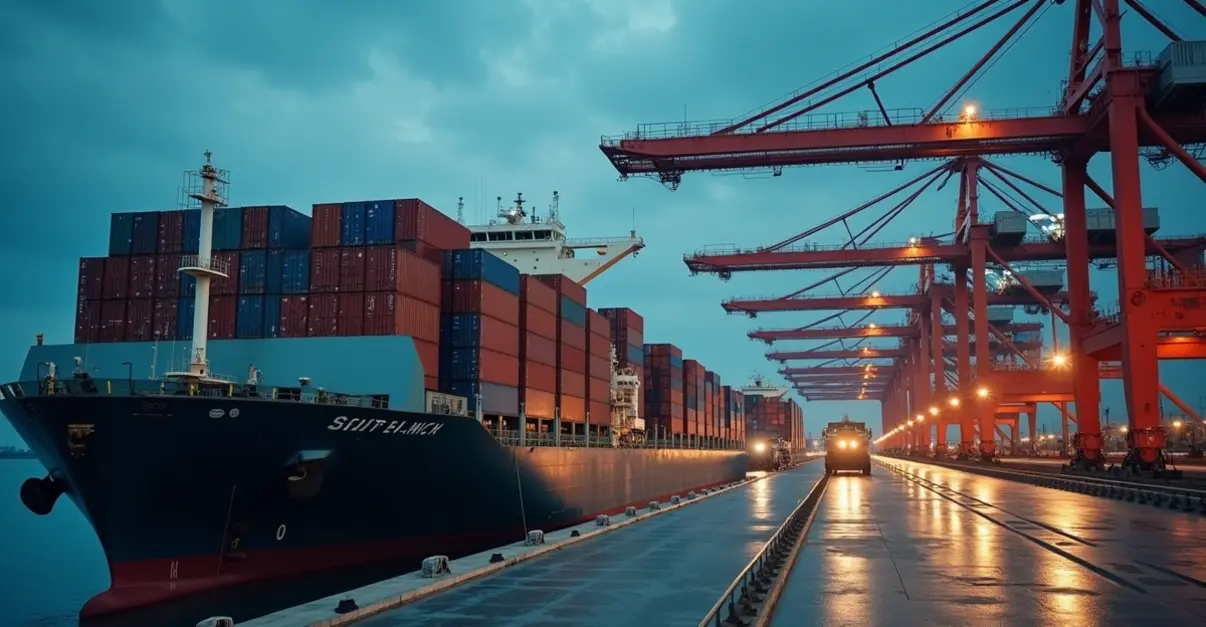
In a landmark development for global maritime logistics, recent port automation pilot projects have demonstrated significant throughput gains while simultaneously addressing critical workforce transition challenges. As global trade volumes continue to escalate, ports worldwide are embracing automation technologies to enhance operational efficiency, with pilot programs showing container throughput increases of 15-25% alongside innovative approaches to workforce retraining and labor agreements. The maritime logistics transformation represents a pivotal moment in supply chain modernization, balancing technological advancement with human capital considerations.
What is Port Automation?
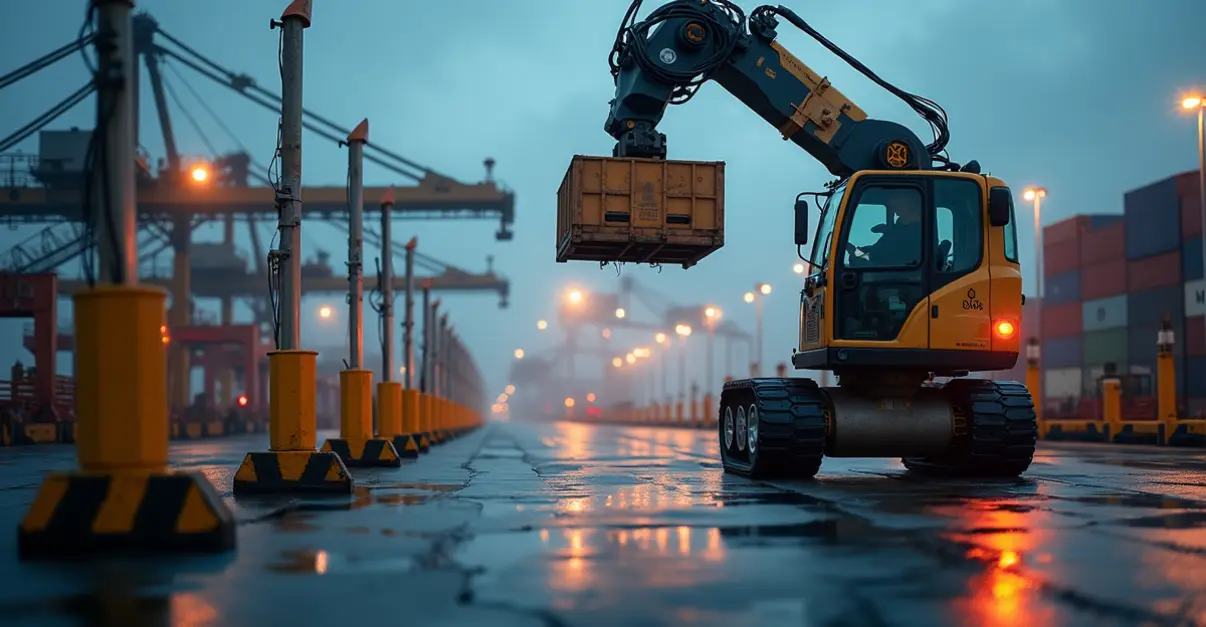
Port automation refers to the integration of advanced technologies like automated guided vehicles (AGVs), automated stacking cranes, and artificial intelligence systems into container terminal operations. These systems work in concert to streamline cargo handling, reduce turnaround times, and optimize yard management without constant human intervention. According to recent industry reports, the global container port automation market is projected to reach US$222.1 billion in 2026, growing to US$316.5 billion by 2034 with a 4.53% compound annual growth rate.
Throughput Gains: The Numbers Speak
Recent pilot projects across major global ports have yielded impressive efficiency improvements. China's Qingdao Port, operational since 2023, has achieved a 15% increase in container throughput alongside a 6% improvement in operating efficiency. Its single bridge crane set a global record for automated terminal handling efficiency at 60.9 container units per hour. Similarly, Yantai Port's automated ore terminal shows 20% efficiency gains in bulk cargo operations.
European ports are reporting comparable results. Major ports like Rotterdam's Maasvlakte II and PSA Singapore's Tuas Mega Port report 20-25% reductions in vessel turnaround times through automation. These improvements translate directly to supply chain resilience, with automation solutions addressing port congestion by cutting truck waiting times up to 40% through gate automation and optimized scheduling systems.
Key Technologies Driving Efficiency
The automation revolution in ports is powered by several core technologies:
- Automated Guided Vehicles (AGVs): Driverless vehicles that transport containers between ships and storage yards
- Automated Stacking Cranes: Computer-controlled cranes that organize containers in storage yards
- AI-Powered Optimization Systems: Machine learning algorithms that predict vessel arrivals and optimize yard planning
- Real-Time Tracking Systems: Digital platforms providing end-to-end container visibility
- Gate Automation: Automated check-in systems reducing truck processing times
Workforce Transition: The Human Element
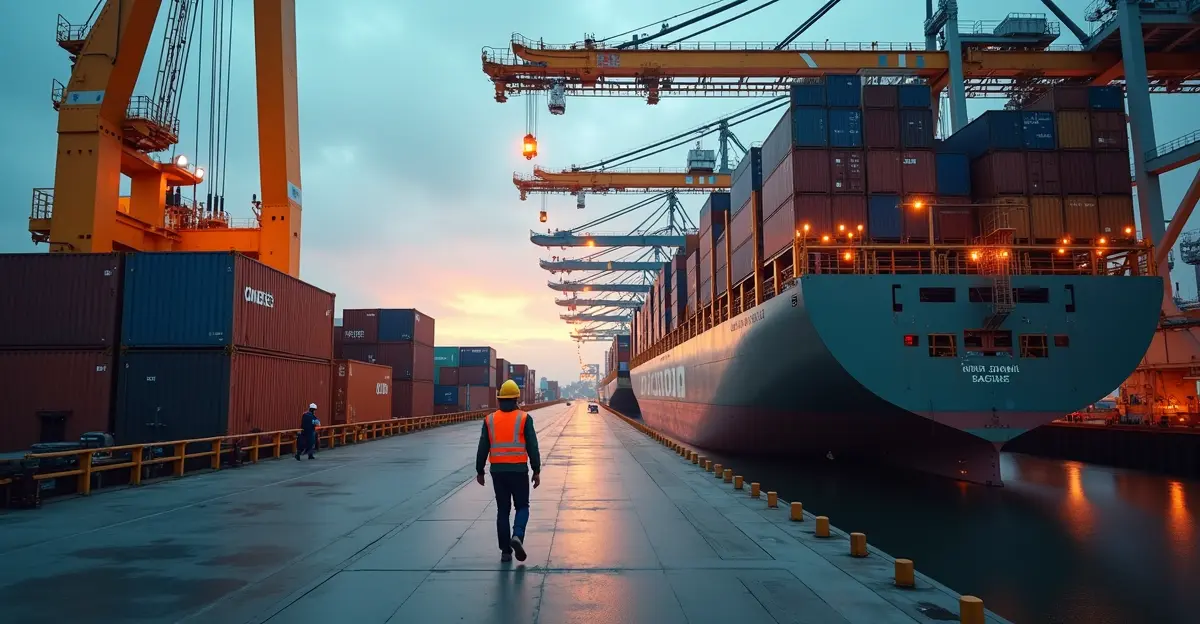
Perhaps the most significant development in recent port automation initiatives is the comprehensive approach to workforce transition. The historic six-year labor agreement between the International Longshoremen's Association (ILA) and United States Maritime Alliance (USMX), ratified with nearly 99% approval, establishes a groundbreaking blueprint for automation while protecting approximately 45,000 dockworkers across 14 East and Gulf Coast ports.
The agreement's core innovation is an automation framework that prohibits fully automated systems while allowing semi-automated technology with a crucial 'one-for-one' provision: for every semi-automated crane implemented, employers must create one additional job. This balanced approach demonstrates how labor technology integration can succeed in modern industrial settings.
Training Programs and Economic Benefits
The landmark agreement includes comprehensive training programs to equip employees with skills to operate automated systems, ensuring sustainable port development while maintaining job retention. Economic benefits are substantial, with a 62% wage increase over six years, restored container royalty payments, and enhanced healthcare benefits. Each port implements customized strategies recognizing unique operational needs, with major ports like New York/New Jersey adopting semi-automated rail-mounted gantry cranes and real-time tracking systems.
Scale-Up Considerations and Implementation Challenges
While pilot projects demonstrate clear benefits, scaling automation across entire port ecosystems presents significant challenges. A March 2024 GAO report reveals that all 10 largest U.S. container ports have adopted some automation technologies, with at least one terminal at each port using process automation for tracking and communicating container movements. However, only four ports use automated cargo handling equipment at scale.
Research from Mediterranean ports highlights that automation alone does not guarantee higher efficiency unless effectively integrated with adequate staff training and gradual investment strategies. The study of 20 container ports found that cargo intensity (TEUs per call) plays a more significant role in port performance than automation alone, highlighting the importance of vessel size and cargo concentration.
Implementation Framework
Successful automation implementation requires a structured approach:
- Phased Rollout: Gradual implementation allowing for system testing and workforce adaptation
- Stakeholder Engagement: Continuous dialogue between management, labor unions, and technology providers
- Infrastructure Assessment: Evaluation of existing systems and compatibility with new technologies
- Performance Metrics: Clear benchmarks for throughput, efficiency, and workforce impact
- Continuous Training: Ongoing education programs for both existing and new employees
Global Perspectives and Regional Variations
Automation adoption varies significantly by region. China has established global leadership with 52 automated dry bulk and container terminals constructed so far, the highest number worldwide according to the Ministry of Transport. Asia-Pacific leads in smart port development with Singapore and Shanghai setting benchmarks, while Europe and North America focus on retrofit projects of existing infrastructure.
The global supply chain optimization landscape shows distinct regional approaches. European ports emphasize environmental sustainability alongside efficiency, while U.S. ports balance automation with complex labor agreements. Emerging markets often leapfrog directly to advanced systems, avoiding legacy infrastructure constraints.
Future Outlook and Industry Implications
The successful integration of automation with workforce transition programs creates a powerful template for industrial modernization across sectors. As ports continue their digital transformation, several trends are emerging:
- AI Integration: Advanced machine learning for predictive maintenance and optimization
- Digital Twins: Virtual replicas of port operations for simulation and planning
- Blockchain Integration: Secure, transparent documentation and tracking systems
- Green Automation: Energy-efficient systems reducing carbon footprints
- Intermodal Connectivity: Seamless integration with rail and truck transportation
The industrial automation revolution in ports demonstrates that technological advancement and workforce protection are not mutually exclusive. Rather, they can reinforce each other when approached with careful planning, stakeholder engagement, and phased implementation.
Frequently Asked Questions (FAQ)
What are the main benefits of port automation?
Port automation delivers 15-25% increases in container throughput, 20-40% reductions in truck waiting times, improved safety by separating humans from machinery, and enhanced operational predictability through data-driven optimization.
How does automation affect port workers?
Modern automation agreements include job protection clauses, retraining programs, and often create new technical positions. The ILA-USMX agreement includes a 'one-for-one' provision ensuring job creation alongside automation implementation.
What is the cost of implementing port automation?
Initial investments range from tens to hundreds of millions depending on port size, but ROI typically occurs within 3-5 years through efficiency gains, reduced labor costs, and increased throughput capacity.
Which ports are leading in automation adoption?
China leads globally with 52 automated terminals, followed by Singapore's Tuas Mega Port, Rotterdam's Maasvlakte II, and major U.S. ports including Los Angeles, Long Beach, and New York/New Jersey.
How long does automation implementation take?
Full implementation typically requires 2-4 years, including planning, infrastructure upgrades, technology installation, testing, and workforce training phases.
Conclusion
The port automation revolution represents a transformative moment in global logistics, demonstrating that technological efficiency and workforce stability can coexist through thoughtful planning and collaborative agreements. As pilot projects continue to show impressive throughput gains of 15-25%, the industry is developing sophisticated frameworks for scaling these benefits while ensuring equitable workforce transitions. The success of recent labor agreements and training programs provides a blueprint for other industries facing similar automation challenges, proving that modernization need not come at the expense of human capital.



Follow Discussion