


 Deutsch
 English
 Español
 Français
 Nederlands
 Português


 Share
Share




What Happened: Vatican Declares SSPX in Schism
On July 2, 2026, the Vatican's Dicastery for the Doctrine of the Faith issued a formal decree declaring the excommunication of six bishops and the entire Priestly Fraternity of Saint Pius X (SSPX) to be in a state of schism. The unprecedented action follows the SSPX's unauthorized consecration of four new bishops on July 1, 2026, in Écône, Switzerland, without papal mandate and against the explicit warnings of Pope Leo XIV. The move marks the most severe rupture between the Holy See and the traditionalist movement since the 1988 excommunication of SSPX founder Archbishop Marcel Lefebvre.
Background: The SSPX and Its Conflict with Rome
The Society of Saint Pius X, also known as the Lefebvrists, was founded in 1970 by French Archbishop Marcel Lefebvre in opposition to the liturgical and doctrinal reforms of the Second Vatican Council (1962–1965). The SSPX rejects the Novus Ordo Mass, insisting on the exclusive use of the Tridentine Latin Mass and pre-conciliar liturgical books. The group argues that the post-conciliar Church has abandoned the true faith. For decades, the Vatican attempted reconciliation, but the SSPX refused to accept key council teachings, including religious liberty, ecumenism, and collegiality.
In 1988, Lefebvre consecrated four bishops without papal approval, incurring automatic excommunication. Pope Benedict XVI lifted those excommunications in 2009 as a gesture of goodwill, but the SSPX's canonical status remained unresolved. Pope Francis later granted limited faculties for SSPX priests to hear confessions (2017) and officiate marriages, but the underlying doctrinal disagreements persisted. In February 2026, the SSPX announced plans to consecrate new bishops, citing the advanced age of its remaining two bishops (Alfonso de Galarreta and Bernard Fellay) and the need to ensure apostolic succession. The Vatican repeatedly urged the society to halt, but the SSPX proceeded.
The traditionalist Catholic movement has long been a source of tension within the Church, and this latest crisis has intensified calls for clarity on the limits of dissent.
The July 1 Consecration and Vatican Response
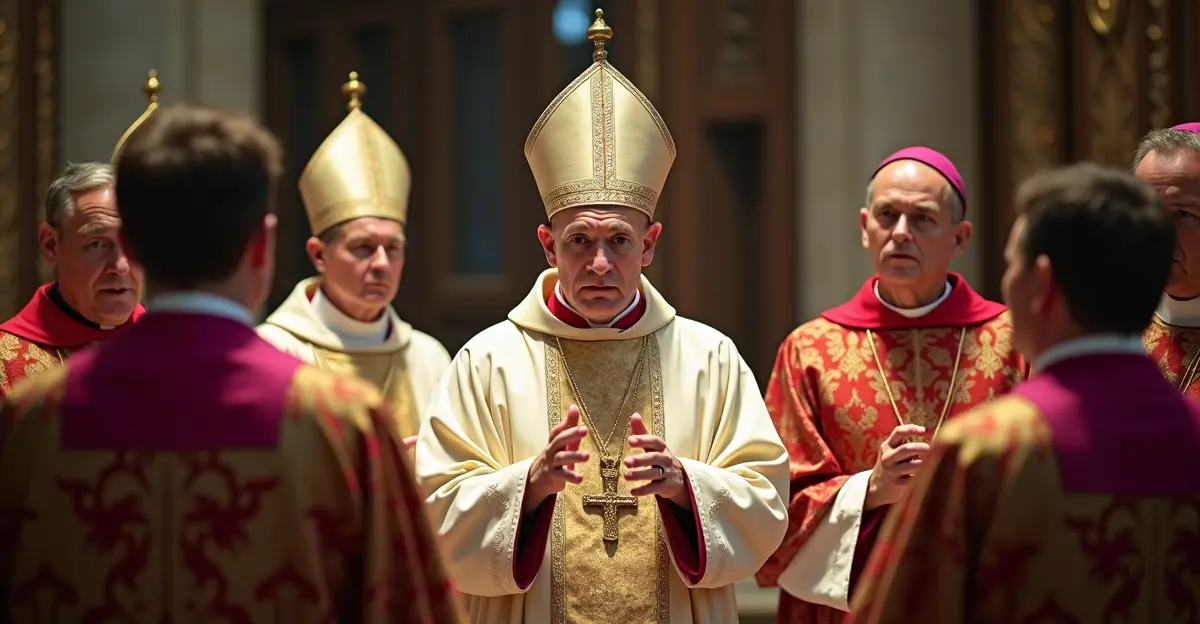
On July 1, 2026, in the presence of thousands of faithful at the SSPX's international seminary in Écône, Switzerland, Bishop Alfonso de Galarreta, assisted by Bishop Bernard Fellay as co-consecrator, ordained four new bishops: Pascal Schreiber, Michael Goldade, Michel Poinsinet de Sivry, and Marc Hanappier. The ceremony went ahead despite a personal letter from Pope Leo XIV on June 29, in which he pleaded, 'Please turn back! To tear the seamless garment of Christ is a sin of extreme gravity.'
The next day, the Dicastery for the Doctrine of the Faith issued a decree declaring that the consecrators and the newly consecrated had incurred automatic (latae sententiae) excommunication, reserved to the Apostolic See. The decree further stated that the SSPX as a body is in schism, warning that any Catholic clergy or laity who formally adhere to the society also risk excommunication. The Vatican also rescinded the 2017 faculties for confessions and marriages, ruling that schismatics lack the jurisdiction necessary for the valid administration of those sacraments.
In a press conference, Cardinal Víctor Manuel Fernández, prefect of the Dicastery, said: 'The Church has done everything possible to avoid this break. The SSPX has chosen separation. We pray that they will return to full communion.'
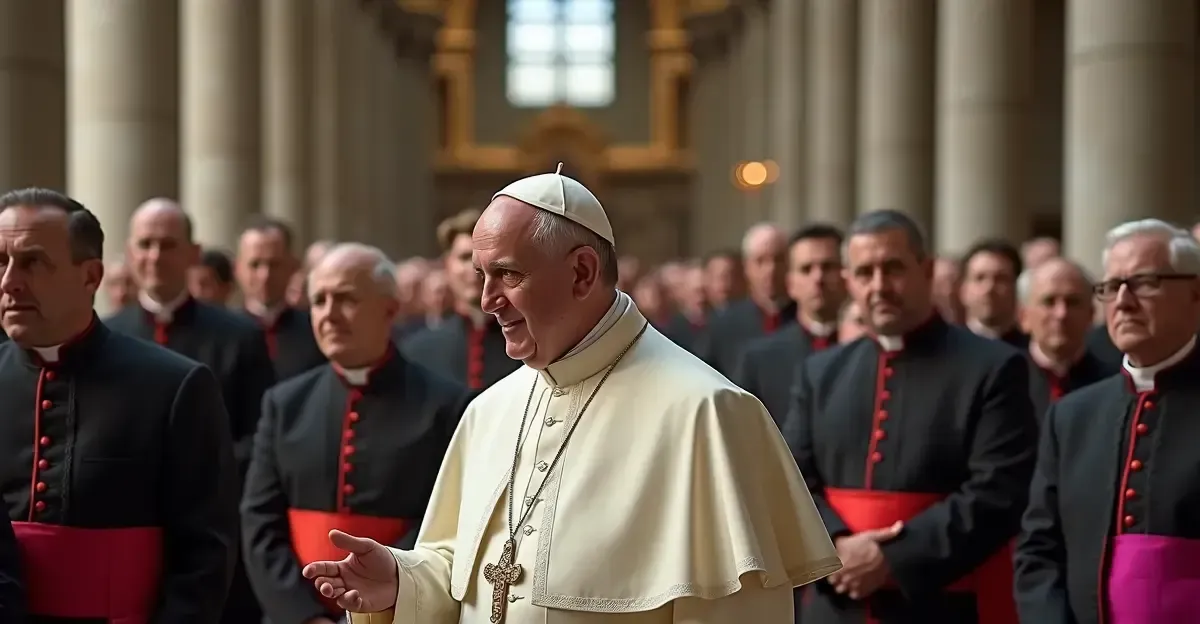
The Pope Leo XIV papacy has faced its first major test with this crisis, and the Vatican's firm response signals a departure from the more conciliatory approaches of previous pontificates.
SSPX Reaction and Global Implications
The SSPX leadership expressed disappointment but defiance. Superior General Father Davide Pagliarani stated: 'We respect the pope and will continue to pray for him. It hurts to be punished by one's father when you know you have done nothing wrong. The Vatican has shut the door in our face, not we in theirs.' The society claims it sought an audience with the pope for over a year but was refused.
The excommunication affects an estimated 600,000 faithful who regularly attend SSPX Masses worldwide, with significant communities in the United States, France, Switzerland, Argentina, and Germany. The decree warns that ordinary laypeople who formally enroll in the SSPX or publicly support its schismatic status also incur excommunication. However, those who attend SSPX chapels out of convenience or tradition without formally rejecting communion with Rome may not be affected.
The 2026 Catholic Church schism has also reignited debates about the limits of liturgical diversity and the authority of the pope. Some conservative Catholics sympathetic to traditionalist concerns have urged the Vatican to find a pastoral solution, while progressives argue that the SSPX's rejection of Vatican II leaves no room for compromise.
Impact on the Catholic Church
The schism represents the most significant break in Catholic unity since the 1988 Lefebvre consecrations, and arguably the most formalized since the 1870 Old Catholic schism following the First Vatican Council. The Vatican's decisive action under Pope Leo XIV—elected in May 2025—demonstrates a willingness to enforce canonical discipline even at the cost of losing a sizable traditionalist wing.
Canon lawyers note that the excommunication is latae sententiae (automatic) and can only be lifted by the pope himself. The decree explicitly states that the SSPX's act constitutes the delict of schism under Canon 751. Sacraments administered by SSPX priests are now considered illicit, with penance and marriages deemed invalid due to lack of jurisdiction. Funerals and other rites remain permitted only for the dying, under the principle of pastoral necessity.
The long-term consequences remain unclear. Some observers predict that the SSPX may splinter further, with more radical members gravitating toward sedevacantist groups that reject the legitimacy of all popes since Vatican II. Others hope that the shock of excommunication may prompt a reconsideration within the society. For now, the Catholic Church faces a divided flock, and the path back to unity appears uncertain.
Frequently Asked Questions
What is the SSPX?
The Society of Saint Pius X (SSPX) is a traditionalist Catholic priestly fraternity founded in 1970 by Archbishop Marcel Lefebvre. It rejects key reforms of the Second Vatican Council and celebrates only the Tridentine Latin Mass.
Why were the SSPX bishops excommunicated?
They were excommunicated for consecrating four new bishops on July 1, 2026, without a papal mandate. The Vatican considers this a schismatic act that violates church law and unity.
Does the excommunication apply to ordinary laypeople?
The Vatican warns that Catholics who formally adhere to the SSPX—by enrolling in the society or publicly supporting its schismatic status—also incur automatic excommunication. Those who simply attend SSPX Masses without formal membership may not be affected.
Can the excommunication be lifted?
Yes, but only by the pope. The excommunication is latae sententiae and reserved to the Apostolic See. If the SSPX repents and seeks reconciliation, the penalty could be removed.
What happens to SSPX sacraments now?
Confessions and marriages administered by SSPX priests are declared invalid due to lack of jurisdiction. Other sacraments are illicit but may be valid in certain circumstances (e.g., baptism in danger of death).
Follow Discussion