


 Deutsch
 English
 Español
 Français
 Nederlands
 Português


 Share
Share




Pope Leo XIV vs. Donald Trump: The Unprecedented Moral Leadership Clash of 2026
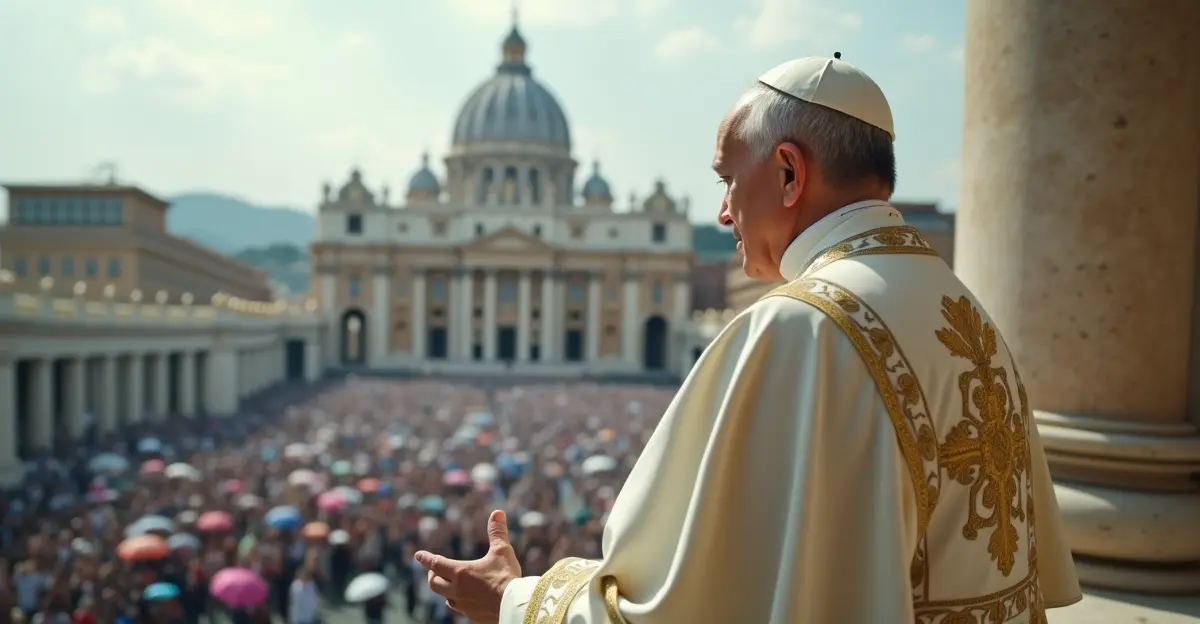
In a dramatic escalation of tensions between religious and political power, Pope Leo XIV has positioned himself as the 'most important moral leader of the entire world' in direct opposition to former President Donald Trump's foreign policy agenda. This unprecedented conflict between the first American pope and the former U.S. president represents a historic moment in church-state relations, with profound implications for global diplomacy and moral authority in the 21st century.
What is the Pope Leo XIV vs. Trump Conflict About?
The conflict centers on fundamental disagreements about war, peace, and moral leadership. Over the past 14 days, Pope Leo XIV has taken increasingly strong positions against what he calls the 'delusion of omnipotence' fueling the U.S.-Israeli war in Iran. The pontiff's peace advocacy has triggered a furious response from Donald Trump, who has labeled the pope 'WEAK on Crime, and terrible for Foreign Policy' in social media tirades. This clash represents more than just political disagreement—it's a fundamental debate about the role of moral authority in international affairs.
Historical Context: Church-State Relations Through the Ages
According to Professor Paul van Geest of Tilburg University, an expert in church history, while popes and rulers have clashed for over a thousand years, the current confrontation is exceptional. 'For those earlier conflicts, we have to go back hundreds of years, when the church was still a 'hard power,'' explains Van Geest. 'Now the church is an important soft power, and this pope speaks out as the most important moral leader of the entire world.' This shift from hard to soft power represents a significant evolution in the Vatican's global influence, similar to how modern geopolitical conflicts have transformed international relations.
The First American Pope: Who is Leo XIV?
Born Robert Francis Prevost in Chicago in 1955, Pope Leo XIV made history in May 2025 by becoming the first American pope. With extensive missionary experience in Peru and a background in mathematics and canon law, his election was unexpected by Vatican observers who doubted a superpower nation could produce a pope. His diverse ancestry—spanning Spanish, Cuban, Italian, French Canadian, and African American heritage—reflects the global nature of modern Catholicism. As an Augustinian priest who chose his papal name to honor Leo XIII's social justice legacy, he brings a unique perspective to the papacy.
Trump's Response and the 'Childish' Exchange
Donald Trump's reaction to the pope's peace advocacy has been characteristically confrontational. In a series of social media posts, the former president called Pope Leo XIV a 'weakness,' claimed the pontiff owed his position to Trump, and even remarked that he preferred the pope's brother. Professor Van Geest characterizes this exchange as operating on 'totally different wavelengths.' 'The pope does what a pope should do: peace on earth is the core business of the pope. This pope carries that out like no other. And Trump: he curses and scolds and says he likes the little brother better. It's also so incredibly childish.'
The Vatican's Soft Power in Action
The current conflict highlights the unique nature of Vatican influence in the modern world. Unlike nations with military or economic power, the Catholic Church wields what experts call 'soft power'—the ability to shape global affairs through moral authority, religious influence, and diplomatic networks. With 1.5 billion Catholic followers worldwide and extensive networks of schools, churches, and hospitals, the pope speaks as 'the mouthpiece of moral authority,' according to Van Geest. This approach differs significantly from traditional political power structures that rely on economic or military might.
Why This Conflict Matters: Global Implications
The Pope Leo XIV-Trump clash has significant implications beyond religious circles:
- Moral Authority vs. Political Power: The conflict tests whether moral leadership can influence hard political decisions in an era of geopolitical tension.
- American Catholicism: As the first American pope criticizes a former U.S. president, it creates complex dynamics for American Catholics navigating political and religious loyalties.
- Peace Advocacy: The pope's call for an Easter truce and dialogue represents a direct challenge to current military strategies in conflict zones.
- Global Perception: The exchange shapes how international audiences view both religious leadership and American political culture.
Expert Analysis: A Shift in Papal Strategy
Professor Van Geest notes a significant shift in Pope Leo XIV's approach: 'This I had not thought until two weeks ago. Then he was still giving all kinds of proper speeches. But now he speaks out.' This newfound assertiveness represents a departure from more diplomatic approaches and signals the pope's willingness to engage directly on contentious geopolitical issues. The professor adds that many non-Catholics have contacted him saying, 'I am not a Catholic, but this pope expresses exactly what I feel. The world longs for peace. In your heart and in the big bad outside world. And that is what the pope expresses.'
Comparative Analysis: Vatican Soft Power vs. National Hard Power
| Vatican Soft Power | National Hard Power |
|---|---|
| Moral and spiritual authority | Military and economic strength |
| 1.5 billion followers worldwide | National populations and resources |
| Diplomatic relations with 180+ countries | Formal alliances and treaties |
| Influence through schools, hospitals, charities | Influence through trade, aid, sanctions |
| Conflict mediation and peace advocacy | Military intervention and deterrence |
FAQ: Pope Leo XIV vs. Donald Trump Conflict
What started the conflict between Pope Leo XIV and Donald Trump?
The conflict began when Pope Leo XIV criticized the 'delusion of omnipotence' fueling the U.S.-Israeli war in Iran and called for peace, prompting Trump to attack the pope on social media as 'weak' on crime and foreign policy.
Why is Pope Leo XIV considered the first American pope?
Born Robert Francis Prevost in Chicago in 1955, Leo XIV is the first pope born in the United States and the first to hold U.S. citizenship, elected in May 2025 after extensive missionary work in Peru.
What is 'soft power' and how does the Vatican use it?
Soft power refers to influence through cultural, moral, and diplomatic means rather than military or economic coercion. The Vatican exercises soft power through its moral authority, global Catholic networks, diplomatic relations with 180+ countries, and humanitarian work.
How are American Catholics responding to this conflict?
Many U.S. Catholics are reportedly dismayed by Trump's criticism of the pope, creating tension between political loyalty and religious authority in the American Catholic community.
What are the historical precedents for pope-ruler conflicts?
While popes and rulers have clashed for centuries, most historical conflicts involved the Church as a 'hard power' with territorial control, unlike today's soft power approach. The current conflict resembles medieval church-state tensions but in a modern geopolitical context.
Follow Discussion