


 Deutsch
 English
 Español
 Français
 Nederlands
 Português


 Share
Share




China is actively seeking to deepen military cooperation with North Korea, marking what analysts at the Center for Strategic & International Studies (CSIS) call an 'unprecedented first.' The shift follows Chinese leader Xi Jinping's high-profile visit to Pyongyang in early June 2026—his first in seven years—during which he and North Korean leader Kim Jong-un pledged to elevate bilateral ties to a 'new historic starting point.' The move signals a significant recalibration of Beijing's longstanding relationship with its isolated neighbor, with far-reaching implications for regional security, the US deterrent posture in East Asia, and the delicate balance of power on the Korean Peninsula.
\n\nBackground: The June 2026 Pyongyang Summit
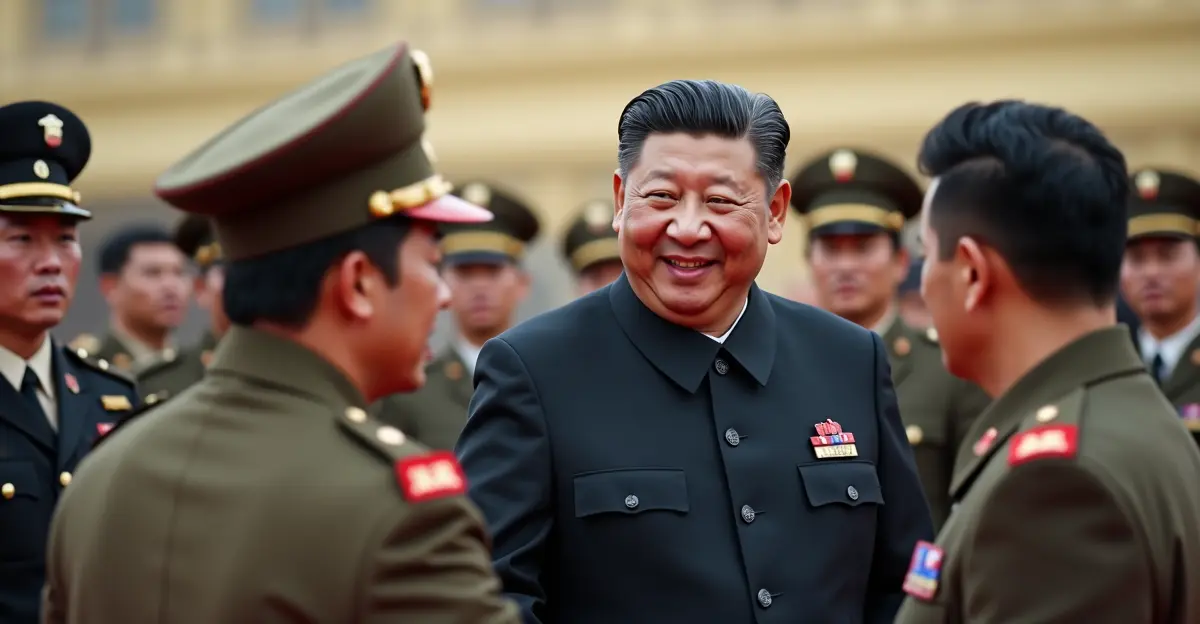
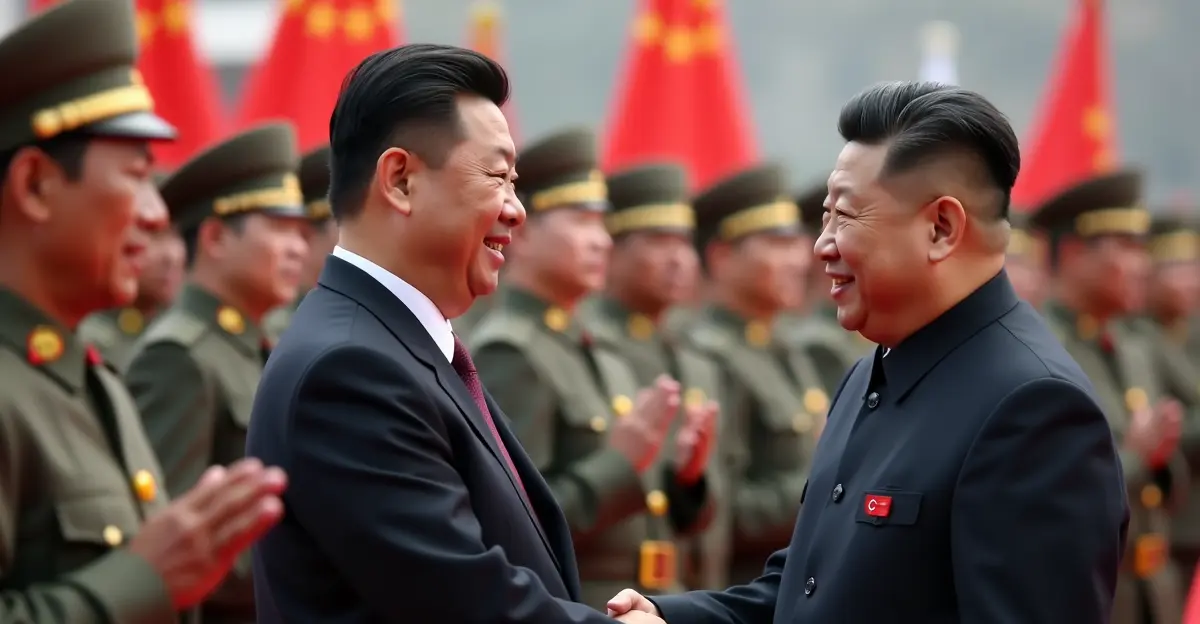
\nXi Jinping arrived in Pyongyang on June 8, 2026, for a two-day state visit—his first overseas trip of the year—timed to coincide with the 65th anniversary of the China-DPRK mutual defense treaty. Greeted with a 21-gun salute, a cavalry escort, and crowds waving flowers in Kim Il Sung Square, Xi was accompanied by his wife Peng Liyuan and received by Kim Jong-un and Ri Sol-ju. The visit marked the seventh meeting between the two leaders and was preceded by months of quiet diplomatic groundwork, including the resumption of direct flights and passenger train services between Beijing and Pyongyang in March 2026, as well as the relaunch of Chinese tourist packages in June. While economic and cultural cooperation dominated the public agenda, the most salient outcome was the explicit commitment to expand military-to-military ties—a departure from China's historic caution in this domain. For context, the 1961 Sino-North Korean mutual defense treaty has remained largely dormant in military terms since the Korean War.
\n\nThe Military Dimension: An 'Unprecedented First'
\nIn their joint statement, Xi and Kim pledged to strengthen 'strategic communication' and 'practical cooperation' across a broad spectrum, including defense. 'The two sides agreed to deepen military cooperation and exchanges, an unprecedented step that reflects Beijing's willingness to treat Pyongyang as a genuine strategic partner,' noted the CSIS analysis. Historically, China has been extremely reluctant to engage in military collaboration with North Korea beyond the 1950–53 Korean War and some limited arms deliveries in the 1980s. The new phase envisages joint exercises, intelligence sharing, and possibly arms sales—moves that could alter the military balance vis-à-vis South Korea and Japan. This comes as the US-Japan defense cooperation deepens under Prime Minister Sanae Takaichi, prompting Beijing to seek counterweights.
\n\nWhy Now? Beijing's Strategic Calculus
\nCSIS analysts identify several drivers behind China's outreach. First, and perhaps most pressing, is the need to dilute Russia's growing influence over Pyongyang. In 2024, Moscow and Pyongyang signed a comprehensive strategic partnership, under which North Korea has supplied artillery shells and manpower to Russia's war effort in Ukraine, receiving in return oil, grain, technology, and diplomatic cover at the UN. 'Quantitatively, high-level exchanges between Russia and North Korea since the Ukraine war have significantly outpaced those between China and North Korea—a historically unprecedented fact,' the CSIS report states. By reviving its own partnership, Beijing aims to reclaim lost ground and prevent Pyongyang from becoming too dependent on Moscow.
\nHedging Against Washington and Tokyo
\nBeijing also seeks to hedge against an unpredictable United States—especially with a possible second Trump-Kim summit on the horizon—and to counter Japan's military buildup. By publicly strengthening ties with Pyongyang, China reminds Washington that no deal with North Korea can succeed without Chinese involvement, while simultaneously signaling that military action against Pyongyang, akin to strikes on Iran's nuclear program, would be seen as a provocation. The 2025 EU-Japan security pact has further incentivized Beijing to solidify its own alliances.
\nThe Taiwan Contingency
\nA critical longer-term factor is Taiwan. A crisis on the Korean Peninsula would strain US military resources, potentially reducing Washington's ability to respond to a simultaneous Chinese move against the island. 'China may be planning to help North Korea expand its forces so that it poses a greater threat to the United States and increases the likelihood of success in a dual emergency,' the CSIS warns. This two-front dilemma has long preoccupied Pentagon planners, and Beijing's latest moves suggest a deliberate effort to operationalize it.
\n\nChina Quietly Accepts North Korea's Nuclear Status
\nEqually significant is what was left unsaid. For years, China routinely called for the 'denuclearization of the Korean Peninsula.' During Xi's visit, that phrase was conspicuously absent—suggesting Beijing's de facto acceptance of North Korea as a nuclear-armed state. This aligns with Pyongyang's recent unveiling of a new uranium enrichment facility and its repeated assertions of nuclear status. While Beijing is unlikely to formally recognize North Korea's nuclear weapons program, its silence removes a key diplomatic obstacle and could embolden Kim to accelerate his arsenal—similar to how the Iran nuclear deal collapse reshaped proliferation dynamics in the Middle East.
\n\nFAQ
\nWhy is China seeking military cooperation with North Korea now?
China aims to reduce Russian influence, counter US and Japanese military pressure, and strengthen its position regarding Taiwan. The move also signals to Washington that any deal with North Korea requires Chinese involvement.
What did Xi Jinping and Kim Jong-un agree on in June 2026?
They pledged to expand cooperation across trade, agriculture, science, health, culture, and—for the first time—military affairs. They also emphasised 'strategic communication' and political trust.
Has China accepted North Korea as a nuclear power?
Beijing has dropped its long-standing call for denuclearization in official statements, indicating tacit acceptance. It has not formally recognised North Korea's nuclear status, but the omission is widely seen as a policy shift.
How does this affect the US and its allies?
A stronger Sino-North Korean military axis complicates US deterrence in East Asia, raises the risk of a two-front crisis involving Taiwan and Korea, and pressures Japan and South Korea to deepen their own defense cooperation.

Follow Discussion