


 Deutsch
 English
 Español
 Français
 Nederlands
 Português


 Share
Share




What is Kim Jong-un's Latest Message to the United States?
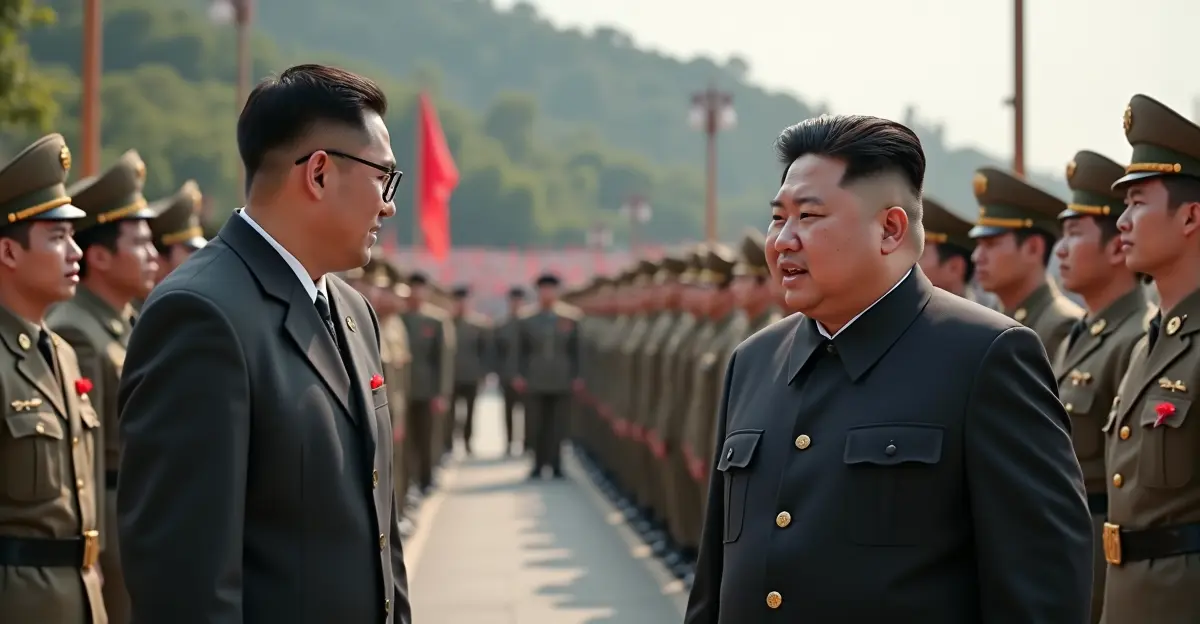
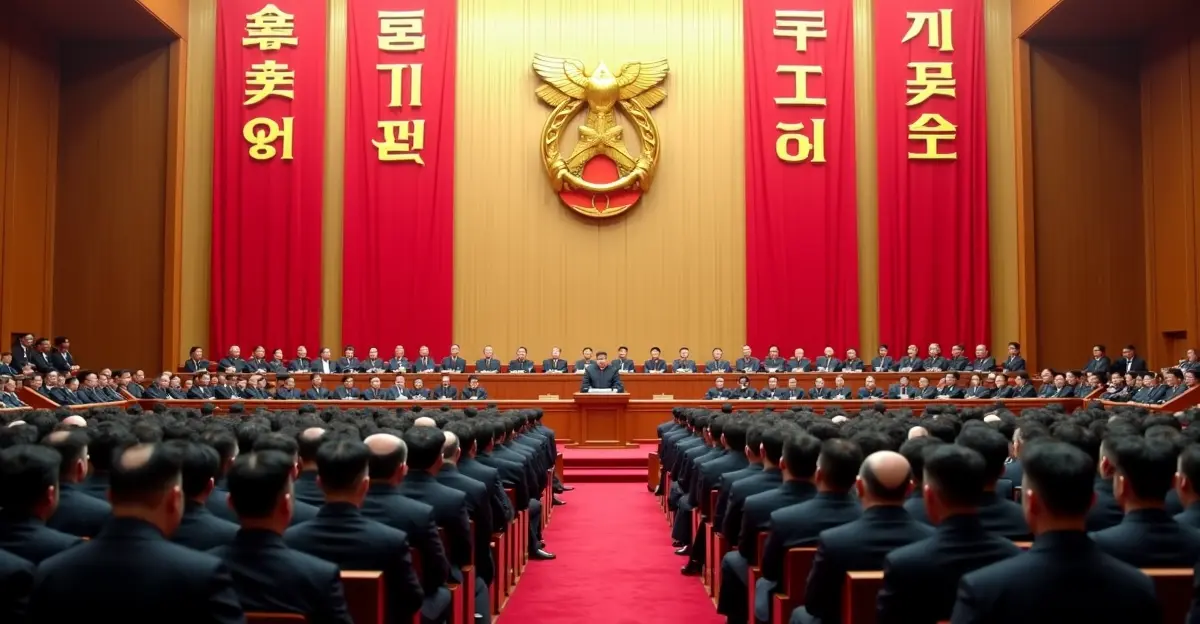
North Korean leader Kim Jong-un has delivered a significant diplomatic message during the 9th Party Congress in Pyongyang, stating that North Korea 'could get along' with the United States under specific conditions. This announcement, made on February 25, 2026, represents a rare direct outreach from the reclusive regime to Washington and comes at a time when international tensions remain high over North Korea's nuclear weapons program. The North Korean nuclear program expansion continues despite United Nations sanctions, making Kim's conditional olive branch particularly noteworthy for global security analysts.
Background: The 9th Party Congress Context
The Workers' Party of Korea held its 9th Party Congress from February 19-25, 2026, in Pyongyang, marking a pivotal moment in North Korean policy formulation. During this five-yearly gathering, Kim Jong-un was unanimously re-elected as general secretary of the party, solidifying his leadership position. The Congress fundamentally transformed the Korean Peninsula's geopolitical landscape by formalizing the permanent severance of ties with South Korea, which Kim declared as the 'first hostile state' and 'immutable principal enemy.' This hostile two-state relationship framework represents a significant departure from previous unification policies and establishes a new 'Neo-Cold War' structure on the peninsula.
Kim's Specific Conditions for US Relations
According to state media KCNA, Kim Jong-un outlined clear prerequisites for improved relations with the United States: 'If Washington respects our current nuclear position as stipulated in our Constitution and withdraws its hostile policies, there is no reason why we cannot get along with the United States.' This statement represents a strategic positioning where North Korea demands acceptance of its nuclear statehood as a precondition for diplomatic engagement. Kim emphasized that the future of US-North Korea relations 'depends entirely on the US attitude,' indicating that Pyongyang views itself as responsive to American policy decisions rather than initiating unilateral changes.
Nuclear Program Expansion Despite Outreach
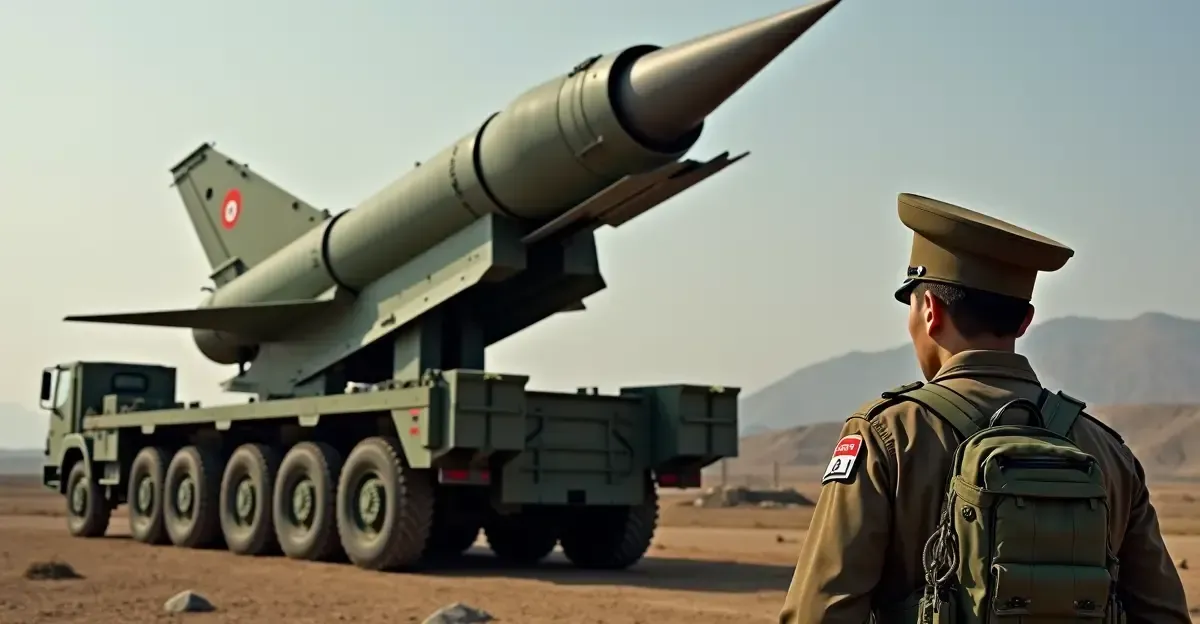
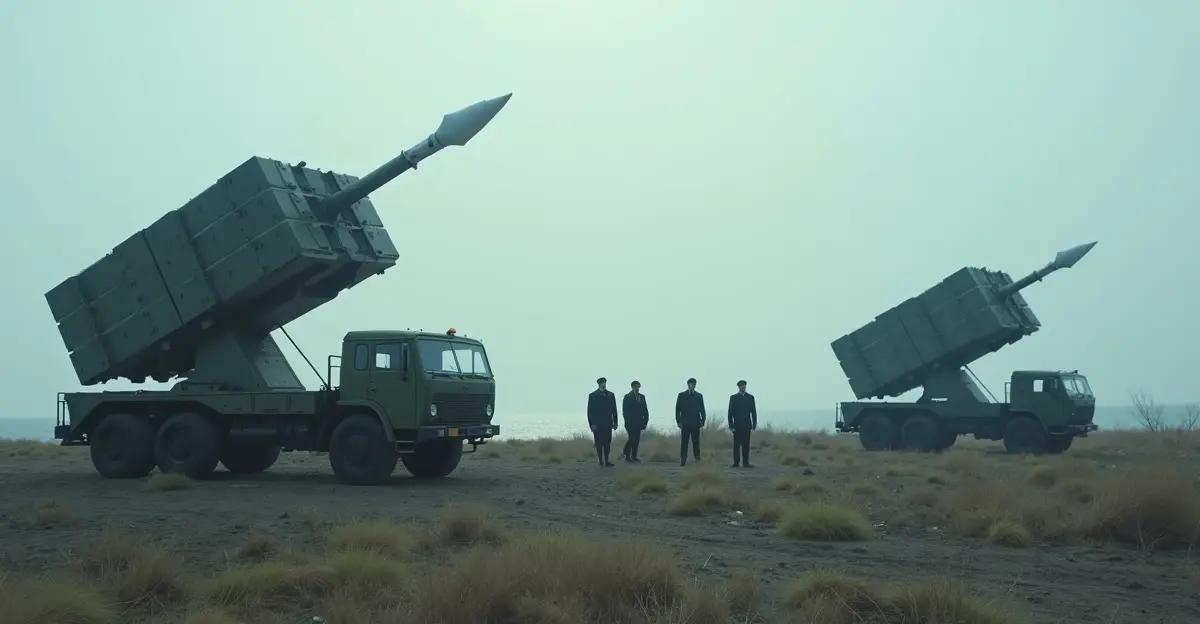
Paradoxically, while extending this conditional diplomatic hand, Kim simultaneously reaffirmed his commitment to expanding North Korea's nuclear arsenal. The Congress institutionalized North Korea's nuclear statehood through the 'Haekpangasoe' (nuclear trigger) system, an integrated nuclear crisis response mechanism that enables prompt and automated nuclear operations. This includes pre-emptive strike capabilities and military modernization with AI-driven weapons and satellite-neutralizing assets. The regime's dual messaging suggests a strategy of leveraging nuclear capabilities as both a deterrent and a bargaining chip in international relations, similar to approaches seen in Iran nuclear negotiations.
Historical Context: US-North Korea Relations Timeline
US-North Korea relations have been characterized by decades of tension, punctuated by brief periods of diplomatic engagement. The current situation must be understood within this historical context:
- 2003: North Korea's nuclear program becomes public, making denuclearization a priority for every US president since
- 2017-2018: Heightened tensions during the North Korea crisis, with Kim conducting nuclear and missile tests
- 2018-2019: Historic summits with South Korean President Moon Jae-in and US President Donald Trump
- 2019: Negotiations break down without progress on denuclearization or reunification
- 2023: Kim declares formal abandonment of Korean reunification efforts
- 2024: North Korea signs security treaty with Russia and supplies materiel for Ukraine war
- 2026: Current conditional outreach to US during 9th Party Congress
Strategic Implications for Regional Security
Kim's statement has significant implications for regional security dynamics in Northeast Asia. By declaring South Korea as the 'most hostile entity' while offering conditional engagement with the US, North Korea is attempting to drive a wedge between the traditional allies. This strategy aligns with Pyongyang's deepening strategic partnerships with China and Russia, creating a complex multipolar security environment. The regime's 2026-2030 economic plan focuses on agricultural self-reliance to eliminate dependence on South Korean aid, further reinforcing the hostile two-state relationship framework established at the Congress.
Expert Analysis: What Does This Mean for Diplomacy?
Regional security experts view Kim's statement as a calculated diplomatic maneuver rather than a genuine shift in policy. 'This is classic North Korean diplomacy - offering just enough hope for engagement to create divisions among their adversaries while continuing to advance their strategic military capabilities,' says Dr. Sarah Chen, a Northeast Asia security analyst at the International Institute for Strategic Studies. 'The conditions laid out are essentially non-starters for the US, which has maintained a consistent policy of demanding denuclearization as a precondition for normalized relations.'
The timing of Kim's statement is particularly significant, coming just before US President Donald Trump's planned visit to China in April 2026. This suggests Pyongyang may be attempting to position itself ahead of potential US-China discussions about regional security. The conditional nature of the outreach also allows North Korea to maintain its nuclear program while appearing open to diplomacy, a strategy that has proven effective in the past for extracting concessions during negotiations.
FAQ: Frequently Asked Questions
What exactly did Kim Jong-un say about US relations?
Kim stated that North Korea 'could get along' with the United States if Washington accepts North Korea's nuclear status as constitutional and withdraws hostile policies. He emphasized that relations 'depend entirely on the US attitude.'
Does this mean North Korea is willing to denuclearize?
No. Kim's statement explicitly demands US acceptance of North Korea's nuclear statehood as a precondition for improved relations, indicating no willingness to denuclearize.
How does this affect relations with South Korea?
The 9th Party Congress formalized permanent hostile relations with South Korea, declaring it the 'first hostile state.' This represents a significant deterioration in inter-Korean relations.
What is the 'Haekpangasoe' system mentioned?
This is North Korea's newly institutionalized nuclear crisis response mechanism that enables prompt, automated nuclear operations, including pre-emptive strike capabilities.
Will the US accept North Korea's conditions?
Highly unlikely. US policy has consistently demanded denuclearization as a precondition for normalized relations, making acceptance of North Korea's nuclear status improbable.

Follow Discussion