

 Deutsch
 English
 Español
 Français
 Nederlands
 Português

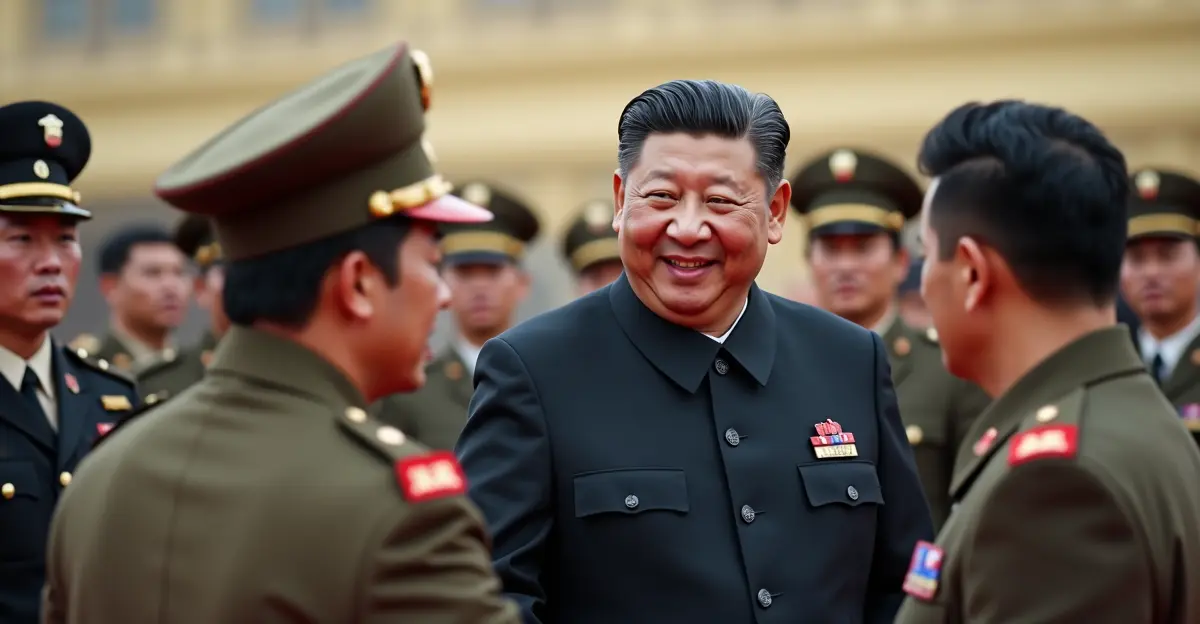





Xi Jinping Arrives in Pyongyang for Landmark Summit
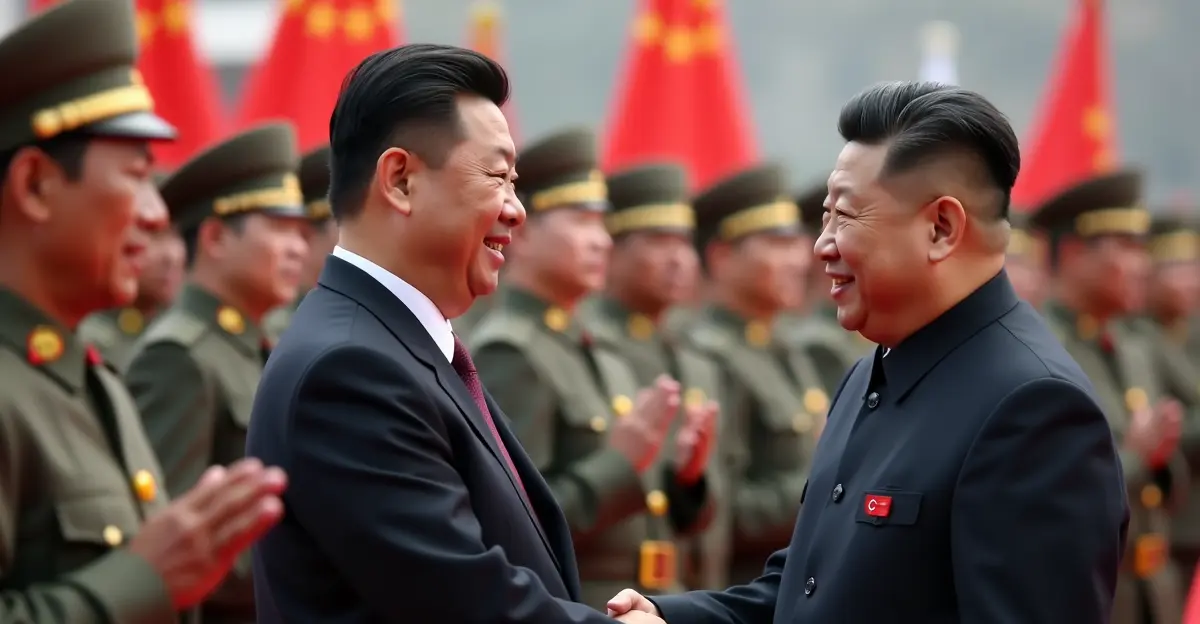
Chinese President Xi Jinping will make a state visit to North Korea on June 8-9, 2026, marking his first trip to Pyongyang in seven years and his first overseas journey of the year. The visit comes at a critical juncture, as China seeks to reassert its influence over its nuclear-armed neighbor amid deepening military and economic ties between North Korea and Russia. Xi's last visit to North Korea was in June 2019, shortly after the failed Trump-Kim summit in Hanoi. The timing of this new summit is widely seen as a strategic signal that Beijing remains the indispensable power on the Korean Peninsula.
The summit was officially announced on June 5, 2026, by the International Department of the Chinese Communist Party. According to Chinese Foreign Ministry spokesperson Mao Ning, Xi and North Korean leader Kim Jong Un will exchange views on bilateral relations and issues of common concern. The visit also coincides with the 65th anniversary of the Treaty of Friendship, Cooperation and Mutual Assistance between China and North Korea. Analysts note that the visit follows closely on the heels of Xi hosting both U.S. President Donald Trump and Russian President Vladimir Putin in Beijing, underscoring China's central role in global diplomacy.
Why Xi Is Visiting North Korea Now
Countering Russia's Growing Influence
Since the COVID-19 pandemic, North Korea has dramatically shifted its foreign policy. After years of border closures and economic isolation, Pyongyang has forged a robust partnership with Moscow. North Korea has supplied Russia with artillery shells, ballistic missiles, and even troops for the war in Ukraine, while Russia has provided food, fuel, technology, and diplomatic cover at the United Nations. The Russia-North Korea military alliance has worried Beijing, which sees the Korean Peninsula as its traditional sphere of influence.
Ost-East Asia expert Seong-Hyon Lee of Harvard University notes: 'The current China-North Korea relationship is stronger than many people think. China remains by far North Korea's most important economic lifeline, especially for food, fuel, and industrial goods.' However, the construction of a new road bridge over the Tumen River by Russia and North Korea, begun in April 2025 and expected to open in summer 2026, has raised eyebrows in Beijing. The bridge could limit China's long-standing ambition to secure direct access to the Sea of Japan via the Tumen River, a goal China has pursued for decades.
Nuclear Proliferation and Sanctions
North Korea's nuclear arsenal continues to grow. According to the Stockholm International Peace Research Institute (SIPRI), North Korea now possesses an estimated 50 nuclear warheads. Kim Jong Un recently inspected a new uranium enrichment facility and called for an 'exponential expansion' of the country's nuclear forces. China officially supports denuclearization of the Korean Peninsula and voted for UN Security Council sanctions in 2017. Yet in practice, Beijing has been reluctant to criticize Pyongyang's nuclear program, instead joining Russia in shielding North Korea from international pressure.
The North Korea nuclear weapons program remains a key point of contention. Some analysts believe China may be moving away from demanding denuclearization, potentially accepting North Korea as a nuclear state as part of a broader buffer strategy against the United States and its allies. This shift would represent a major policy change for Beijing.
The US Factor: Trump's Return
Donald Trump has repeatedly signaled his willingness to re-engage directly with Kim Jong Un, as he did in 2018-2019. Lee observes: 'China wants to prevent diplomacy between Washington and Pyongyang from bypassing Beijing entirely, as happened in 2019.' Xi's visit serves as a reminder that any future negotiations on the Korean Peninsula must include China. Trump visited Beijing in May 2026, just weeks before Xi's trip to Pyongyang, highlighting the intense diplomatic maneuvering among the major powers.
What to Expect From the Xi-Kim Summit
The summit is expected to cover several key topics:
- Economic assistance: China is North Korea's largest trading partner, with bilateral trade rebounding to pre-COVID levels in 2025. Xi may announce new aid packages, infrastructure projects, or resumption of Chinese tourism to North Korea.
- Strategic coordination: Both leaders will likely discuss coordinating their positions on regional security, including responses to the strengthening US-Japan-South Korea trilateral alliance.
- Nuclear recognition: Kim may push for Beijing to formally recognize North Korea as a nuclear state, a move that would have profound implications for nonproliferation efforts.
- Tumen River dispute: China is expected to raise concerns about the new Russia-North Korea bridge and seek assurances that its access to the Sea of Japan will not be blocked.
Lee adds: 'From Beijing's perspective, the growing military cooperation between the US, Japan, and South Korea threatens to create exactly the kind of militarized regional bloc that China has long tried to avoid.' This concern drives China's efforts to strengthen its ties with Pyongyang.
Broader Geopolitical Implications
Xi's visit to North Korea is not merely a bilateral affair—it is a signal of shifting power dynamics in East Asia. With the war in Ukraine, rising US-China tensions, and North Korea's expanding nuclear capabilities, the region is more volatile than at any point in decades. China is positioning itself as the indispensable mediator, while also building a de facto anti-US coalition with Russia and North Korea.
The geopolitical implications of Xi's North Korea visit extend beyond the peninsula. South Korea's Unification Minister has proposed a four-way peace dialogue, but prospects remain uncertain given Pyongyang's hostile stance toward Seoul. Meanwhile, Japan is strengthening its military in response to regional threats, a move that Beijing and Pyongyang both oppose.
For Kim Jong Un, the summit offers a chance to secure economic relief and diplomatic legitimacy. For Xi, it is an opportunity to demonstrate that China—not Russia or the United States—remains the dominant power in its own backyard. As Lee concludes: 'Xi's visit looks less like a classic bilateral state visit and more like a signal of the new power dynamics in Asia. China wants to make clear that, despite Russia's growing role and Trump's return, it is still the central player in East Asia.'
Frequently Asked Questions
When is Xi Jinping visiting North Korea?
Xi Jinping's state visit to North Korea is scheduled for June 8-9, 2026.
Why is Xi visiting North Korea now?
Xi is visiting to reassert Chinese influence over North Korea amid Pyongyang's growing military and economic ties with Russia, and to prevent US-North Korea diplomacy from bypassing Beijing.
How many nuclear weapons does North Korea have?
According to SIPRI, North Korea possesses an estimated 50 nuclear warheads as of 2025.
What is the Tumen River bridge dispute?
Russia and North Korea are building a new road bridge over the Tumen River, which could limit China's access to the Sea of Japan. China sees this as a challenge to its regional influence.
Will China recognize North Korea as a nuclear state?
Analysts suggest China may be moving toward tacitly accepting North Korea's nuclear status as part of a broader strategy to counter US influence, though Beijing has not made any official change in policy.
Sources
This article draws on reporting from NOS, The Diplomat, Associated Press, CBC News, SIPRI, NK News, and Wikipedia. For further reading, see the Wikipedia article on the 2026 Xi visit and Kim-Xi meetings overview.


Follow Discussion