


 Deutsch
 English
 Español
 Français
 Nederlands
 Português


 Share
Share




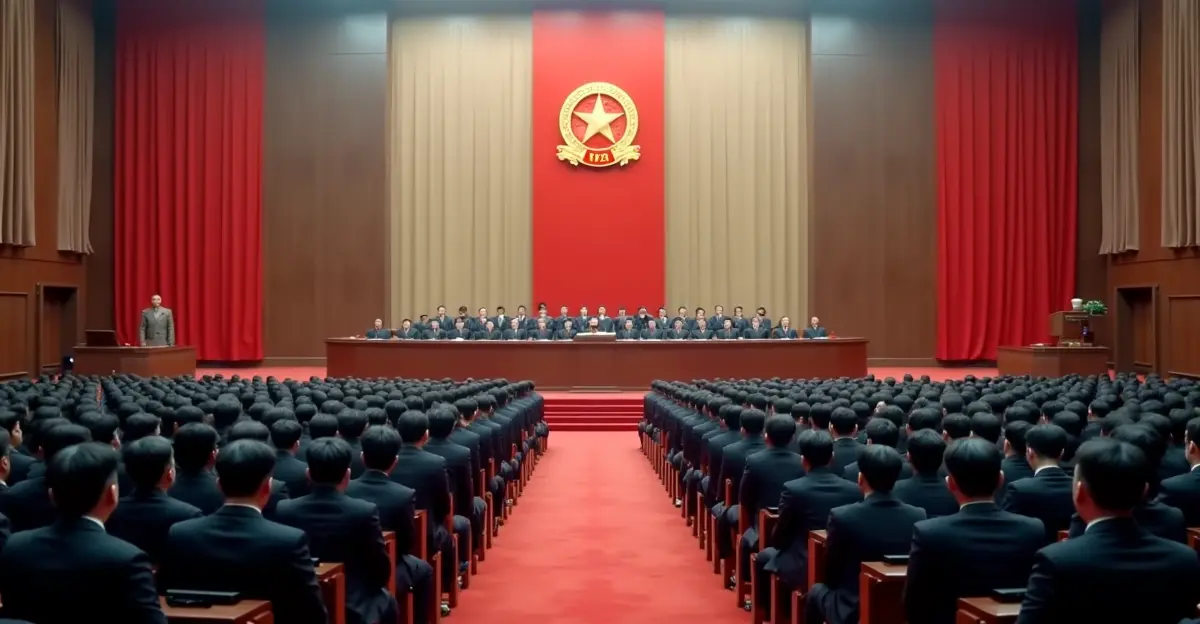
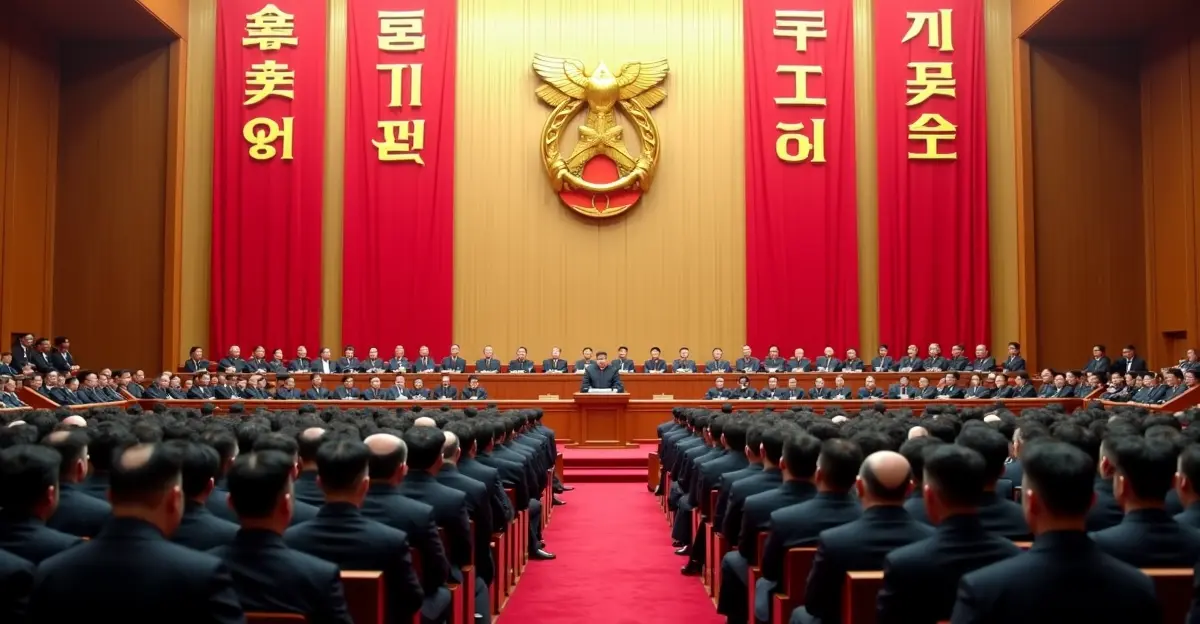
North Korea has formally amended its constitution to declare South Korea a separate state, removing all references to reunification and codifying leader Kim Jong-un's 'two hostile states' doctrine. The revised constitution, adopted during a March 2026 session of the Supreme People's Assembly, introduces a territorial clause for the first time, defining North Korea's borders as including China, Russia, and 'the Republic of Korea to the south.' This landmark change marks the definitive end of the decades-long goal of a unified Korean peninsula under Pyongyang's terms.
What the Constitutional Amendment Entails
The revised constitution, now simply titled the 'Constitution of the DPRK' rather than the 'Socialist Constitution,' eliminates all language related to peaceful reunification, national unity, and ethnic homogeneity that had been present since the country's founding in 1948. Terms such as 'reunification of the fatherland' and 'great national unity' have been excised from both the preamble and the main text.
A new territorial clause declares that North Korea's territory consists of land 'bordering China and Russia to the north and the Republic of Korea to the south, as well as territorial waters and airspace established on that basis.' Notably, the constitution avoids specifying disputed maritime boundaries such as the Northern Limit Line (NLL) in the Yellow Sea, suggesting Pyongyang may be seeking to avoid immediate new friction while embedding its hostile stance in law.
The amendments also remove references to the achievements of former leaders Kim Il-sung and Kim Jong-il, replacing them with language emphasizing Kim Jong-un's 'people-first principle.' The inter-Korean relations shift is now enshrined at the highest legal level.
Expansion of Kim Jong-un's Powers
Beyond the territorial and unification language, the constitutional revision significantly expands Kim Jong-un's authority. For the first time, the constitution explicitly designates the chairman of the State Affairs Commission as the head of state, ranking above the Supreme People's Assembly. The assembly's power to dismiss the chairman has been removed.
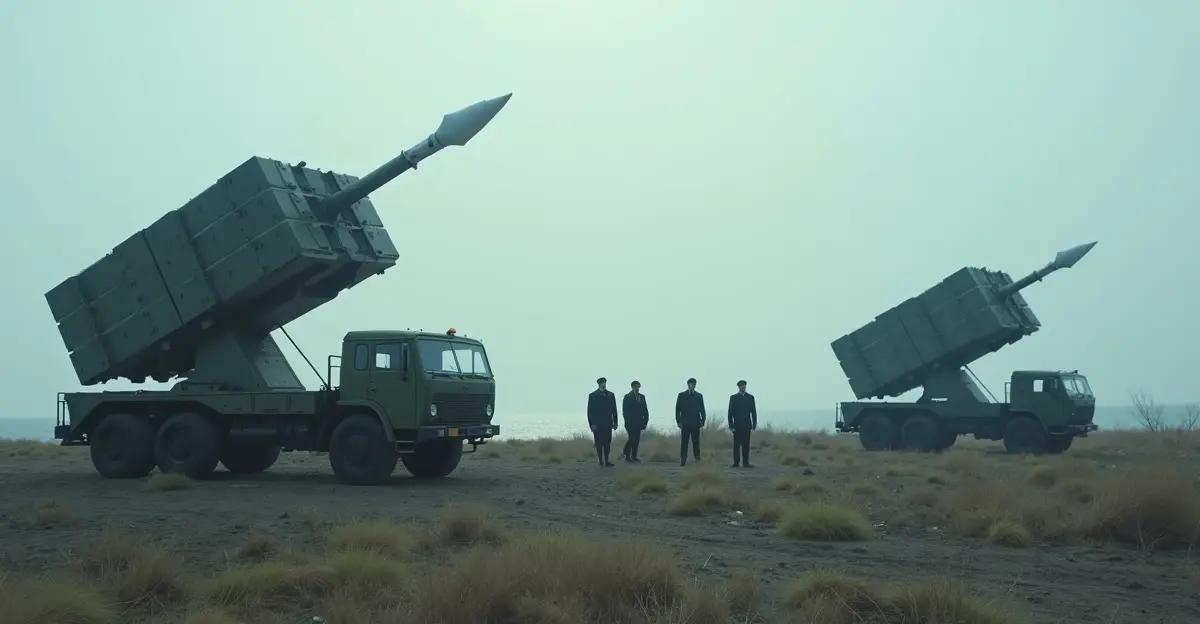
Kim is now formally granted command authority over North Korea's nuclear forces. The constitution describes North Korea as a 'responsible nuclear weapons state' committed to advancing its nuclear arsenal for deterrence and self-defense. The document includes provisions allowing Kim to delegate nuclear command authority to other officials, a move that experts say could ensure continuity of command in a crisis.
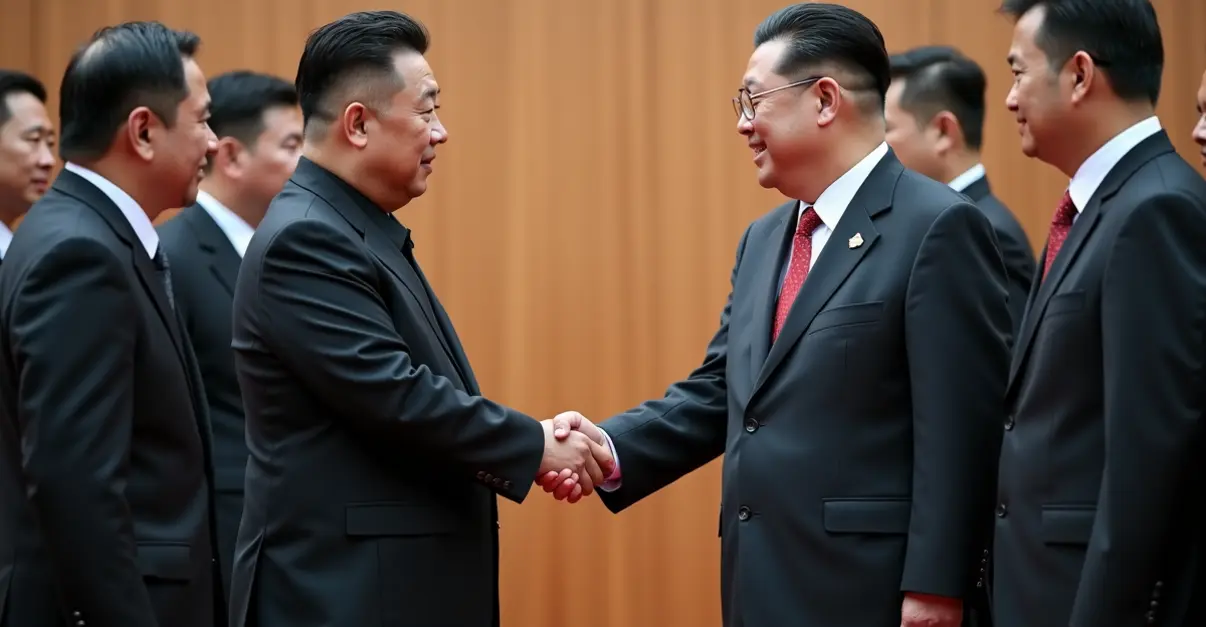
Additional powers include the ability to veto parliamentary decisions, appoint and dismiss senior officials, and receive foreign ambassadors. These changes eliminate nominal institutional constraints that previously existed, further consolidating Kim's already absolute control over the state apparatus.
Background: From Reconciliation to Hostility
The constitutional amendment is the culmination of a dramatic shift in North Korea's policy toward the South that began in late 2023. In December of that year, Kim Jong-un called for redefining inter-Korean relations as those between 'two hostile states.' In January 2024, he ordered the demolition of the Arch of Reunification, a major monument in Pyongyang symbolizing the goal of unification. Throughout 2024 and 2025, North Korea dismantled organizations dedicated to inter-Korean cooperation and rejected overtures from Seoul.
The two Koreas have technically been at war since the 1950-1953 Korean War ended with an armistice rather than a peace treaty. The Korean Demilitarized Zone (DMZ), a 250-kilometer-long, 4-kilometer-wide strip of heavily fortified land, has served as the de facto border since 1953. Both sides maintain large military contingents along the DMZ, and the area has seen numerous skirmishes and incidents over the decades.
South Korea's government, led by President Yoon Suk-yeol, has maintained a firm stance toward the North. The 2025 South Korea defense policy emphasized deterrence and trilateral security cooperation with the United States and Japan.
Expert Analysis and International Reaction
Analysts view the constitutional revision as a strategic move to present North Korea as a 'normal' sovereign state rather than a divided nation awaiting reunification. Professor Lee Jung-chul of Seoul National University noted that omitting a specific inter-Korean border could pave the way for 'peaceful coexistence' without immediately escalating tensions.
'The revision signals that Pyongyang is abandoning the unification fantasy and moving toward a more pragmatic, if hostile, relationship with the South,' said Lee. 'By not defining the border in detail, North Korea leaves room for maneuver while solidifying its two-state doctrine.'
International reactions have been cautious. The United States reiterated its commitment to the defense of South Korea, while China called for stability on the peninsula. The UN Security Council response to North Korea is expected to focus on the nuclear implications of the revised constitution.
Implications for the Korean Peninsula
The constitutional change has profound implications. By formally abandoning reunification as a state goal, North Korea removes a key ideological pillar that had justified its hostile posture toward the South. Some experts argue this could reduce the risk of large-scale conflict, as both sides may now treat the border as a permanent international boundary rather than a temporary division.
However, the explicit enshrinement of nuclear weapons in the constitution and the expansion of Kim's command authority raise concerns about the stability of deterrence on the peninsula. North Korea conducted multiple missile tests in 2025 and early 2026, including tests involving Kim's daughter, signaling the regime's commitment to advancing its weapons programs.
The omission of the Northern Limit Line from the territorial clause leaves a potential flashpoint unresolved. The NLL has been a source of naval clashes and artillery exchanges between the two Koreas, most recently in 2025 when North Korea fired warning shots near the maritime boundary.
Frequently Asked Questions
What does North Korea's constitutional amendment say about South Korea?
The amended constitution defines South Korea as a separate state bordering North Korea to the south, removing all references to reunification and codifying Kim Jong-un's 'two hostile states' doctrine.
When was the constitutional amendment adopted?
The revision was adopted during a March 2026 session of the Supreme People's Assembly, though details were only confirmed in early May 2026 when the text was reviewed by international media.
Does the new constitution mention nuclear weapons?
Yes. The constitution describes North Korea as a 'responsible nuclear weapons state' and explicitly grants Kim Jong-un, as chairman of the State Affairs Commission, command authority over the country's nuclear forces.
How does this affect the border between North and South Korea?
The constitution adds a territorial clause defining North Korea's land borders but avoids specifying the exact inter-Korean boundary, including the disputed Northern Limit Line. The DMZ remains the de facto border under the 1953 armistice.
What has been the international reaction?
The United States reaffirmed its defense commitment to South Korea. China called for stability. Analysts view the move as an attempt to normalize North Korea's status as a sovereign state while escalating its nuclear posture.


Follow Discussion