


 Deutsch
 English
 Español
 Français
 Nederlands
 Português


 Share
Share




Rubio Stirs Controversy With 'For Now' Remark on Greenland's Status
US Secretary of State Marco Rubio has reignited debate over Washington's ambitions in the Arctic, stating during a congressional hearing on June 3, 2026, that Greenland is part of Denmark 'for now.' The remark, made before the House Foreign Affairs Committee, signals the Trump administration's continued push to secure influence over the strategically vital island. Rubio confirmed ongoing discussions with both Denmark and Greenland about using the territory for collective defense, particularly missile defense, and described the talks as being 'in a good place.'
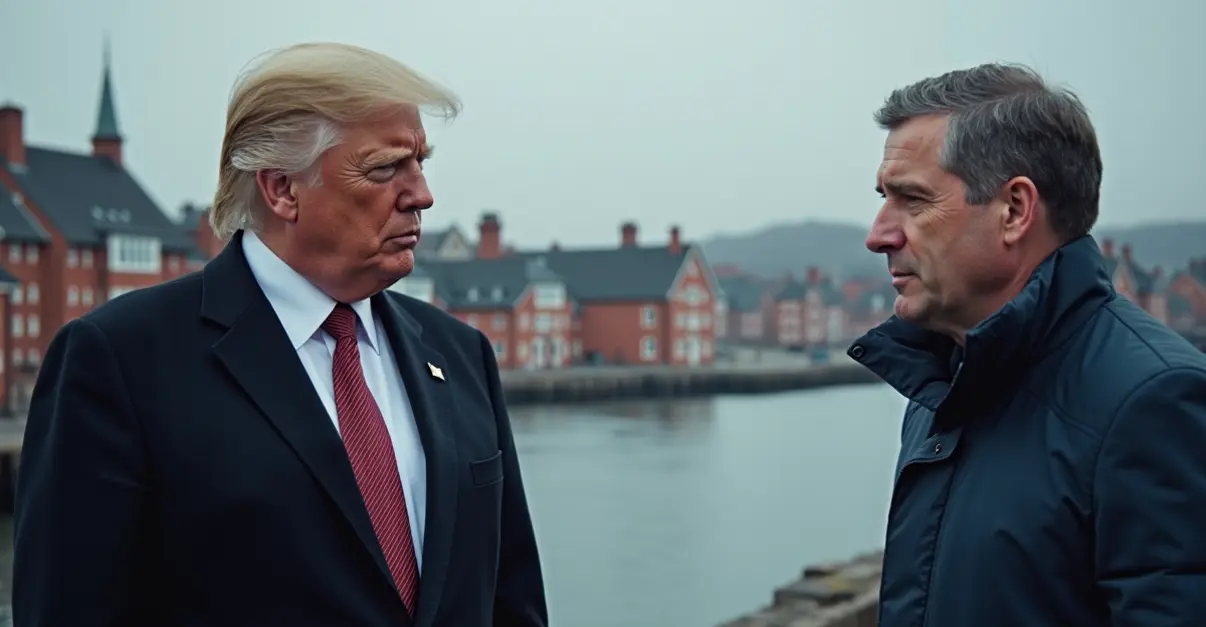
The comment drew immediate attention from allies and adversaries alike, as it echoed President Donald Trump's long-standing interest in acquiring Greenland — a semi-autonomous Danish territory that has repeatedly stated it is not for sale. Danish Prime Minister Mette Frederiksen and Greenlandic leaders have firmly rejected any notion of a transfer of sovereignty, emphasizing that Greenland's future will be decided by its people.
Background: The Greenland Crisis and US Strategic Interests
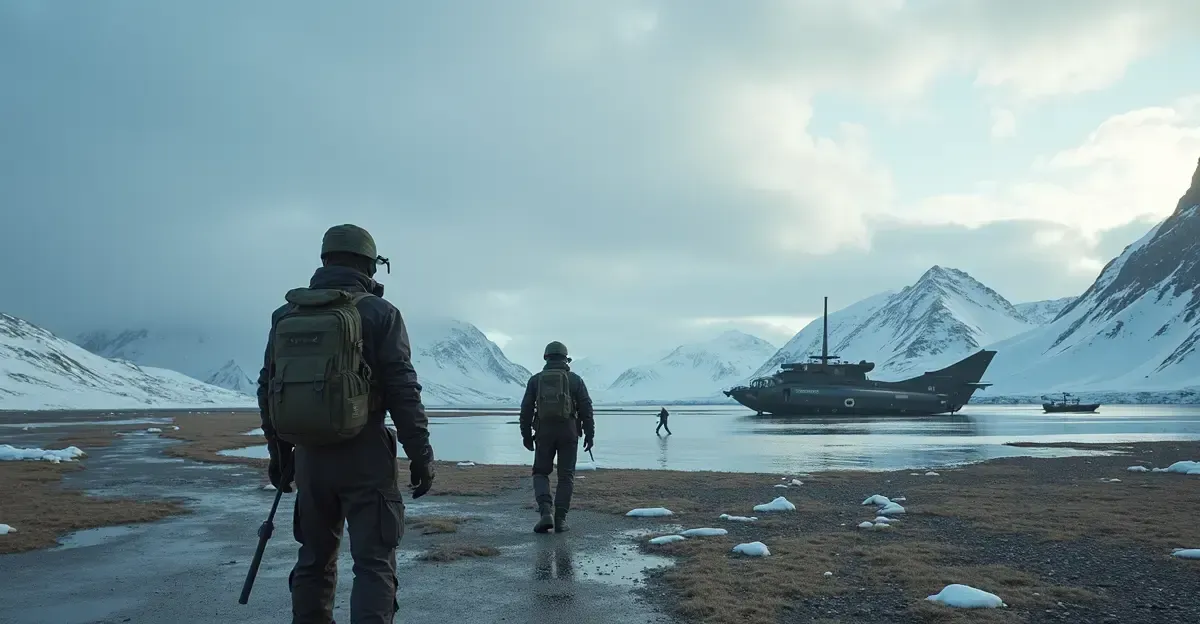
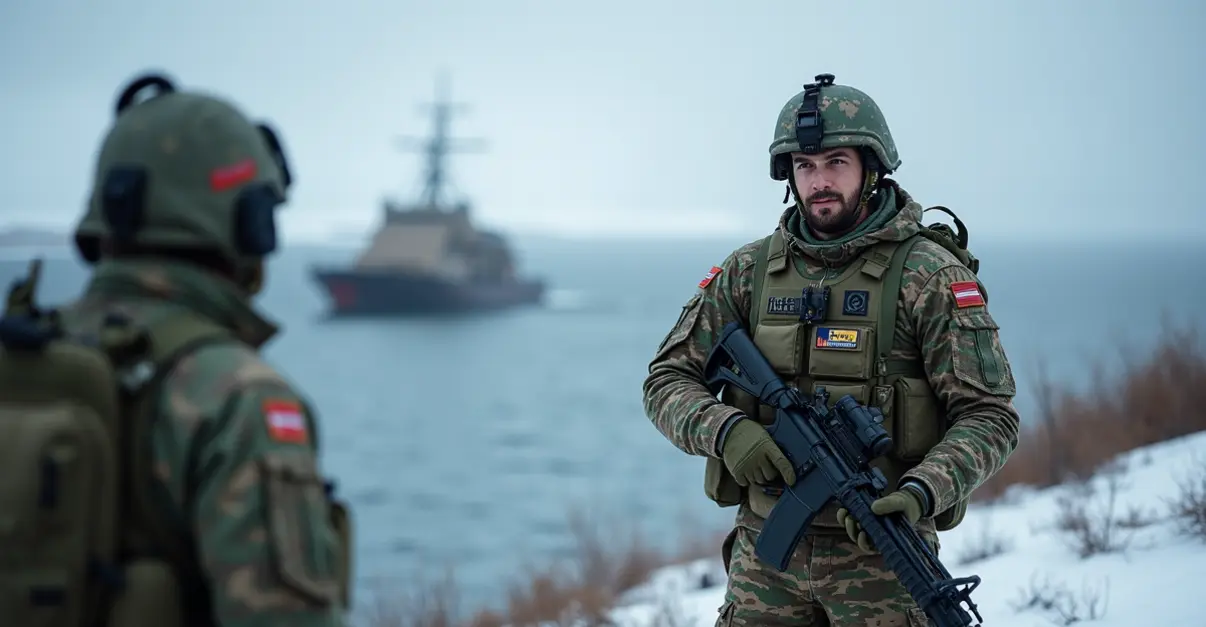
The so-called Greenland crisis began in January 2025 when the second Trump administration openly sought to annex the island. Tensions escalated dramatically in early 2026 after Trump refused to rule out military force and threatened 25% tariffs on European goods unless Denmark ceded the territory. Denmark, alongside eight NATO allies, deployed forces to defend Greenland, and large-scale 'Hands off Greenland' protests erupted in Nuuk and Copenhagen. A YouGov poll at the time found only 8% of Americans supported an invasion. Facing bipartisan US congressional opposition and international backlash, Trump reversed course on January 21, 2026, ruling out military force and dropping tariff threats after talks with NATO Secretary-General Mark Rutte. However, the underlying US push for a greater foothold in Greenland has not subsided. The US Arctic strategy and NATO tensions remain closely intertwined with these developments.
What Rubio Said: Key Excerpts From the Hearing
During his testimony, Representative Sarah McBride asked Rubio directly whether he was aware that Greenland is part of Denmark. The Secretary of State replied: 'For now.' When pressed on whether the US needs to own territory within the NATO alliance to defend itself, Rubio declined to answer directly but emphasized that 'we are currently in talks with Greenland and Denmark about the use of Greenland for our collective defense.' He described the island as 'crucial for missile defense' and suggested that 'pretty good news' could emerge from the ongoing discussions.
Rubio's remarks align with the administration's broader narrative that Greenland's strategic location — sitting along the shortest route between North America and Europe — makes it indispensable for monitoring Russian and Chinese activity in the Arctic. The US already operates Pituffik Space Base (formerly Thule Air Base) on the island, a key asset for missile warning and space surveillance. The geopolitical significance of the Arctic region continues to grow as melting ice opens new shipping lanes and resource extraction opportunities.
Oil, Minerals, and the Economic Dimension
President Trump's special envoy to Greenland, Louisiana Governor Jeff Landry, made headlines in May 2026 when he claimed during a Fox News interview that Greenland could export two million barrels of oil per day within 10 months, citing untapped reserves that could ease global energy prices amid the ongoing US-Iran conflict. However, according to Arctic Today, these claims are at odds with reality: Greenland currently has no oil production, no pipeline or export infrastructure, and not a single commercial barrel has ever been pumped there. The only active prospect is the Jameson Land basin, where a US firm and British partner plan two exploratory wells in late 2026 — merely to test if oil exists. Even if successful, production would be years away.
Beyond oil, Greenland holds an estimated 1.5 million tons of rare earth elements, ranking eighth globally in reserves. These minerals are critical for defense technologies, electronics, and green energy, making the island a coveted prize in the global competition for supply chain security. China has also pursued influence through its 'Polar Silk Road' strategy, with state-linked firms holding stakes in Greenlandic mining projects. The rare earth minerals supply chain competition is a key driver of US interest in the territory.
Public Opposition and Diplomatic Pushback
Despite Washington's overtures, public sentiment in Greenland remains overwhelmingly opposed to US acquisition. In May 2026, more than 500 Greenlanders protested the opening of a new, larger US consulate in Nuuk — a 30,000-square-foot facility that locals have dubbed 'Trump Towers.' Protesters chanted 'We don't want your money' and 'Greenlanders know a MAGA Trojan horse when we see one,' according to UPI. Organizer Aqqalukkuluk Fontain stated: 'Our message is that in a democratic world, no means no.'
Greenlandic Prime Minister Jens-Frederik Nielsen has reiterated that the island is not for sale and affirmed the right to self-determination. Denmark's government, which controls Greenland's foreign and defense policy, has backed this position. The US ambassador to Denmark, Kenneth Howery, defended the expanded consulate, saying the US looks forward to 'a closer partnership with Greenland' — a statement met with skepticism by many Greenlanders.
NATO and European Reactions
Rubio's 'for now' comment has further strained transatlantic relations already tested by the Greenland crisis and the US military campaign against Iran. NATO allies have expressed concern over Washington's unilateral approach to Arctic security. The upcoming NATO summit in The Hague, scheduled for July 2026, is expected to address these tensions. Rubio himself described the summit as potentially 'the most important in the alliance's history.' European leaders, including French President Emmanuel Macron, have denounced what they call 'bullying' tactics, while Canadian Prime Minister Mark Carney declared that 'the old global order is ending.'
Denmark's new coalition government, unveiled by Prime Minister Frederiksen in early June, has made defending Greenlandic sovereignty a cornerstone of its foreign policy. The Danish military, alongside NATO partners, continues to conduct exercises in and around Greenland as a show of force and commitment to territorial integrity.
What Comes Next?
While full annexation appears off the table for now, the US is pursuing a range of options to solidify its presence in Greenland. These include negotiating long-term military basing rights, securing preferential access to mineral resources, and expanding diplomatic and economic engagement. The US has also begun visiting former Cold War-era military bases on the island, considering reopening some. However, any deal that alters Greenland's sovereignty remains a non-starter for both Nuuk and Copenhagen. As Rubio himself acknowledged, the island is Danish 'for now' — a phrasing that leaves the door open to future change, but one that also underscores the deep diplomatic hurdles ahead.
Frequently Asked Questions
What did Marco Rubio say about Greenland?
During a House Foreign Affairs Committee hearing on June 3, 2026, US Secretary of State Marco Rubio said Greenland is part of Denmark 'for now,' signaling continued US interest in the territory.
Is Greenland for sale?
No. Both Denmark and Greenland's government have repeatedly stated that Greenland is not for sale. Greenlandic leaders emphasize the islanders' right to self-determination.
Why does the US want Greenland?
The US views Greenland as strategically vital for missile defense, Arctic security, and access to rare earth minerals and potential oil reserves. The island hosts the US Pituffik Space Base and sits along key Arctic transit routes.
What was the Greenland crisis?
The Greenland crisis was a diplomatic confrontation that began in 2025 when the Trump administration sought to annex Greenland. It escalated in early 2026 with threats of military force and tariffs, before Trump de-escalated in January 2026.
How have Greenlanders reacted to US overtures?
Overwhelmingly negatively. Large protests have taken place in Nuuk and Copenhagen, with slogans such as 'No means no' and 'Greenland belongs to the Greenlanders.' A new US consulate opened in May 2026 was met with hundreds of demonstrators.
Follow Discussion