

 Deutsch
 English
 Español
 Français
 Nederlands
 Português

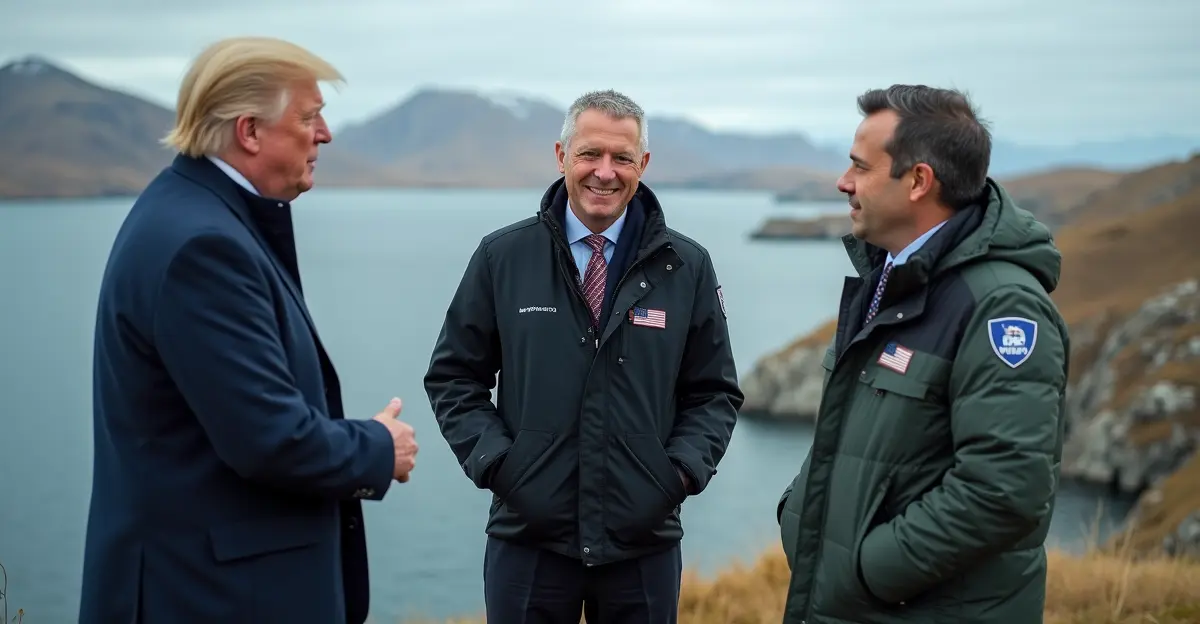





Breakthrough in Davos Eases Transatlantic Tensions
In a significant diplomatic development at the World Economic Forum in Davos, former U.S. President Donald Trump and NATO Secretary General Mark Rutte announced they have reached a framework for a future deal regarding Greenland and Arctic security. The announcement came after weeks of escalating tensions over Trump's persistent interest in acquiring the autonomous Danish territory.
'This is a deal for the long term,' Trump told reporters after his meeting with Rutte. 'It's about security and minerals. Everybody is in a really good position now.'
Tariff Threat Lifted
As a direct result of the framework agreement, Trump announced he would not impose punitive tariffs on eight European countries that were scheduled to take effect on February 1st. These tariffs had been threatened in response to European opposition to U.S. ambitions in Greenland.
Dutch Foreign Minister Van Weel expressed relief at the development, stating: 'The stone is now out of the shoe. This was blocking the transatlantic relationship, and now we can hopefully have a successful meeting between President Zelensky and President Trump.'
Strategic Importance of Greenland
Greenland's significance extends far beyond its icy landscapes. According to CSIS analysis, Greenland ranks eighth globally with 1.5 million tons of rare earth reserves, including two of the world's largest deposits. These minerals are essential for advanced technology and defense systems, offering potential relief from America's 80% dependence on China for these critical materials.
The territory also holds immense strategic military value. Located at the GIUK Gap (Greenland-Iceland-United Kingdom), it provides unmatched monitoring capabilities for Russian and Chinese naval movements. The U.S. already operates the Pituffik Space Base (formerly Thule Air Base) in northern Greenland, which serves as a critical missile early warning system.
What the Framework Includes
While specific details remain confidential, sources indicate the framework involves:
- Joint NATO defense of Greenland and the Arctic region
- U.S. access to critical mineral resources
- Development of the proposed 'Golden Dome' missile defense system
- Assurances that Greenland remains part of Denmark
NATO Secretary General Rutte clarified that 'the issue of whether Greenland stays with Denmark did not come up during our discussion,' addressing concerns about sovereignty changes.
European Reactions
European leaders responded with cautious optimism. Danish Foreign Minister Lars Løkke Rasmussen noted: 'The day ended better than it began.' However, German Finance Minister Lars Klingbeil tempered expectations: 'It's good that Denmark and the U.S. are in dialogue, but we should wait and not become too hopeful too quickly.'
Despite the framework agreement, an emergency EU summit on Greenland proceeded as scheduled in Brussels, indicating that European leaders remain vigilant about protecting their interests in the region.
Geopolitical Context
The Greenland issue has emerged as a flashpoint in Arctic geopolitics. As The Guardian reports, melting Arctic ice due to climate change is opening new shipping routes and exposing valuable resources, transforming the region into a strategic frontline between major powers.
Russia has significantly expanded its Arctic military infrastructure, while China has declared itself a 'near-Arctic state' and invested in Greenland's mining sector through companies like Shenghe Resources.
NATO correspondent Kysia Hekster observed: 'We still don't know much about the content of this framework, but tempers have been calmed for now. What's certain is that Rutte coordinated this with the Danes in advance, so he speaks on their behalf too.'
The framework represents a diplomatic victory for all parties involved, though the real test will come during the detailed negotiations that follow. For now, markets have responded positively, with stocks rebounding after the announcement, and transatlantic relations appear to have avoided a potentially damaging confrontation over Greenland's future.
Follow Discussion