
 Deutsch
 English
 Español
 Français
 Nederlands
 Português

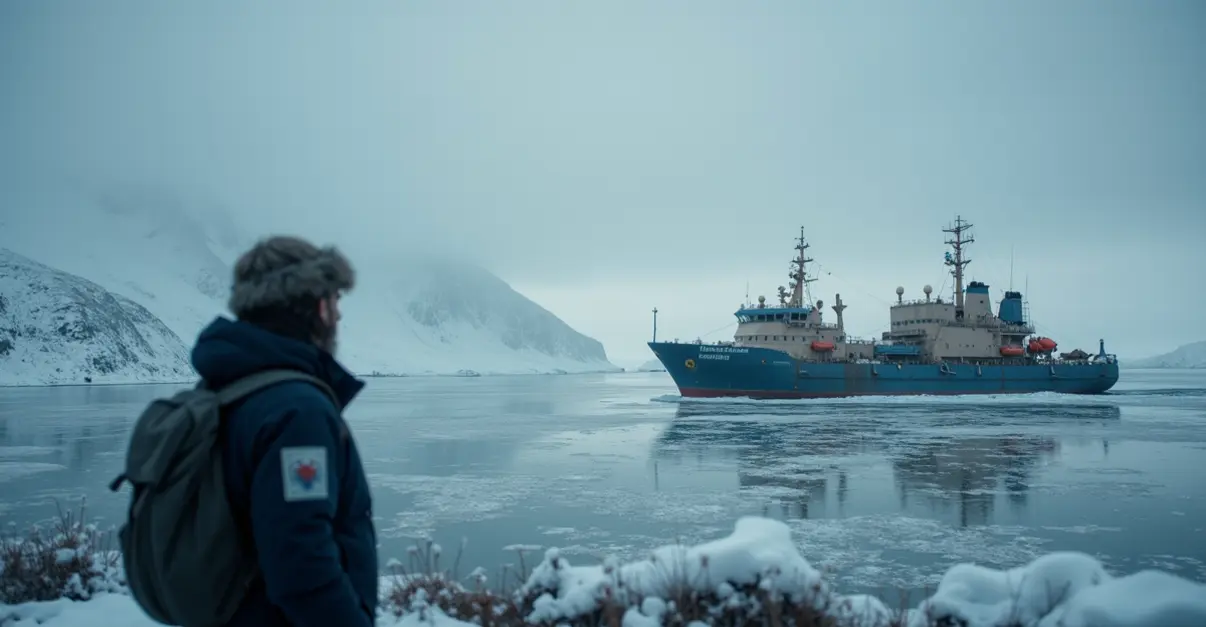





Denmark Takes Firm Stance Against US Greenland Acquisition Plans
In a decisive move that has escalated transatlantic tensions, Denmark has officially refused to enter negotiations with the United States regarding the potential sale of Greenland. Foreign Minister Lars Løkke Rasmussen made the announcement during an interview with Danish public broadcaster DR, stating unequivocally: 'We will not enter negotiations where we have to give up our principles. We will never do that.'
Trump's Persistent Ambitions Meet Danish Resistance
The refusal comes after President Donald Trump reiterated at the World Economic Forum in Davos that the United States 'absolutely needs Greenland for its defense' and wants to acquire it at all costs. While Trump ruled out military force this time, his language remained threatening: 'You can say yes and you can say no, and we will remember that.'
Rasmussen acknowledged the positive aspect of Trump ruling out military means but emphasized that 'it doesn't solve the problem.' The Danish minister had previously met with his Greenlandic counterpart Motzfeldt and U.S. Secretary of State Rubio in Washington earlier this month, where they agreed to establish a joint working group to seek solutions - an arrangement now effectively nullified by Denmark's refusal to negotiate.
Historical Context and Strategic Importance
Greenland, the world's largest island, has been part of the Kingdom of Denmark since the 18th century, though it gained extensive autonomy in 2009. The United States has long eyed Greenland for its strategic position in the Arctic, where melting ice due to climate change is opening new shipping routes and resource exploration opportunities. The U.S. already maintains the Pituffik Space Base (formerly Thule Air Base) in northwestern Greenland under a 1951 defense agreement.
According to historical records, this isn't the first time the U.S. has attempted to acquire Greenland. Secret offers were made in 1946 and discussions date back to 1867, but all previous attempts were rejected by Denmark.
International Reactions and NATO Implications
The conflict has significant implications for NATO, with Denmark receiving support from European NATO members and Canada. Dutch Foreign Minister Van Weel expressed cautious relief at Trump's speech, noting: 'At least we saw a president who, after the past few days with AI images and threats that it would happen within a few weeks, now adopted a somewhat more constructive tone.'
Van Weel suggested this might be due to domestic American pressure, noting 'very little support among the American population for the plans with Greenland.' The crisis has prompted discussions about European strategic autonomy, with French President Emmanuel Macron calling for a 'new form of European independence' according to international reactions.
Greenlandic Opposition and Future Outlook
Greenlanders themselves have made their position clear through massive protests in the capital Nuuk, where thousands marched to the U.S. consulate carrying signs reading 'Make America Go Away' and chanting 'Kalaallit Nunaat' (Greenland's name in Greenlandic). Surveys indicate approximately 85% of Greenlanders oppose an American takeover.
While Greenland's political parties generally support eventual independence from Denmark, they prefer maintaining their current relationship rather than joining the United States. The situation remains tense as Trump has threatened tariffs of 10-25% on eight European allies starting February 1 if no deal is reached, though legal challenges to these tariffs are pending before the Supreme Court.
The standoff represents one of the most significant diplomatic crises in recent transatlantic relations, testing the foundations of NATO and raising fundamental questions about sovereignty, self-determination, and the future of Arctic geopolitics.




Follow Discussion