


 Deutsch
 English
 Español
 Français
 Nederlands
 Português


 Share
Share




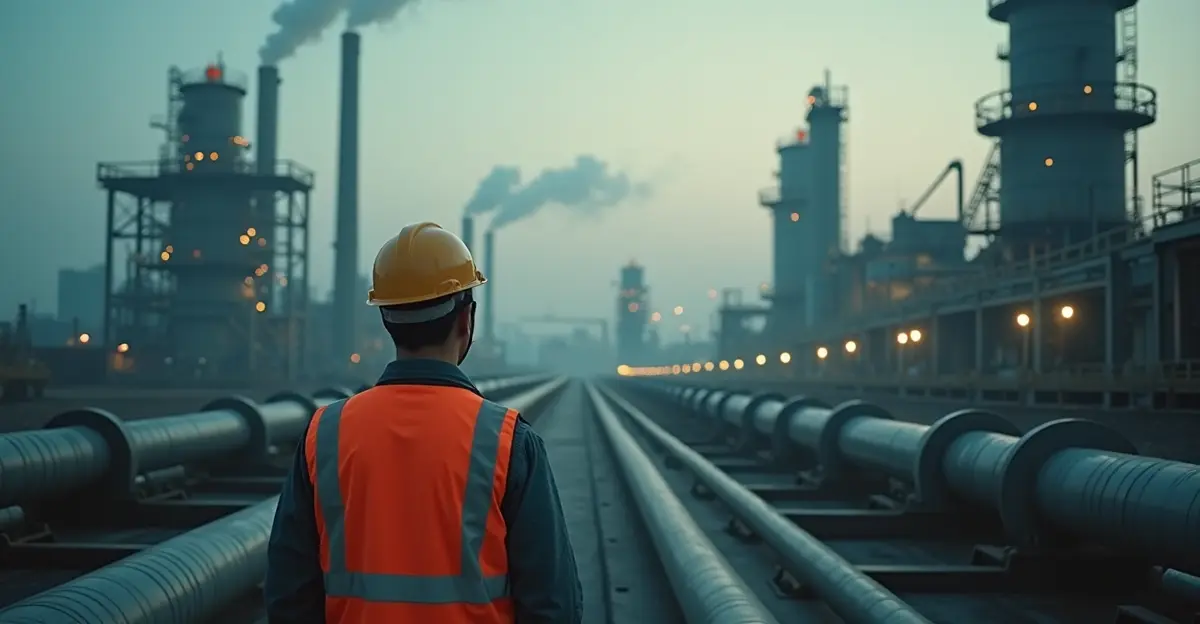
The global trade architecture is undergoing its most consequential realignment since the 1970s oil shocks, as the United States, European Union, and allied nations push forward with the Mineral Security Partnership (MSP) and targeted decoupling from Chinese rare earth and lithium processing. In 2026, a parallel set of trade corridors is emerging — from Australia's lithium refineries to new processing hubs in Canada and Chile — creating what analysts are calling the New Silk Roads of critical mineral supply chains. This strategic geography is reshaping geopolitical alliances, industrial policy, and the very architecture of global trade.
From MSP to FORGE: The Institutional Framework
The Minerals Security Partnership, launched in 2022 with 14 countries and the EU, moved from diplomatic declarations to binding investment commitments in 2026. On February 4, 2026, U.S. Secretary of State Marco Rubio hosted the 2026 Critical Minerals Ministerial, attended by representatives from 54 countries and the European Commission. The centerpiece was the announcement of FORGE (Forum on Resource Geostrategic Engagement), the successor to the MSP, chaired by the Republic of Korea. The event produced 11 new bilateral critical minerals frameworks with countries including Argentina, Morocco, the Philippines, the UAE, and the UK.
The U.S. government has mobilized over $30 billion in letters of interest, loans, and investments for critical mineral projects over the past six months. The EXIM Bank's Project Vault — a $10 billion initiative to establish America's first Strategic Critical Minerals Reserve — was approved in February 2026, with private-sector partners including Clarios, GE Vernova, Western Digital, and Boeing. Unlike the Strategic Petroleum Reserve, Project Vault is designed as insurance against systemwide supply shocks, with private firms paying subscription fees for access during disruptions.
China's Retaliation: Export Controls as Geopolitical Weapon
China has retaliated against Western supply chain diversification with increasingly sophisticated export controls. In November 2025, Beijing imposed export controls on gallium, germanium, antimony, and superhard materials via MOFCOM Announcements 70 and 72. While Announcement 72 provided a one-year suspension for civilian trade until November 27, 2026, the underlying control regime remains intact, with a broad military end-use ban that was never lifted. Export licensing approval rates for European firms have fallen below 25%, triggering sixfold price spikes.
China controls 90% of rare earth processing, 80% of tungsten, and 60% of antimony globally. Over 80% of European companies depend on Chinese supply chains for critical minerals essential to defense, EVs, and renewable energy. The World Economic Forum's 2026 Global Risks Report ranks geoeconomic confrontation as the top global risk, underscoring the stakes of this supply chain confrontation.
The November 2026 Cliff
The temporary suspension of China's export ban on gallium, germanium, and antimony to the U.S. expires on November 27, 2026. While the suspension marks a tactical thaw following trade talks between Presidents Trump and Xi, licensing volumes remain uncertain, and Beijing retains the ability to re-impose strict controls. Western alternative projects have expanded far slower than policy rhetoric suggested, with most remaining in permitting or pilot phases. Key risks concentrate in defense electronics, infrared optics, and precision machining where substitution options are limited.
Australia: The Lithium Paradox
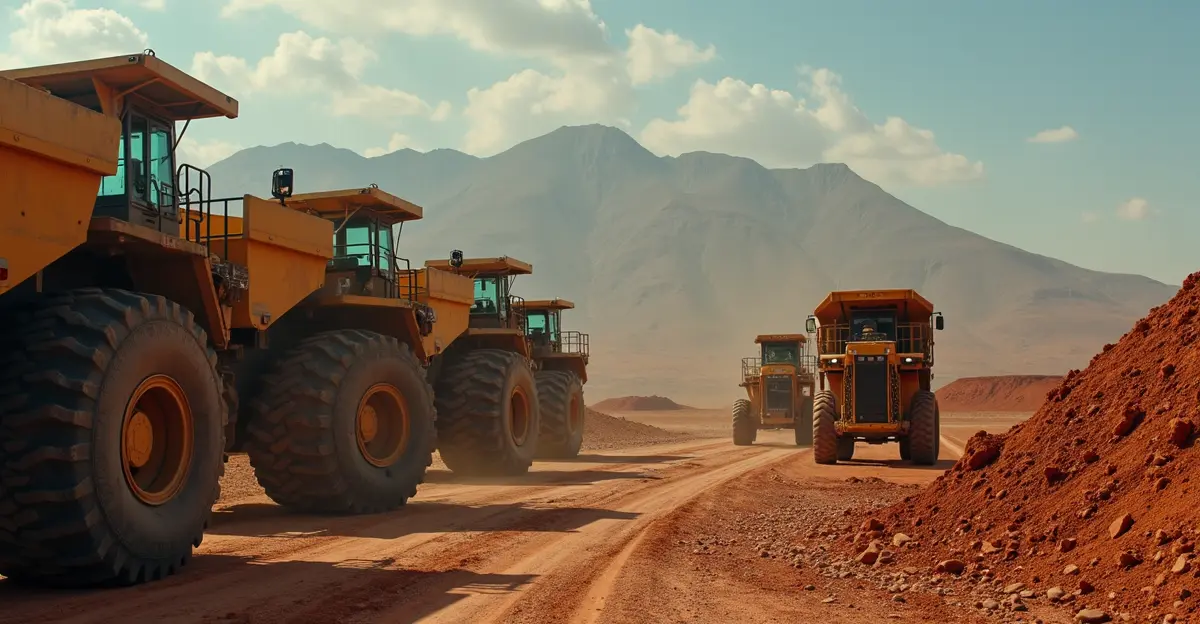
Australia is the world's largest lithium exporter, contributing 46% of global supply, but over 85% of Australian lithium is exported to China as spodumene concentrate for processing. The Australian government's ambition to build domestic downstream processing capacity has faced significant headwinds. In February 2026, U.S. chemicals giant Albemarle announced the immediate closure of its Kemerton lithium refinery in Western Australia, affecting approximately 275 jobs. The company cited that recent lithium price rises have not been enough to offset operating costs amid high industrial electricity prices.
However, progress is being made. The Covalent Lithium Refinery in Kwinana, a 50:50 joint venture between Wesfarmers and SQM, has an annual capacity of 50,000 tonnes of battery-grade lithium hydroxide — enough for approximately 1 million EV batteries annually. The facility integrates directly with the Mount Holland spodumene mine, creating a fully vertical mine-to-refinery operation. Mining commentator Tim Treadgold noted that Australia's high energy costs make downstream processing uncompetitive compared to China, highlighting a structural challenge that energy infrastructure investment alone cannot solve.
Canada: The Emerging Processing Hub
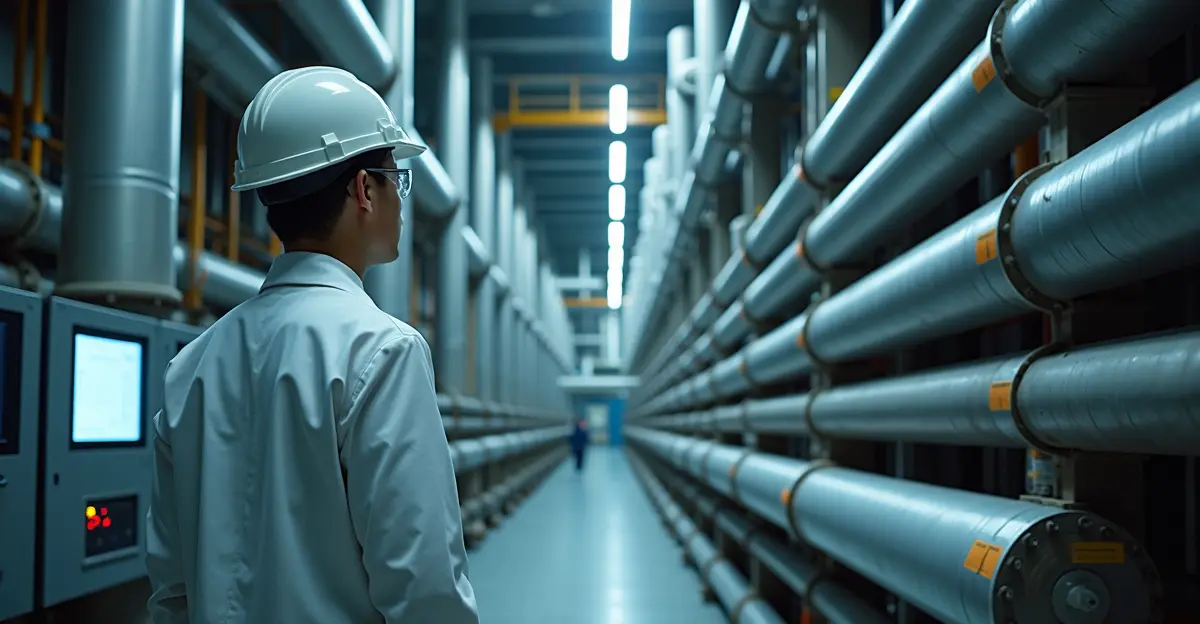
Canada is positioning itself as a critical minerals processing powerhouse. In April 2026, North America's first commercial-scale electrochemical lithium refinery was commissioned in Delta, British Columbia, operated by Mangrove Lithium. The Delta plant produces 1,000-1,100 tonnes of battery-grade lithium hydroxide annually, enough for ~25,000 EVs. Unlike conventional acid-leach refining, Mangrove uses electrochemical electrodialysis — an ion-separation process powered by BC's hydroelectric grid — eliminating sulphate waste, doubling output per feedstock, and reducing carbon footprint.
The refinery sources spodumene from Quebec's North American Lithium mine, creating Canada's first domestic lithium corridor. Federal funding of CAD $21.88 million supports the project, with plans for an Eastern Canada expansion targeting 500,000 EVs annually. Canada has also announced a C$1.6 billion investment to develop a lithium supply chain hub in Alberta, leveraging significant lithium brine reserves in the Leduc Formation. The Canada-Australia critical minerals partnership signed in March 2026 further strengthens this emerging corridor.
Chile: National Lithium Strategy and Indigenous Tensions
Chile is advancing its National Lithium Strategy through a partnership between SQM and state-owned Codelco. The joint venture, Novandino Litio, involves a $3 billion capital commitment to exploit lithium in the Salar de Atacama, with Codelco holding majority ownership. Production targets include an additional 300,000 metric tons of lithium carbonate equivalent from 2025-2030, and 280,000-300,000 MT annually from 2031-2060. By 2031, Chile will receive 85% of the partnership's operating margin.
However, the strategy faces significant opposition. Rio Tinto, in a joint venture with Codelco, plans to extract lithium from the Salar de Maricunga salt flat, but the Colla Indigenous people fear the water-intensive extraction process will threaten their water supplies and a fragile ecosystem home to 53 species including Andean flamingos. Microbiologist Cristina Dorador warns that reinjected brine could harm unique flora and fauna. A cross-party group of senators has introduced a bill to establish a dedicated legal framework for critical minerals, aiming to strengthen traceability and oversight while positioning Chile competitively in the global landscape.
Geopolitical and Economic Implications
The reconfiguration of critical mineral supply chains carries profound implications. A multi-institutional analysis warns that rebuilding independent alternatives to Chinese processing would take 20-30 years, far exceeding the current geopolitical window. China is weaponizing control rather than scarcity, using temporary reversible restrictions to maintain pricing power and extract strategic concessions while preventing large-scale Western alternative investment.
The U.S. Geological Survey warned that a total Chinese export ban could reduce U.S. GDP by $3.4-9 billion. Western nations face a narrowing 12-18 month window to act decisively or accept prolonged supply chain vulnerability. The European Union's Critical Raw Materials Act and similar legislation in allied nations aim to accelerate permitting and investment, but implementation lags behind policy ambition.
Environmental and Social Dimensions
The rush to secure critical minerals also raises environmental and social concerns. Lithium extraction in Chile's Atacama region threatens fragile ecosystems and Indigenous livelihoods. In Australia, the closure of the Kemerton refinery highlights the tension between value-added processing ambitions and economic viability. The Mangrove Lithium refinery in Canada demonstrates that technological innovation can reduce environmental impact, but scaling such solutions remains a challenge.
As Secretary Rubio stated at the February ministerial, "We cannot trade one dependency for another. Our critical minerals strategy must be built on partnerships that respect environmental standards, labor rights, and the sovereignty of resource-rich nations."
FAQ
What is the Mineral Security Partnership (MSP)?
The MSP was a transnational association of 14 countries and the EU, launched in 2022 to secure stable supplies of critical raw materials. In February 2026, it was succeeded by FORGE (Forum on Resource Geostrategic Engagement), chaired by South Korea.
Why did China impose export controls on gallium, germanium, and antimony?
China imposed these controls in November 2025 as retaliation for U.S. semiconductor restrictions and Western efforts to diversify critical mineral supply chains away from Chinese dominance. The controls include a broad military end-use ban that remains in effect.
What is Project Vault?
Project Vault is a $10 billion public-private initiative by the U.S. Export-Import Bank to establish America's first Strategic Critical Minerals Reserve. It aims to protect domestic manufacturers from supply shocks by stockpiling essential raw materials.
How much lithium does Australia process domestically?
Despite being the world's largest lithium exporter, over 85% of Australian lithium is exported as spodumene concentrate to China for processing. Domestic processing capacity is growing but faces challenges from high energy costs and lithium price volatility.
What are the main environmental concerns with critical mineral extraction?
Key concerns include water-intensive extraction in arid regions like Chile's Atacama desert, threats to Indigenous livelihoods and biodiversity, and the carbon footprint of conventional refining processes. New technologies like electrochemical refining aim to reduce environmental impact.
Conclusion: A New Trade Architecture
The critical mineral supply chain realignment of 2026 represents a fundamental shift in global trade architecture. The New Silk Roads — from Australian mines to Canadian refineries, from Chilean salt flats to American stockpiles — are being forged in response to geopolitical necessity. Yet the transition is fraught with challenges: high costs, environmental concerns, Indigenous rights, and the sheer scale of investment required to match Chinese processing capacity.
The November 2026 deadline for China's export control suspension looms as a critical inflection point. Whether the emerging Western supply chains can achieve meaningful scale before then will determine not only the fate of the green energy transition but the balance of economic power for decades to come. As the global trade architecture continues to evolve, one thing is clear: the era of cheap, secure, and geopolitically neutral critical mineral supply chains is over.



Follow Discussion