


 Deutsch
 English
 Español
 Français
 Nederlands
 Português


 Share
Share




China says it drove away a Dutch warship near the disputed Paracel Islands, escalating tensions in the strategic waterway.
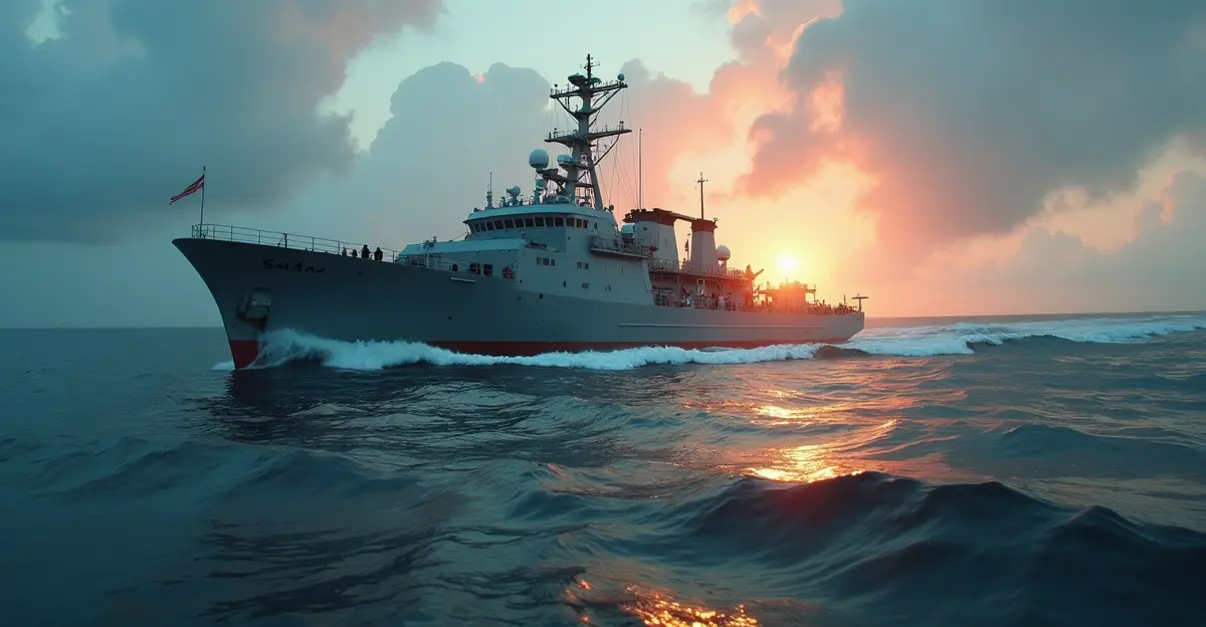
On May 27, 2026, the People's Liberation Army (PLA) Southern Theater Command announced that Chinese naval and air forces had driven the Royal Netherlands Navy frigate HNLMS De Ruyter (F804) away from the vicinity of the Paracel Islands in the South China Sea. Beijing accused the Dutch vessel of illegally entering Chinese-claimed territorial waters and airspace. The incident marks the latest in a series of confrontations between China and Western naval powers operating in the region to uphold freedom of navigation.
Background: The Pacific Archer Mission
The HNLMS De Ruyter, a De Zeven Provinciën-class air defense and command frigate, departed Den Helder in early April 2026 for a five-and-a-half-month global deployment known as Pacific Archer. The mission aims to promote maritime security, freedom of navigation, and strengthen diplomatic and military ties with partner nations across the Indo-Pacific, Mediterranean, and Atlantic. The frigate is equipped with an NH90 NATO frigate helicopter, which China claims repeatedly entered its airspace.
The incident follows a similar confrontation in 2024, when Chinese fighter jets circled the Dutch frigate HNLMS Tromp in the East China Sea. The Netherlands Indo-Pacific naval presence has increased in recent years, including joint operations with British and U.S. forces.
The Incident: What Happened?
According to PLA Southern Theater Command spokesperson Senior Captain Zhai Shichen, Chinese naval and air units were dispatched after the De Ruyter and its helicopter allegedly intruded into the airspace of the Paracel Islands. China claims the archipelago, which it has controlled since seizing it from Vietnam in 1974. The PLA stated it used "necessary measures" including spoken warnings and electronic jamming to force the Dutch warship to leave.
Chinese state media reported that the frigate was expelled using electronic countermeasures and verbal warnings. A PLA statement said: "We strongly oppose this and urge the Netherlands to immediately stop these infringing and provocative actions."
The Dutch Ministry of Defense confirmed the vessel involved was Zr. Ms. De Ruyter but declined to comment on operational details. A spokesperson stated: "The frigate operates on the basis of international law, including the United Nations Convention on the Law of the Sea (UNCLOS). We sail through waters where free passage can take place and have not been in territorial waters. We continue our route." The UNCLOS freedom of navigation principles are central to the dispute.
Commander's Account
Just five days before the Chinese announcement, on May 22, Commander Rodger de Wit told reporters in Manila, Philippines, that his ship had been approached by a Chinese naval helicopter in the South China Sea. He described the interaction as professional and limited: "We were approached by a helicopter up there, but that was really professional on both sides. They just came to see who we were and left again. They asked who we were, and we replied, and that's enough." It remains unclear whether this was the same incident referenced by Beijing.
Strategic Implications
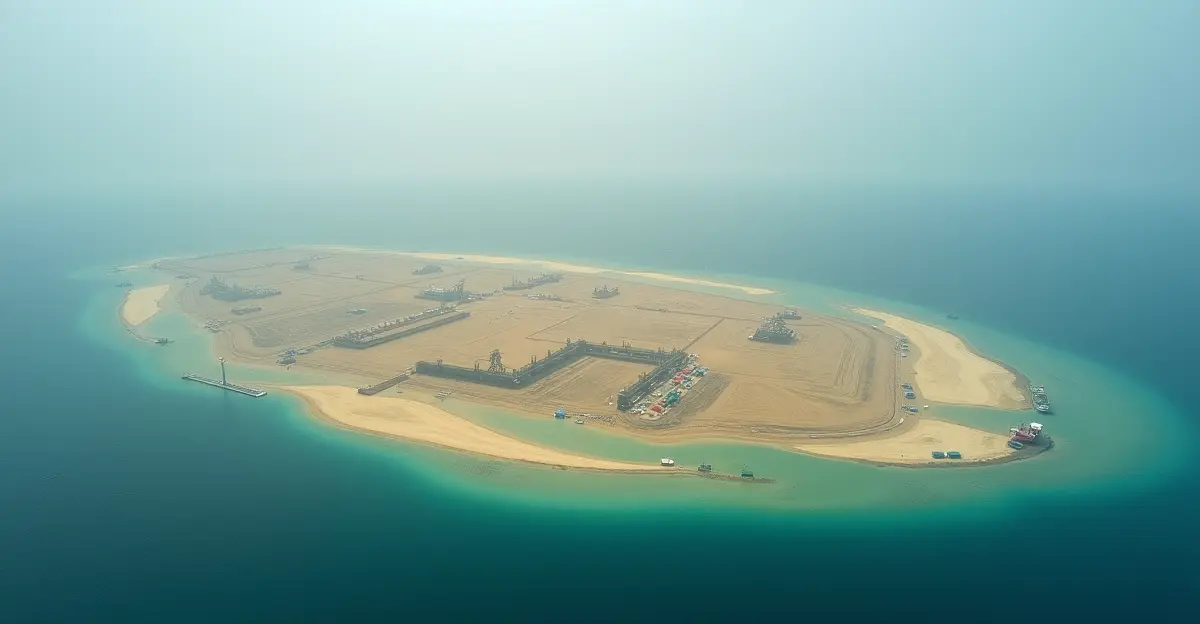
The South China Sea is one of the world's most critical maritime chokepoints, with an estimated $3 trillion in annual trade passing through its waters. It holds vast oil and gas reserves and is subject to overlapping territorial claims by China, Vietnam, the Philippines, Malaysia, Brunei, and Taiwan. The Paracel Islands are at the heart of the dispute.
China claims sovereignty over most of the sea based on its controversial nine-dash line, a claim the Permanent Court of Arbitration in The Hague ruled invalid under UNCLOS in 2016. Beijing has since intensified militarization, building artificial islands and airstrips, and expanding electronic warfare capabilities. The South China Sea militarization 2026 continues to alarm regional states and Western powers.
The Netherlands, like other European nations, has stepped up naval deployments to the Indo-Pacific to support a rules-based maritime order. The Pacific Archer mission includes port calls in the Philippines, participation in RIMPAC exercises near Hawaii, and operations with EUNAVFOR Aspides. The frigate's visit to Manila coincided with the 75th anniversary of diplomatic relations between the Netherlands and the Philippines.
International Reactions
The United States, which conducts regular Freedom of Navigation Operations (FONOPs) in the South China Sea, has not yet officially commented on this specific incident. However, analysts note that the confrontation underscores growing friction between China and European navies operating in the region. In 2024, a similar incident involved the German frigate Bayern, and in 2025, a French surveillance aircraft was harassed by Chinese jets.
China's foreign ministry reiterated its position that the South China Sea is a "peace, stability, and prosperity" region and accused external forces of stoking tensions. The Dutch government has called for de-escalation and dialogue, while reaffirming its commitment to international law.
FAQ
What is the Paracel Islands dispute?
The Paracel Islands are a disputed archipelago in the South China Sea. China has controlled them since 1974, but Vietnam and Taiwan also claim sovereignty. The islands are strategically located near major shipping lanes.
Did the Dutch frigate violate international law?
The Netherlands insists the De Ruyter was operating in accordance with UNCLOS, which guarantees freedom of navigation in exclusive economic zones. China claims the frigate entered its territorial waters, a claim the Netherlands denies.
What is Pacific Archer?
Pacific Archer is a five-and-a-half-month global deployment by the Royal Netherlands Navy, aimed at promoting maritime security, freedom of navigation, and strengthening partnerships with allied nations.
Has this happened before?
Yes. In 2024, Chinese fighter jets circled the Dutch frigate HNLMS Tromp in the East China Sea. Similar incidents have involved German, French, and Australian vessels in recent years.
What are electronic warfare measures?
Electronic warfare involves using electromagnetic energy to disrupt enemy communications, radar, or other systems. China reportedly used electronic jamming to interfere with the Dutch frigate's operations.


Follow Discussion