


 Deutsch
 English
 Español
 Français
 Nederlands
 Português


 Share
Share




Historic heatwave grips Central Europe as temperature records fall across Germany, Poland, and Czech Republic
A relentless heatwave has shattered long-standing temperature records across Central Europe, with Germany recording a provisional all-time high of 41.7°C (107°F) in Neißemünde-Coschen, Brandenburg, on June 28, 2026. The extreme heat, which meteorologists have described as 'completely unprecedented,' marks the third consecutive day of broken records in Germany and has caused widespread disruption to infrastructure, health services, and daily life across the region.
According to the German Weather Service (DWD), the previous record of 41.5°C set just a day earlier in Möckern-Drewitz, Saxony-Anhalt, was surpassed as the heat dome intensified. The impact of climate change on heatwaves has been identified as a key driver, with scientists from World Weather Attribution concluding that such extreme June temperatures would have been 'virtually impossible' without human-induced global warming.
Record temperatures across the region
Germany: Three consecutive national records
Germany has experienced an unprecedented sequence of all-time high temperatures. On Friday, June 26, Saarbrücken recorded 41.3°C. Saturday saw 41.5°C in Möckern-Drewitz, and Sunday's peak of 41.7°C in Neißemünde-Coschen set a new national benchmark. The village of Kubschütz in Saxony also recorded the hottest night in German history, with a minimum temperature of 29.4°C, offering no relief from the heat.
Poland: 105-year-old record broken
Poland recorded its highest temperature since measurements began, with the mercury reaching 40.5°C (104.9°F) in the western border town of Słubice on June 28. This surpassed the previous national record of 40.2°C, which had stood since 1921 when measured in Opole (then part of the German Empire). Preliminary data also showed 40.3°C in Toruń, according to the state meteorological agency IMGW.
Czech Republic: 'Completely unprecedented'
The Czech Republic broke its all-time temperature record twice within 24 hours. On Saturday, June 27, Doksany, north of Prague, recorded 40.9°C, surpassing the 2012 record of 40.4°C. The following day, the same location reached 41.9°C — a staggering 1.5°C above the previous record. Czech meteorologists described the margin as 'completely unprecedented,' with the Czech Hydrometeorological Institute (ČHMÚ) stating: 'Whether we like it or not, we must adapt. The sooner, the better. Such extreme weather conditions will occur more frequently in the coming years and decades.'
Austria and Slovakia: Near-record heat
In Austria, Vienna recorded 40°C for the first time in its history, making it the second hottest day nationally since records began. Slovakia came within one degree of its national record, reaching 39°C. The heatwave also affected Hungary and other parts of the Balkans, with temperatures exceeding 38°C in multiple locations.
Infrastructure disruption and health impacts
The extreme heat has caused significant damage to infrastructure across the affected countries. In Germany, roads buckled on multiple motorways, including the A1 and A9, and Deutsche Bahn advised against non-essential travel due to the risk of rail buckling. Trams in Leipzig were halted after asphalt melted onto tracks. In Poland, roads were damaged and train services were cancelled or delayed. The economic cost of extreme weather events is expected to run into hundreds of millions of euros.
At least 15 drowning deaths have been reported in Germany alone as people sought relief in lakes and rivers. The World Health Organization reported that more than 1,300 excess deaths linked to high temperatures have been recorded across Europe since June 21. In France, which experienced its hottest day on record (44.3°C in Pissos) earlier in the week, approximately 1,000 excess deaths were recorded between June 24 and 27. Spain reported at least 327 heat-related deaths.
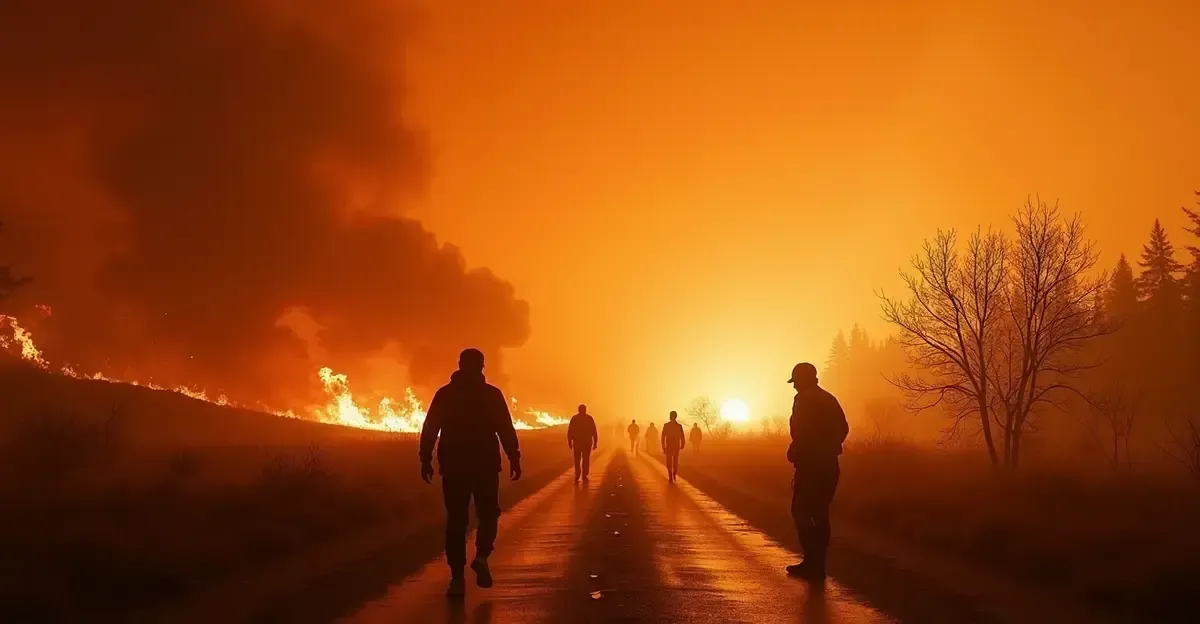
Forest fires have erupted in several regions. In Germany, a large fire near Bad Kreuznach in Rhineland-Palatinate forced the evacuation of 650 residents from a forest contaminated with unexploded World War II munitions. Firefighters faced extreme difficulty in accessing the area due to the danger of explosions.
Climate change attribution
Scientists from World Weather Attribution, an international network of climate researchers, conducted a rapid analysis of the heatwave and concluded that comparable June heat would have been 'virtually impossible' in a world without human-caused climate change. Europe is warming at approximately twice the global average rate, making heatwaves more frequent, intense, and longer-lasting.
The heatwave is being driven by a persistent Omega block atmospheric pattern — a stationary high-pressure system that acts like a lid, trapping warm air underneath and intensifying surface temperatures. This 'heat dome' has drawn super-heated Saharan air northward, while depleted spring soil moisture has shifted the surface energy balance toward extreme heating.
The role of atmospheric blocking patterns in extreme weather is becoming increasingly important as climate change alters global circulation systems.
What comes next
As the heatwave begins to shift eastward toward the Balkans and Eastern Europe, severe thunderstorms and heavy rainfall are expected to follow. The German Weather Service has warned of violent storms, hail, and flooding, with temperatures set to plunge from above 40°C to around 25-29°C within days. Over 2,700 lightning strikes were already recorded in North Rhine-Westphalia as the cold front arrived.
Authorities across the region are urging residents to remain vigilant, stay hydrated, and check on vulnerable neighbors. The World Meteorological Organization has warned that the heatwave could affect parts of Southern and Eastern Europe for another two weeks, with the Balkans likely to experience the next peak in temperatures.
Frequently Asked Questions
What caused the 2026 Central Europe heatwave?
The heatwave was caused by a persistent Omega block atmospheric pattern that created a heat dome over Western and Central Europe, trapping hot air and intensifying surface temperatures. Climate change made the event significantly more likely and intense.
What were the highest temperatures recorded?
Germany: 41.7°C in Neißemünde-Coschen (June 28); Czech Republic: 41.9°C in Doksany (June 28); Poland: 40.5°C in Słubice (June 28); France: 44.3°C in Pissos (June 23).
How many people died during the heatwave?
The WHO reported more than 1,300 excess deaths across Europe since June 21. France recorded approximately 1,000 excess deaths, Spain at least 327, and Germany at least 15 drowning deaths. The full toll is expected to be higher once all data is collected.
Is this heatwave linked to climate change?
Yes. World Weather Attribution's rapid analysis concluded that such extreme June heat would have been 'virtually impossible' without human-induced climate change. Europe is warming at roughly twice the global average rate.
What infrastructure damage occurred?
Roads buckled on German motorways, train services were disrupted across Germany and Poland, trams halted in Leipzig due to melted asphalt, and multiple forest fires broke out. Nuclear power plants in France struggled with cooling water availability.





Follow Discussion