


 Deutsch
 English
 Español
 Français
 Nederlands
 Português


 Share
Share




The effective closure of the Strait of Hormuz following the February 28, 2026, military conflict with Iran has triggered the largest oil supply disruption in modern history, removing roughly 20% of global crude from international markets and sending shockwaves through the world economy. With daily ship transits collapsing by 95%—from approximately 130 vessels to just six—the crisis has pushed West Texas Intermediate crude past $97 per barrel and prompted the Dallas Federal Reserve to project a staggering 2.9 percentage point drag on annualized global GDP growth in the second quarter of 2026. "This is not a replay of 1973 or even 2022," said Dallas Fed senior economist Lutz Kilian. "Previous disruptions removed 4 to 6 percent of supply. We are looking at a shock three to five times larger."
How the Strait Became a Flashpoint
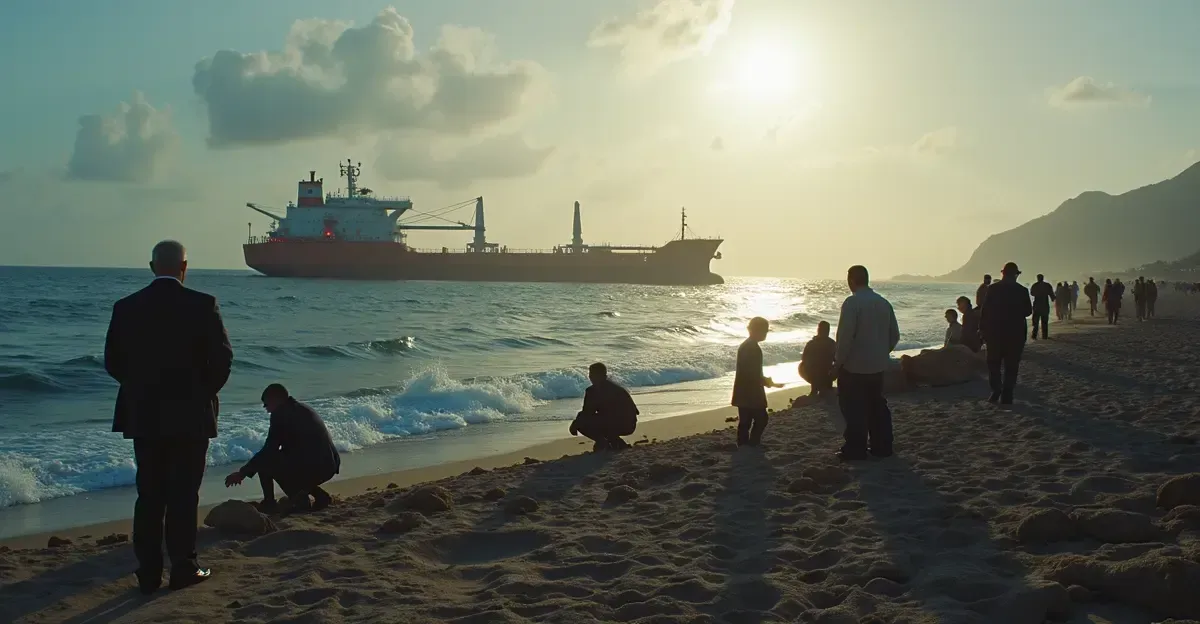
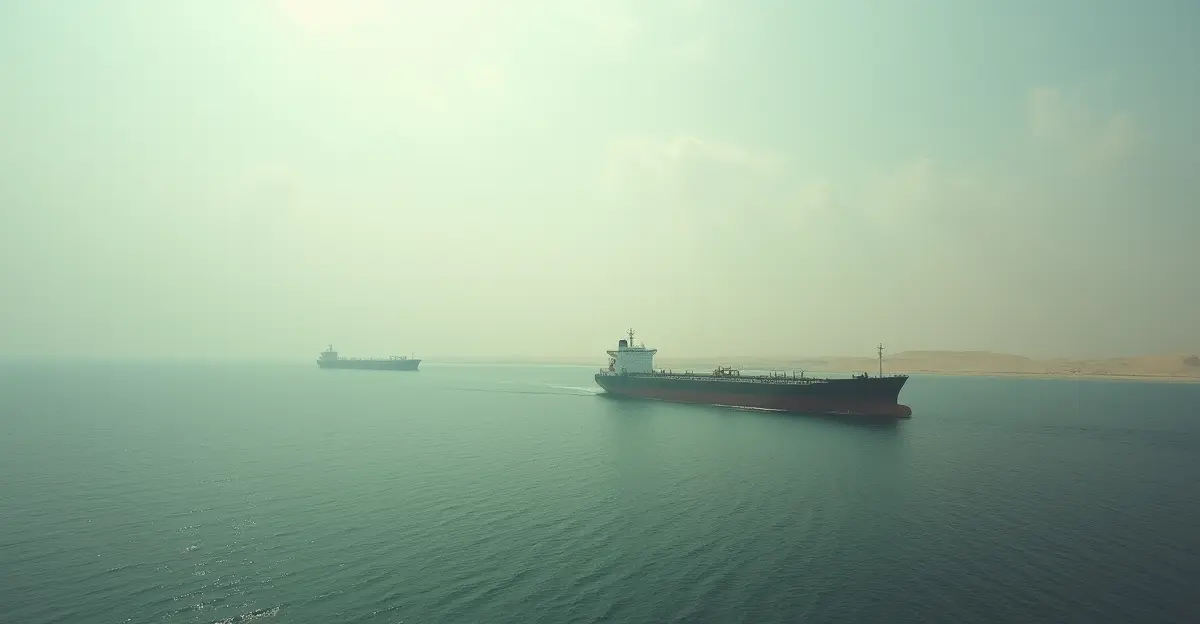
The Strait of Hormuz—a narrow 21-nautical-mile-wide waterway between Iran and Oman—has long been the world's most critical energy chokepoint, handling approximately 25% of global seaborne oil trade and 20% of liquefied natural gas flows. On February 28, 2026, coordinated US-Israeli airstrikes on Iranian nuclear and military facilities, known as Operation Epic Fury, ignited a full-scale Iran conflict that quickly engulfed the region. Iran retaliated by mining the strait and launching missile attacks on Gulf oil infrastructure in Saudi Arabia, Kuwait, and the UAE. By March 2, the Islamic Revolutionary Guard Corps had effectively sealed the passage, and major P&I insurance clubs—including Gard, Skuld, and the London P&I Club—withdrew war-risk coverage, making commercial transit commercially unviable. Within days, tanker traffic had plummeted, leaving over 150 vessels stranded and forcing carriers to reroute around the Cape of Good Hope shipping lanes at enormous additional cost.
The Economic Toll: Dallas Fed Quantifies the Damage
In a March 20 analysis, the Federal Reserve Bank of Dallas modeled three scenarios based on the duration of the closure. A one-quarter disruption would see WTI average $98 per barrel in Q2 before falling back to $68 in Q3, with GDP growth rebounding. A two-quarter closure—the current baseline—pushes oil to $115 before settling at $76, while a three-quarter scenario could drive prices as high as $132. All scenarios imply a 2.9 percentage point annualized GDP growth penalty for Q2 2026. The Dallas Fed energy research further warns that rising diesel costs—which surpassed $5 per gallon in the US for only the second time in history—are already curbing consumer spending and freight activity across nearly every industry.
Oil Markets in Uncharted Territory
Brent crude surged 65% in March alone—the largest monthly increase ever recorded—briefly touching $126 per barrel in physical markets. The World Bank's April 2026 Commodity Markets Outlook projected a 24% year-on-year energy price surge, while the International Energy Agency coordinated an unprecedented release of 400 million barrels from member countries' strategic petroleum reserves. Despite this intervention, the IEA acknowledged that global strategic petroleum reserves can only partially offset the loss of roughly 10 million barrels per day of Gulf exports, a deficit the World Bank describes as the "largest oil supply shock on record."
Developing Economies Bear the Heaviest Burden
UNCTAD's June 2026 analysis identifies 61 vulnerable developing economies facing simultaneous oil and food price shocks, affecting an estimated 3.4 billion people. Countries such as Pakistan and Bangladesh, which rely on Gulf states for nearly all LNG imports, face acute energy shortfalls, while India—importing 60% of its crude from the Middle East—has been forced to seek expensive spot-market alternatives. Fertilizer prices have surged 31%, threatening food security for up to 45 million people. "Even short periods of unaffordable food can cause lasting harm," warns an UNCTAD trade disruption report. "A 5% rise in real food prices increases the risk of child wasting by up to 26% among poor rural children."
Strategic Rethinking: Energy Diversification and Maritime Security
The crisis is accelerating a global pivot away from chokepoint-dependent energy architectures. Asian importers are fast-tracking renewable energy investment strategies and expanding strategic storage capacity, while European nations are revisiting nuclear and LNG diversification plans. The International Maritime Organization has proposed a new shipping lane off the Omani coast, though Iran has rejected French-Omani mine-clearing efforts. Analysts at the GISS Institute argue that the 2026 crisis "will redefine global energy security for a generation," forcing governments to treat maritime corridor resilience as a core national security priority rather than a commercial afterthought.
FAQ: Strait of Hormuz Crisis
What caused the Strait of Hormuz closure in 2026?
Iran closed the strait in retaliation for US-Israeli airstrikes on February 28, 2026, that targeted its nuclear and military infrastructure. Mining, missile attacks on shipping, and the withdrawal of war-risk insurance effectively halted commercial transit.
How much oil flows through the Strait of Hormuz?
Before the crisis, roughly 20 million barrels per day—about 20% of global petroleum consumption and 25% of seaborne oil trade—passed through the strait, along with 20% of global LNG shipments.
What is the projected impact on global GDP?
The Dallas Federal Reserve projects a 2.9 percentage point drag on annualized global GDP growth for each quarter the strait remains closed, with developing economies disproportionately affected.
How high could oil prices go?
Brent crude briefly exceeded $126 per barrel in March 2026. Dallas Fed scenarios project averages of $98 to $132 depending on the closure duration, with the World Bank forecasting a 2026 average of $86 per barrel.
What is being done to reopen the strait?
The IEA released 400 million barrels from strategic reserves, and diplomatic efforts involving France, Oman, and the IMO continue, but Iran has so far rejected demining and alternative shipping lane proposals.
Outlook: A Fragmented Global Trade Architecture
As of June 2026, the strait has remained effectively closed for over 100 days. Even if a ceasefire holds, UNCTAD warns that freight contracts, supply chains, and food systems will take months to normalize. The crisis has exposed structural vulnerabilities in a global economy still dependent on a single 21-mile-wide maritime passage for one-fifth of its energy. Whether this shock catalyzes a durable transformation toward energy diversification and resilient trade corridors—or simply resets the clock on the next chokepoint crisis—remains the defining question for policymakers in a newly fragmented world order.



Follow Discussion