


 Deutsch
 English
 Español
 Français
 Nederlands
 Português


 Share
Share




Introduction
The near-total shutdown of the Strait of Hormuz in early 2026 — triggered by the U.S.-Israeli military campaign against Iran — has slashed ship transits by 95%, sent Brent crude surging past $119 per barrel, and triggered the largest oil supply disruption in history. Global merchandise trade growth is projected to halve from 4.7% to as low as 1.5%, while developing economies face a compounding crisis of higher food and fuel import costs, currency depreciation, and tighter financial conditions. This article analyzes how the energy choke point is cascading through global supply chains, which regions and sectors are most exposed, and whether strategic reserves, bypass pipelines, and accelerated renewable investment can absorb the shock before it triggers a broader systemic crisis.
Context: The Strait of Hormuz and the 2026 Campaign
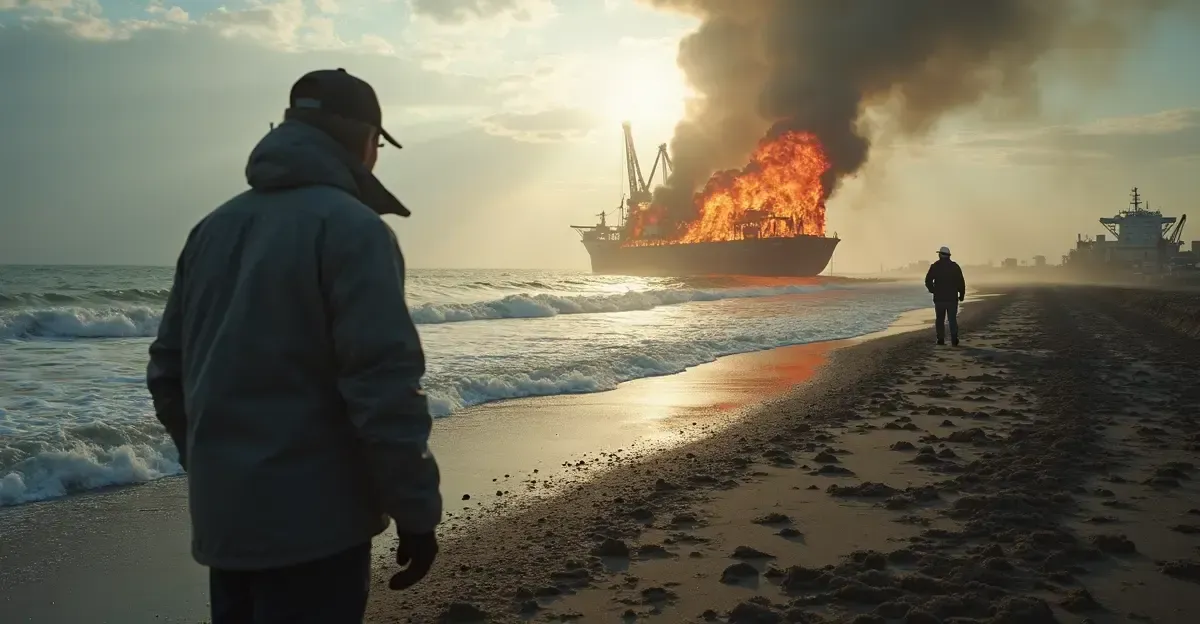
The Strait of Hormuz is a 167-kilometer waterway connecting the Persian Gulf to the Gulf of Oman. Before 2026, it carried about 20% of the world's liquefied natural gas (LNG) and 25% of seaborne oil trade annually, making it the most strategically important energy chokepoint on Earth. The 2026 Iran war began on February 28, 2026, when the United States and Israel launched Operation Epic Fury, a massive aerial campaign that killed Iran's Supreme Leader Ali Khamenei and dozens of other officials through nearly 900 strikes in 12 hours. In retaliation, Iran blockaded the Strait of Hormuz in early March, deploying naval mines, anti-ship missiles, and drone swarms. By late March, ship transits collapsed from about 130 per day to just 6 — a 95% reduction. The U.S.-led 2026 Strait of Hormuz campaign, launched on March 19, aimed to reopen the waterway but faced fierce resistance. A ceasefire was agreed on April 7–8, but the strait remained effectively closed, with the International Energy Agency calling it the largest disruption in history to oil supply.
Energy Market Fallout: Historic Supply Shock
The disruption removed approximately 10 million barrels per day (mb/d) of crude oil from global markets — three to five times larger than past geopolitical oil disruptions like the 1973 Yom Kippur War or the 1990 Gulf War. According to the World Bank's April 2026 Commodity Markets Outlook, global oil supply crashed by 10.1 mb/d in March, the largest monthly drop on record. Brent crude surged 65% in March alone — the biggest monthly rise ever — and briefly exceeded $119 per barrel in May. The Dallas Federal Reserve modeled that a one-quarter closure would raise West Texas Intermediate to an average of $98 per barrel and lower global real GDP growth by an annualized 2.9 percentage points in Q2 2026. If the closure extends to two quarters, oil prices could reach $115 per barrel, with growth remaining negative until Q4 2026. The 2026 oil price shock is already surpassing the 1973 crisis in scale.
LNG and Fertilizer Prices Surge
The strait also carries about 20% of global LNG trade. Asian spot LNG prices more than doubled, forcing countries like Pakistan, Thailand, and Sri Lanka to adopt four-day workweeks and limit flights at airports. Fertilizer prices are set to increase 31%, according to the World Bank, threatening food security for up to 45 million more people. The global food crisis 2026 is deepening as developing nations struggle to afford imports.
Global Trade and Economic Growth at Risk
UNCTAD's second rapid assessment, published in May 2026, warns that the disruption is feeding through the entire global economy. Global merchandise trade growth is projected to decelerate from 4.7% in 2025 to between 1.5% and 2.5% in 2026 — a potential halving. Overall economic growth is expected to slow from 2.9% to 2.6%. Developing economies are hit hardest: currencies have weakened, borrowing costs have risen, and imports of fuel and food have become more expensive. Around 3.4 billion people live in countries that already spend more on debt servicing than on health or education. The developing economy debt crisis is being exacerbated by the energy price shock.
Supply Chain Cascades
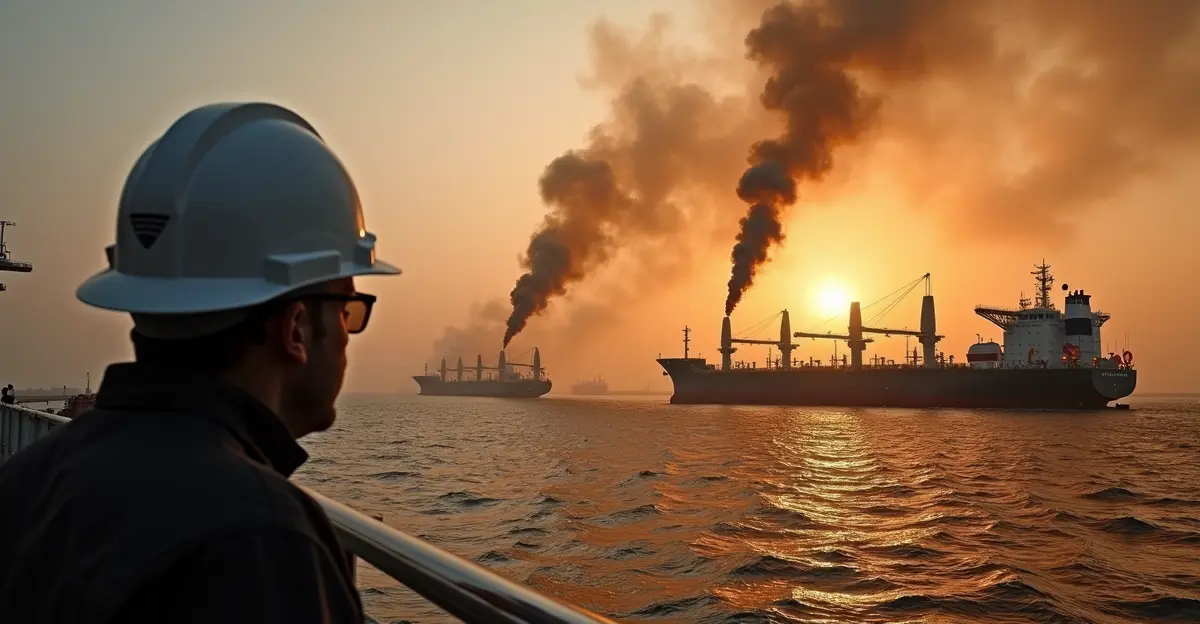
The energy shock is cascading through supply chains via higher transport costs (bunker fuel, freight rates, insurance), rising input costs for manufacturing, and reduced consumer demand. The World Bank's Indermit Gill stated: War is development in reverse. The crisis echoes the COVID-19 pandemic and the Ukraine war in demonstrating how interconnected markets propagate shocks, but the Hormuz disruption is unique in its concentration on a single chokepoint.
Bypass Pipelines and Strategic Reserves
In response, countries are racing to build infrastructure to bypass the strait. The UAE's ADNOC has completed nearly 50% of a second pipeline that will double export capacity through Fujairah, a port on the Gulf of Oman beyond Hormuz, expected operational in 2027. Saudi Arabia's Petroline and the UAE's ADCOP pipelines are at capacity and need expansion. Iraq is increasing exports through Türkiye, and India struck a deal with the UAE to build strategic oil and gas reserves. Japan and South Korea are pursuing similar arrangements. Russia and China are discussing the long-stalled Power of Siberia 2 gas pipeline. However, even if the conflict ends immediately, ADNOC CEO Sultan Al Jaber said it would take at least four months to ramp oil flows to 80% of normal levels, with full normalization not expected until early 2027. The global energy infrastructure investment needed to reduce Hormuz dependence is massive and urgent.
Renewable Energy Acceleration
The crisis has also accelerated renewable energy investments as countries seek to reduce reliance on volatile fossil supply chains. Solar and wind installations are being fast-tracked in Asia and Europe, and electric vehicle adoption is rising. However, the world still depends heavily on oil and gas, and the transition will take years. The renewable energy transition 2026 is gaining momentum but cannot provide immediate relief.
Expert Perspectives
Analysts warn that the crisis could trigger a broader systemic crisis. Bank of America expects the energy price shock to extend into the second half of 2026. The Federal Reserve is now 97.5% likely to hold rates steady in June 2026 due to inflationary pressure. Copper has reached historic highs, reflecting demand for electrification but also supply constraints. The Dallas Fed's modeling suggests that even a one-quarter closure will have severe and lasting effects on global growth.
FAQ
What caused the Strait of Hormuz shutdown in 2026?
The shutdown was triggered by Iran's blockade of the strait in retaliation for U.S.-Israeli airstrikes on February 28, 2026, that killed Iran's Supreme Leader and other officials. Iran deployed naval mines, anti-ship missiles, and drones to close the waterway.
How much oil supply has been lost?
Approximately 10 million barrels per day of crude oil have been removed from global markets, making it the largest oil supply disruption in history. Over 1 billion barrels have been lost as of May 2026.
Which countries are most affected?
Developing economies in Asia (Pakistan, India, Sri Lanka, Thailand) and Africa are most exposed due to higher import costs, currency depreciation, and debt burdens. Europe and Japan also face significant energy price spikes.
Can bypass pipelines solve the problem?
Existing pipelines (Saudi Petroline, UAE ADCOP) are at capacity. New pipelines under construction (UAE's second Fujairah line) will take until 2027 to become operational. In the short term, strategic reserves and demand reduction are the only options.
Will oil prices stay above $100?
The World Bank forecasts Brent averaging $86/barrel in 2026 assuming recovery by year-end, but upside risks could push prices to $95–$115/barrel if conflict escalates. As of May 2026, Brent has exceeded $119.
Conclusion
The Strait of Hormuz shock is the defining geopolitical-economic event of early 2026, reshaping energy markets, trade flows, and financial stability in ways not seen since the 1970s oil shocks. While strategic reserves, bypass pipelines, and renewable investments offer long-term solutions, the immediate outlook is grim: slower growth, higher inflation, and heightened risk of a systemic crisis. The world is learning a painful lesson about the dangers of over-reliance on a single energy chokepoint.
Follow Discussion