


 Deutsch
 English
 Español
 Français
 Nederlands
 Português


 Share
Share




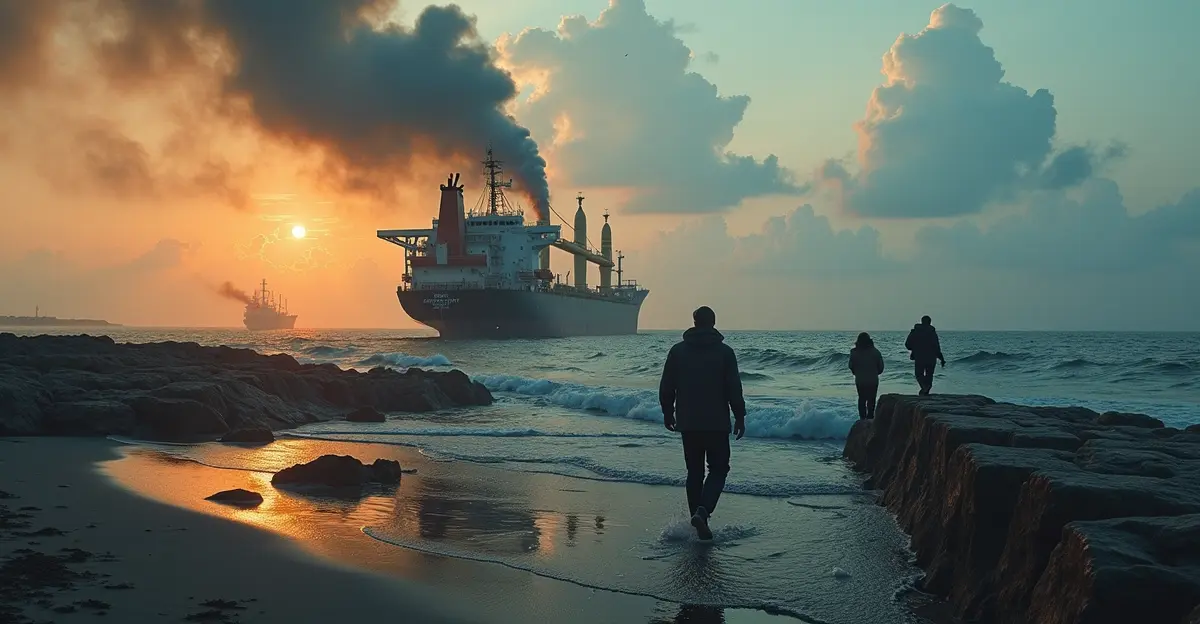
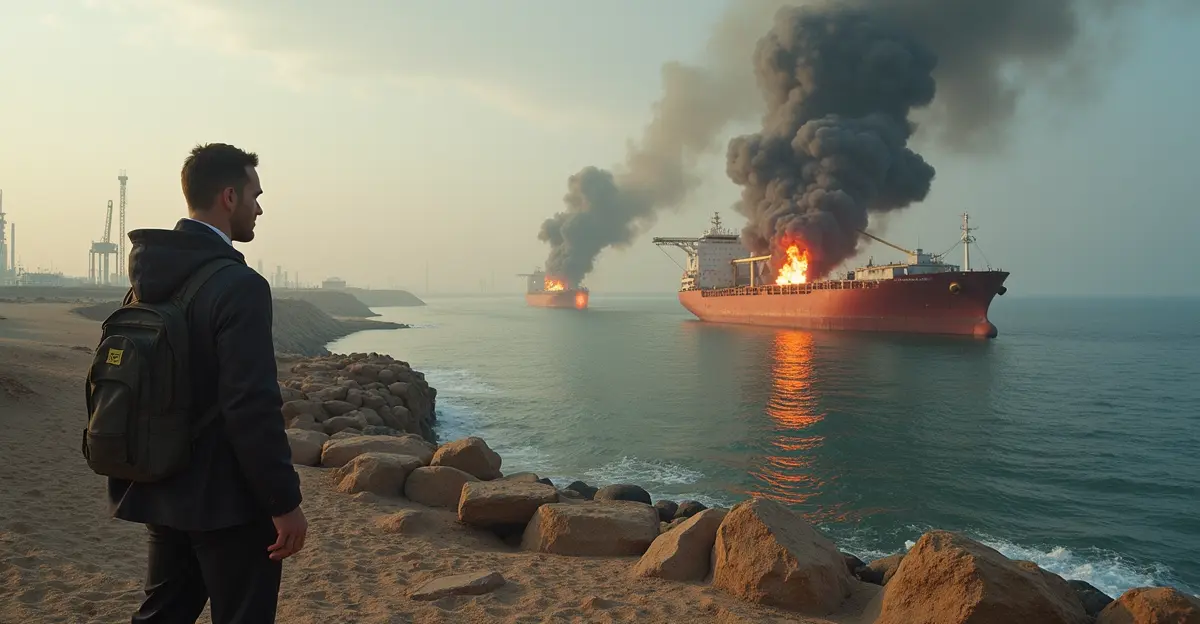
The effective closure of the Strait of Hormuz amid the 2026 U.S.-Iran conflict has disrupted roughly 20% of global oil transit, sending Brent crude above $115 per barrel and triggering what the International Energy Agency calls "the largest supply disruption in the history of the global oil market." As of April 2026, the 21-mile-wide chokepoint—through which 17 to 21 million barrels of crude oil passed daily before the blockade—remains largely impassable, with an estimated 600 million barrels prevented from reaching global markets over 50 days. The crisis extends far beyond oil, crippling supply chains for fertilizers, helium, methanol, and aluminum, while the International Monetary Fund projects global growth slowing to 3.1%.
Context: A Chokepoint Under Siege
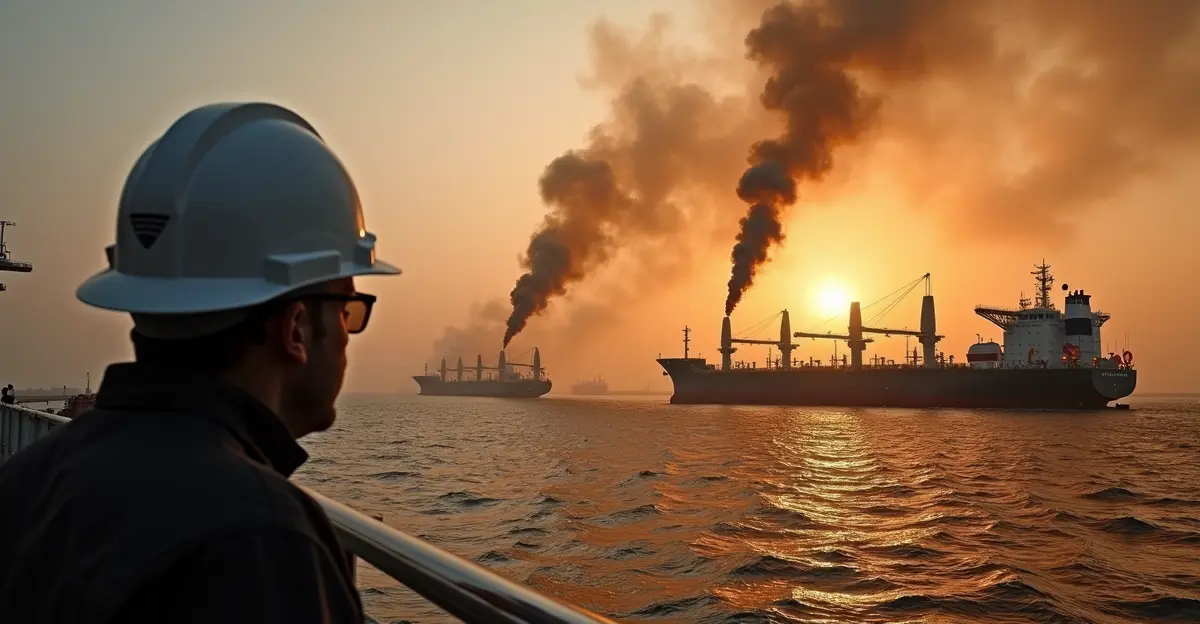
The Strait of Hormuz connects the Persian Gulf to the Gulf of Oman and the open ocean, serving as the primary maritime artery for oil and liquefied natural gas exports from Saudi Arabia, Iran, Iraq, Kuwait, Qatar, and the United Arab Emirates. Before the conflict erupted on February 28, 2026, roughly 13 million barrels of seaborne crude oil—31% of global seaborne trade—and about 20% of global LNG passed through the strait daily. The blockade, imposed by Iran in response to U.S. military operations, has effectively shut off this flow. The U.S. Energy Information Administration reports that Iraq, Saudi Arabia, Kuwait, UAE, Qatar, and Bahrain collectively shut in 7.5 million barrels per day of crude oil production in March, rising to an estimated 9.1 million b/d in April. The 2026 US-Iran conflict has thus created a supply shock three to five times larger than the 1973 Yom Kippur War or the 1990 Gulf War, according to the Dallas Federal Reserve.
Oil Markets: $115 Brent and Beyond
Brent crude oil surged to an intraday high of $126.41 per barrel on April 30, 2026, with a two-session rally of nearly 14%. The EIA's April 2026 Short-Term Energy Outlook forecasts Brent peaking at $115 per barrel in Q2 2026 before gradually declining, assuming the conflict does not persist past April. However, the Dallas Fed warns that if the closure extends to two or three quarters, oil prices could reach as high as $132 per barrel, with global real GDP growth dropping by an annualized 2.9 percentage points for a one-quarter closure. The WTI-Brent spread widened to roughly $13 per barrel—more than double historical norms—as Brent priced seaborne crude exposed to Hormuz risk. U.S. retail gasoline prices are expected to peak near $4.30 per gallon in April, averaging over $3.70 per gallon in 2026, while diesel prices peak above $5.80 per gallon.
Impact on Key Importers
Asian economies bear the brunt of the disruption. China, Japan, South Korea, and India face acute exposure with no viable large-scale alternative to Hormuz transit. China relies on the strait for 40% of its oil imports, Japan for 75%, and South Korea for 70%. India faces dual oil and LNG exposure, while Pakistan and Bangladesh depend on Qatar and the UAE for 99% and 72% of their LNG imports, respectively. The global energy supply chain disruption has forced these nations to tap strategic reserves and seek alternative suppliers, driving up spot prices worldwide.
Beyond Oil: The Non-Energy Commodity Crisis
The World Economic Forum highlights that the blockade impacts nine key non-oil commodities. The Arabian Gulf accounts for 46% of global urea trade (a critical fertilizer), nearly half of seaborne sulfur, and around one-third of the world's helium supply from Qatar. Disruptions threaten global food security, as fertilizer shortages could reduce crop yields in importing nations. Helium—essential for semiconductor manufacturing, MRI machines, and scientific research—faces severe supply constraints. Methanol, used in plastics and fuel blending, and aluminum, for which the U.S. imports over 20% from the Persian Gulf, are also affected. Aluminum prices hit a four-year high in April 2026. The crisis underscores how critical mineral supply chains remain dangerously concentrated in geopolitically volatile regions.
IMF Warns of Slower Growth, Higher Inflation
The International Monetary Fund, in its April 2026 World Economic Outlook, cut its global growth forecast to 3.1% for 2026, down from 3.3% projected earlier. In a severe scenario with prolonged energy disruptions, growth could fall to 2% and inflation exceed 6%. The IMF notes that low-income and developing economies are hit hardest, with the Middle East and North Africa region's growth slashed to 1.1%. Iran's forecast was cut by 7.2 points to a contraction of 6.1%, while Saudi Arabia's growth forecast dropped from 4.5% to 3.1%. The eurozone slowed to 1.1% growth. Central banks face difficult trade-offs between fighting inflation and preserving growth; the IMF advises looking through the energy surge only if inflation expectations remain anchored.
Gulf States Race to Diversify Export Routes
The blockade has exposed the vulnerability of Gulf energy exporters who lack alternative routes. Saudi Arabia's East-West Petroline, with a capacity of 7 million barrels per day, carries crude to the Red Sea, bypassing Hormuz. The UAE's ADCOP pipeline moves 1.8 million bpd to Fujairah port. However, Kuwait, Bahrain, and Qatar have no overland alternatives, and LNG exports remain entirely dependent on maritime transit. Options under consideration include rehabilitating the Iraq-to-Saudi IPSA pipeline, the Trans-Arabian Pipeline to the Mediterranean, building a new Iraq-Türkiye pipeline, and expanding railway corridors through Jordan and Syria. The US-backed India-Middle East-Europe Economic Corridor (IMEC) is central to long-term plans, aiming to link India, the Middle East, and Europe through an integrated network of ports, rail lines, and pipelines. Costs for new infrastructure range from $5 billion to $20 billion, but the alternative energy export routes are seen as essential for long-term energy security.
Expert Perspectives
"This is not a temporary disruption—it is a structural crisis that will reshape global energy trade for years," said Dr. Amara Al-Mansouri, a senior fellow at the Gulf Research Center. "The reliance on a single chokepoint for 20% of the world's oil was always a risk. Now we are seeing the consequences." The Dallas Fed's analysis concludes that even a one-quarter closure would reduce global GDP by nearly 3 percentage points, while a longer blockade could trigger a global recession. The WEF warns that the crisis should serve as a wake-up call for diversifying both energy and non-energy commodity supply chains.
Frequently Asked Questions
What is the Strait of Hormuz and why is it important?
The Strait of Hormuz is a 21-mile-wide maritime chokepoint between the Persian Gulf and the Gulf of Oman. Before the 2026 blockade, it handled roughly 20% of global oil transit and about 20% of global LNG exports, making it the world's most critical energy artery.
How has the blockade affected oil prices?
Brent crude surged above $115 per barrel in April 2026, with an intraday high of $126.41. The EIA forecasts a peak in Q2 2026, but longer closures could push prices to $132 per barrel, according to the Dallas Fed.
Which countries are most vulnerable to the crisis?
Asian importers such as China, Japan, South Korea, India, Pakistan, and Bangladesh face the greatest exposure. Gulf states like Kuwait, Bahrain, and Qatar, which lack alternative export routes, are also severely affected.
What non-oil commodities are affected?
Fertilizers (urea, ammonia), helium, methanol, aluminum, sulfur, monoethylene glycol, graphite feedstocks, iron ore pellets, and green hydrogen infrastructure are all disrupted, threatening food security, healthcare, and manufacturing.
What alternatives exist to the Strait of Hormuz?
Saudi Arabia's East-West Petroline and the UAE's ADCOP pipeline offer partial bypass capacity. Long-term proposals include the IMEC corridor, new pipelines through Iraq and Turkey, and expanded railway networks. However, no alternative can fully replace the strait's capacity in the short term.
Conclusion: A Defining Economic-Security Event
The Strait of Hormuz crisis of 2026 has exposed the fragility of global energy chokepoints in an era of great-power confrontation. With the IMF, EIA, and WEF issuing urgent warnings, the dual shock to energy and commodity markets is reshaping policy priorities worldwide. Gulf states are racing to diversify export routes, while importers scramble to secure alternative supplies. The crisis underscores the urgent need for resilient, diversified supply chains—a lesson that will define global economic security for years to come.

Follow Discussion