Nederlands
 English
 Deutsch
 Français
 Español
 Português
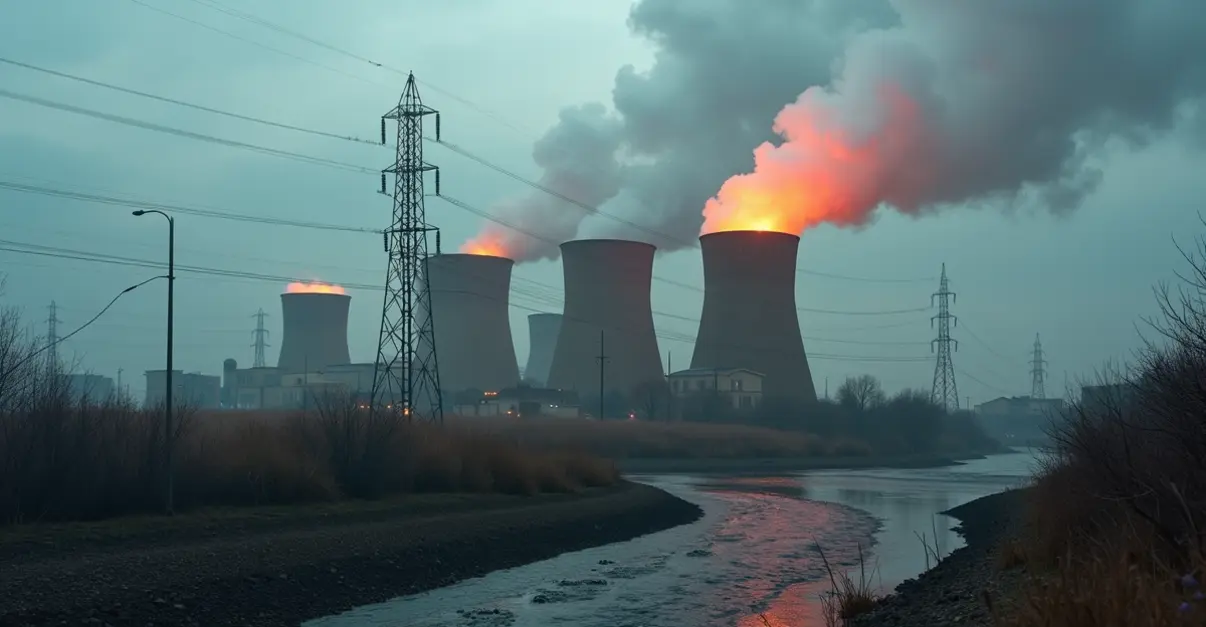





Utilities Rethink Coal Retirement Schedules as Grid Stability Concerns Mount
Electric utilities across the United States and globally are facing a critical dilemma: how to balance ambitious climate goals with the practical realities of maintaining reliable electricity grids. As surging demand from artificial intelligence, data centers, and electrification strains power systems, many utilities are reconsidering previously announced coal phase-out timelines, creating tension between environmental commitments and energy security.
The AI-Driven Demand Surge
The rapid expansion of AI infrastructure has fundamentally changed electricity demand projections. According to recent analysis, at least 15 coal plants across the U.S. have had planned retirements delayed or pushed back since early 2025, with these facilities emitting over 68 million tons of CO2 in 2024 alone. 'Winning the AI race requires reliable baseload power, and right now, that means keeping some coal plants online longer than we'd prefer,' says Energy Secretary Chris Wright, explaining the administration's position.
The U.S. Energy Information Administration reports that planned coal retirements will reach 8.1 gigawatts in 2025, representing 4.7% of the total coal fleet. However, this represents a significant slowdown from previous years, when annual retirements averaged 9.8 gigawatts over the past decade. The largest coal plant scheduled for retirement is the 1,800-megawatt Intermountain Power Project in Utah, but even this timeline faces scrutiny as grid operators assess replacement capacity.
Stranded Assets and Financial Risks
The financial implications of premature coal plant retirements are staggering. A Nature Sustainability study analyzed 16,438 fossil-fuel power plants worldwide and found that achieving ambitious climate goals (1.5°C or 2°C) would require early retirement of fossil fuel plants, creating substantial financial losses for owners. The top 25 companies collectively hold $770 billion in stranded assets under a 1.5°C scenario, with coal plants representing 75% of these costs.
'We're talking about billions in potential stranded assets if plants retire prematurely without proper replacement infrastructure,' explains Dr. Sarah Chen, energy economist at Stanford University. 'Utilities face the impossible choice between environmental compliance and financial stability, with customers ultimately bearing the risk either way.'
State Policies Meet Practical Realities
State-level coal phase-out policies are facing implementation challenges. According to the State Climate Policy Dashboard, several states have enacted ambitious targets: Oregon requires utilities to phase out coal by 2030, Washington mandates coal phaseout by 2025, and Colorado and Minnesota require 100% renewable or carbon-free energy by 2040. However, utilities are struggling with the practical realities of meeting these deadlines.
'Our grid wasn't designed for this rapid transition,' says Mark Thompson, CEO of a major Midwestern utility. 'We support decarbonization, but we can't compromise reliability. When the wind doesn't blow and the sun doesn't shine, we need dispatchable power, and right now, that often means coal.'
Global Context and Varied Approaches
The global picture presents a complex mosaic. Europe continues with steady coal phase-outs, with Germany planning to shut down its last coal-fired power station between 2035 and 2038. Meanwhile, Asia presents a different story - China continues building new coal capacity alongside renewable expansion, accounting for more than half of global stranded asset costs according to research.
New analytical tools are emerging to help navigate this transition. Researchers have developed 'contextual retirement vulnerability' scores to identify which plants are most suitable for early retirement based on factors like age, efficiency, and local grid conditions. Utilities are also exploring nuanced approaches including phased retirements, natural gas conversions, and investments in renewables paired with grid modernization.
The Path Forward
The tension between climate goals and grid reliability represents one of the most significant challenges in the energy transition. As utilities reassess their coal phase-out timelines, they're developing more sophisticated transition plans that balance multiple priorities: environmental compliance, financial stability, and energy security.
'This isn't about abandoning climate goals,' emphasizes Lisa Rodriguez, director of the Clean Energy Transition Institute. 'It's about recognizing that the transition must be managed carefully to avoid blackouts, protect ratepayers, and ensure we don't create new problems while solving old ones. The smart approach involves strategic investments in grid modernization, energy storage, and demand response alongside planned retirements.'
With electricity demand projected to grow 2-3% annually through 2030, the pressure on utilities will only increase. The coming years will test whether energy systems can evolve quickly enough to meet both climate targets and reliability requirements, making utility decision-making more critical than ever in shaping our energy future.