Nederlands
 English
 Deutsch
 Français
 Español
 Português
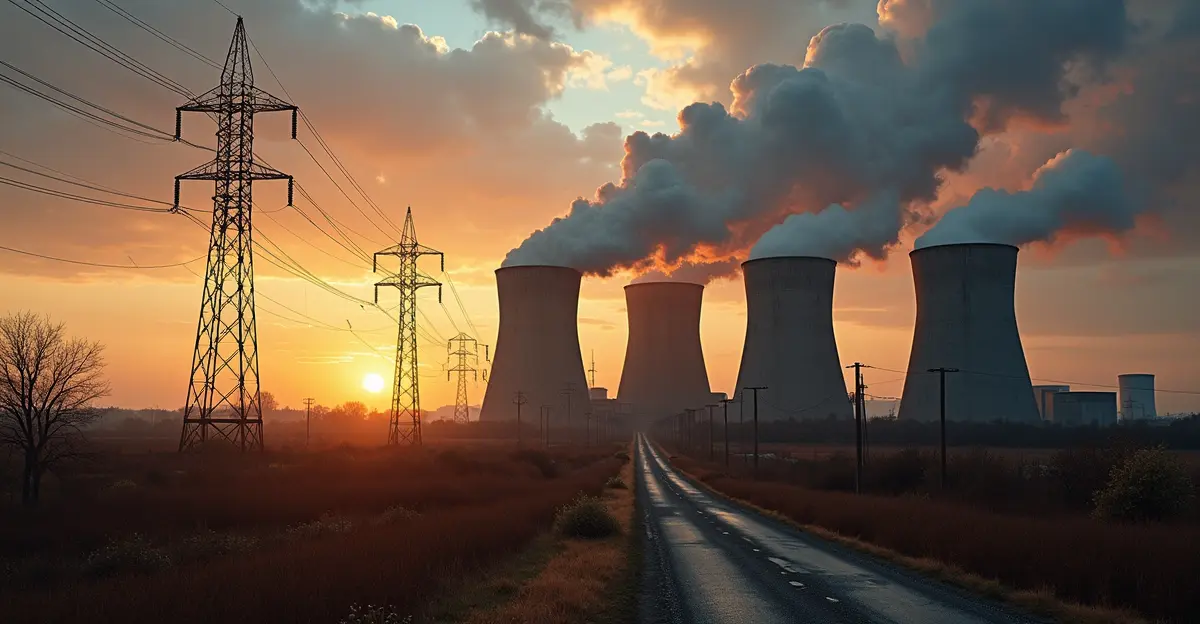





Grid Reliability Concerns Clash with Climate Goals as Coal Debate Heats Up
The ongoing debate over coal phase-out policies has reached a critical juncture in 2025, with grid reliability concerns colliding head-on with climate commitments. As extreme weather events become more frequent and electricity demand continues to grow, policymakers, energy experts, and communities are grappling with how to balance the urgent need for decarbonization with maintaining a stable power supply.
The Grid Under Pressure
Recent Department of Energy reports highlight growing concerns about grid stability across the United States. The July 2025 Resource Adequacy Report confirms what many utilities have been warning about: the rapid retirement of coal-fired power plants is creating potential reliability gaps, particularly during peak demand periods. 'We're walking a tightrope between climate goals and keeping the lights on,' says energy analyst Sarah Chen from the Grid Resilience Institute. 'The transition needs to be managed carefully, not rushed.'
Coal's share of U.S. electricity generation has plummeted from 50% in 2000 to just 20% in 2024, according to data from the MIT Technology Review. This dramatic decline, driven primarily by cheaper natural gas and renewable energy economics, has accelerated plant retirements across the country. However, this transition hasn't been without consequences for grid stability.
Emergency Measures and Policy Conflicts
In a controversial move earlier this year, the Department of Energy issued an emergency order requiring Michigan's J.H. Campbell coal plant to remain operational for at least 90 days to address grid security concerns ahead of summer peak demand. This action highlights the tension between political agendas and market realities. 'Using emergency authority to keep aging coal plants running is a short-term fix that ignores long-term solutions,' argues environmental policy director Mark Rodriguez. 'We need to invest in modern grid infrastructure, not prop up outdated technology.'
The economic case against coal continues to strengthen. A recent Nature Energy study reveals that 75% of coal plants saw costs rise faster than inflation between 2021 and 2024, making them increasingly uneconomical compared to new renewable installations. The study's 'contextual retirement vulnerability' score provides a data-driven framework for identifying which plants are most likely to retire and why.
Renewable Alternatives and Storage Solutions
While coal advocates point to its reliability as baseload power, renewable energy and storage technologies are rapidly advancing to fill the gap. Battery storage capacity grew by an impressive 40% from May 2024 to April 2025, according to grid operator data. During recent heat waves in Texas, expanded battery storage helped prevent blackouts that might have occurred just a few years earlier.
'The narrative that we need coal for reliability is becoming outdated,' says renewable energy developer Lisa Thompson. 'With smart grid management, demand response programs, and rapidly improving storage technology, we can maintain reliability while accelerating the clean energy transition.'
Community Impacts and Economic Transition
The human dimension of coal phase-out cannot be overlooked. Communities that have depended on coal plants for generations face economic uncertainty as plants close. The G7's commitment to phase out unabated coal by the first half of the 2030s, while important for climate goals, raises questions about just transition policies for affected workers and regions.
A recent analysis from the Kleinman Center for Energy Policy notes that while the G7 commitment represents progress, it lacks concrete timelines and fails to address broader fossil fuel dependencies. 'We need comprehensive transition plans that include retraining programs, economic diversification, and community investment,' emphasizes labor economist David Park.
The Path Forward
Experts agree that a nuanced approach is needed. The one-size-fits-all phase-out strategy is giving way to more targeted policies that consider regional grid characteristics, economic factors, and community needs. Some suggest accelerated retirement for the most polluting and expensive plants while maintaining select facilities for grid stability during the transition period.
As the debate intensifies, what's clear is that the energy transition is entering its most challenging phase. Balancing climate imperatives with grid reliability requires sophisticated planning, substantial investment in modern infrastructure, and policies that address both environmental and economic concerns. The decisions made in the coming months will shape America's energy landscape for decades to come.