Nederlands
 English
 Deutsch
 Français
 Español
 Português





The Great Energy Balancing Act: Reliability Versus Transition
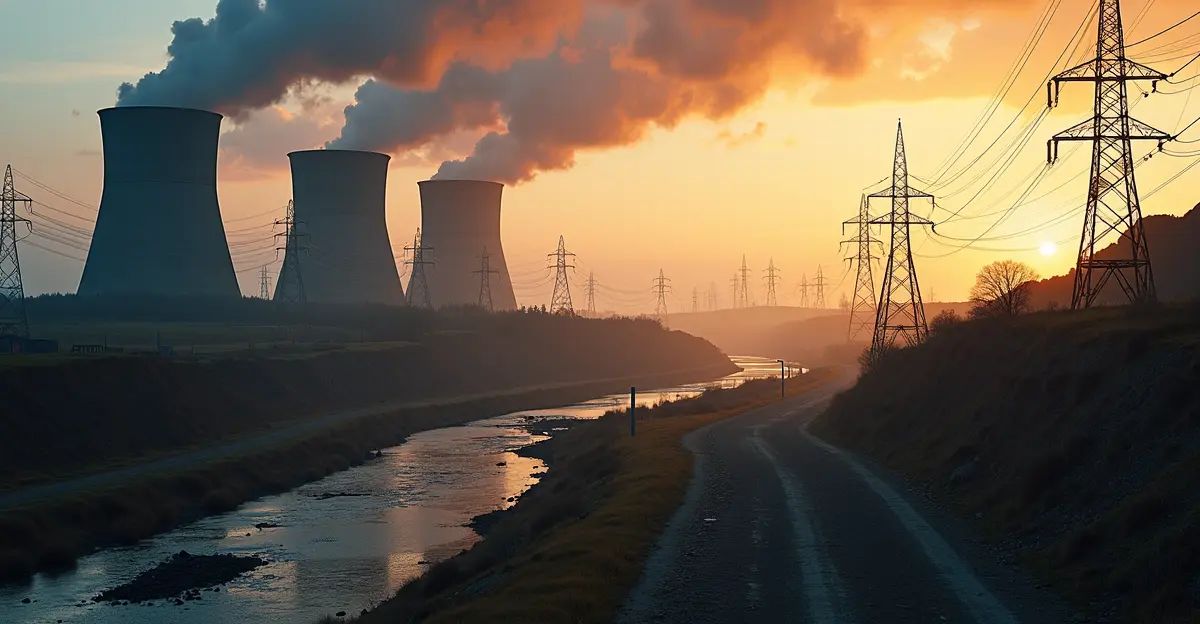
The debate over grid reliability versus coal phase-out has become one of the most contentious energy policy discussions of 2025. As nations worldwide accelerate their transition to cleaner energy sources, policymakers face a critical dilemma: how to maintain a stable, reliable electricity grid while rapidly phasing out coal-fired power plants that have traditionally provided baseload power.
The Economic Reality of Coal's Decline
Coal power in the United States has declined dramatically from providing 50% of electricity generation in 2000 to just 20% in 2024, according to recent analysis. This trend is driven primarily by economic factors, with natural gas, wind, and solar becoming cheaper alternatives. 'The economic case for coal has collapsed,' says energy analyst Dr. Sarah Chen. 'What we're seeing now is a political struggle to keep plants open that no longer make financial sense.'
Despite this economic reality, the Trump administration has taken steps to keep coal plants operational through emergency orders, citing grid reliability concerns ahead of summer demand peaks. In one notable case, the Department of Energy ordered Michigan's J.H. Campbell plant to remain operational for at least 90 days beyond its scheduled May closure.
Reliability Investments Versus Transition Financing
The core policy trade-off centers on where to allocate limited resources: should governments invest in maintaining aging coal infrastructure for reliability, or should those funds be directed toward accelerating the clean energy transition? A recent Nature Energy study presents a novel framework for accelerating US coal power phase-out by analyzing contextual retirement vulnerabilities. Researchers used graph theory and topological data analysis to classify the US coal fleet into eight distinct groups based on technical, economic, environmental, and socio-political characteristics.
'We need targeted strategies, not one-size-fits-all solutions,' explains lead researcher Dr. Michael Rodriguez. 'Some plants should be retired immediately for environmental reasons, while others might need temporary support during the transition to prevent grid instability.'
The Battery Storage Solution
One promising solution to the reliability challenge is battery energy storage systems (BESS). As detailed in Wikipedia's battery storage entry, these systems are the fastest responding dispatchable source of power on electric grids, capable of transitioning from standby to full power in under a second to deal with grid contingencies. Battery storage capacity grew by 40% in the past year alone, offering a viable alternative to keeping old coal plants running.
Battery storage can be used for short-term peak power demand and for ancillary services, such as providing operating reserve and frequency control to minimize the chance of power outages. Since battery storage plants require no fuel deliveries and have no chimneys or large cooling systems, they can be rapidly installed and placed within urban areas close to customer load.
Global Context and Climate Imperatives
According to Wikipedia's coal phase-out information, coal is responsible for over 30% of the global average temperature increase above pre-industrial levels. The International Energy Agency (IEA) emphasizes that phasing out coal is critical to limiting climate change as laid out in the Paris Agreement. Some countries in the Powering Past Coal Alliance have already stopped using coal, with Germany planning to shut down its last coal-fired power station between 2035 and 2038.
'The health and environmental benefits of getting rid of coal quickly exceed the costs,' notes climate policy expert Maria Gonzalez. 'But we need to manage the transition carefully to avoid reliability issues that could undermine public support for climate action.'
Policy Recommendations and Path Forward
Experts suggest several approaches to balance reliability needs with transition goals:
1. Targeted retirement strategies: Using data-driven approaches to identify which plants can be retired immediately versus those needing transitional support.
2. Accelerated investment in grid modernization: Upgrading transmission infrastructure to better integrate renewable sources.
3. Demand flexibility programs: Encouraging consumers to shift electricity use away from peak periods.
4. Just transition financing: Supporting communities and workers affected by coal plant closures.
The U.S. Department of Energy's July 2025 grid reliability report likely contains important assessments of current grid conditions and recommendations for enhancing security and reliability during the energy transition.
As the debate continues, one thing is clear: the transition away from coal is inevitable for both economic and environmental reasons. The question is no longer whether to phase out coal, but how to manage that phase-out while maintaining the reliable electricity supply that modern societies depend on.