


 Deutsch
 English
 Español
 Français
 Nederlands
 Português


 Share
Share




Mercedes-Benz at Risk of US Market Exclusion
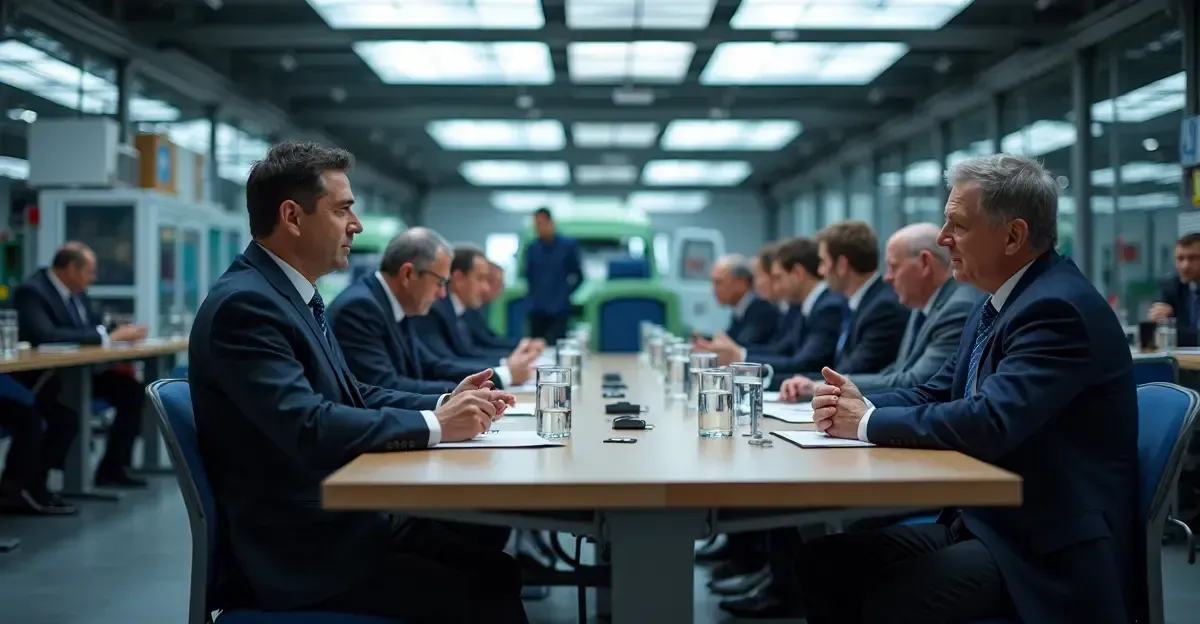
Mercedes-Benz faces a potential ban from the lucrative U.S. auto market under a proposed bipartisan bill in Congress, the Motor Vehicle Modernization Act of 2026. The legislation targets automakers with ownership ties to foreign adversaries, including China, and could inadvertently block the German luxury brand from selling vehicles in America despite nearly 30 years of domestic manufacturing operations.
The bill, which has passed a House committee but still requires approval from the full House and Senate, sets a 15% ownership threshold for entities linked to countries designated as foreign adversaries — namely China, Russia, Iran, and North Korea. Mercedes-Benz Group AG has approximately 19.7% of its shares held by Chinese entities: BAIC, a Chinese state-owned automaker, holds a 9.98% stake, while Zhejiang Geely chairman Li Shufu owns an additional 9.69%. This combined Chinese ownership exceeds the proposed threshold, putting the automaker in the crosshairs of the legislation.
What Does the Motor Vehicle Modernization Act Propose?
The Motor Vehicle Modernization Act of 2026 (H.R. 7389) was introduced in the U.S. House of Representatives on February 5, 2026, by Representative Brett Guthrie (R-KY). While the bill primarily aims to modernize NHTSA's motor vehicle safety programs, a key provision prohibits any manufacturer controlled by a foreign adversary from manufacturing, selling, delivering, or importing vehicles into the United States.
Under the current language, companies with any direct or indirect equity interest held by a foreign-adversary government face restrictions. Exemptions exist for automakers that have manufactured vehicles in the U.S. for at least five years, but these exemptions do not apply if there is any foreign-adversary government ownership — a clause that would ensnare Mercedes-Benz despite its long American manufacturing history.
"The bill states that a manufacturer controlled by a foreign adversary may not manufacture, sell, deliver, or import any vehicle into the United States," explains Noud Broekhof of the Nationale Autoshow. "Then they are not allowed to produce, import, or sell."
Impact on Mercedes-Benz: Jobs, Plants, and Sales at Stake
Mercedes-Benz has invested heavily in the U.S. market. The company operates two major production facilities — one in Tuscaloosa, Alabama, and another in North Charleston, South Carolina — together employing more than 10,000 American workers. The Tuscaloosa plant, founded in 1995, was Mercedes' first major manufacturing site outside Germany and has produced over 4.5 million vehicles since 1997. Around two-thirds of annual production is exported, making Mercedes-Benz U.S. International (MBUSI) one of the largest automotive exporters in the country.
In 2025, Mercedes-Benz USA reported retail sales of 303,200 passenger cars and 40,000 vans, totaling 343,200 units. The GLE SUV, built in Alabama, achieved its best sales year ever with 14% growth. A U.S. ban would not only halt new vehicle sales but also stop production and imports, dealing a severe blow to the company's North American operations.
"The automaker has more than 10,000 employees in the U.S.," Broekhof notes. "Employees are spread across two production facilities in Alabama and South Carolina. Moreover, Mercedes is one of the best-selling luxury brands in the U.S."
The potential ban also threatens the US auto industry supply chain, as Mercedes relies on a vast network of American suppliers and dealerships across all 50 states.
Volvo Also in the Crosshairs
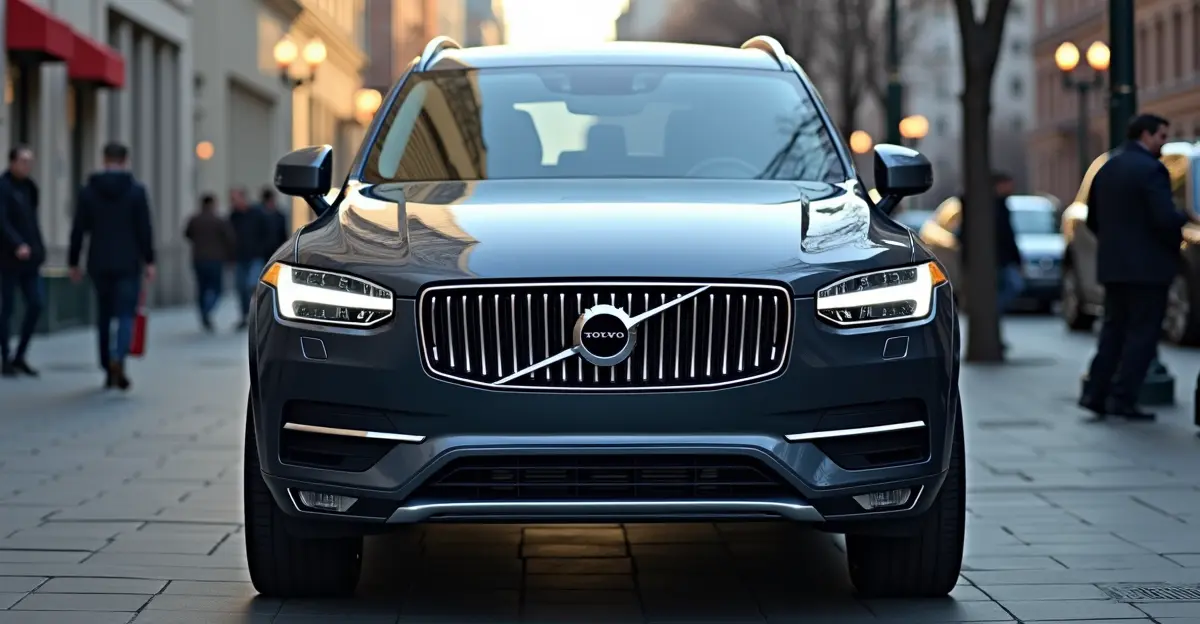
Mercedes is not alone in facing this threat. Volvo Cars, the Swedish automaker that is nearly 80% owned by China's Zhejiang Geely, also risks being barred from the U.S. market. However, Volvo recently received a reprieve: the Trump administration granted the company an exemption from a separate ban on connected vehicles with Chinese-developed software and hardware, allowing Volvo to continue selling its vehicles in America.
This exemption, announced in late May 2026, followed discussions regarding governance, technology, and data security. Volvo can now proceed with expansion plans, including bringing XC60 and hybrid production to its South Carolina factory. The outcome for Mercedes remains less certain, as the Motor Vehicle Modernization Act targets ownership structures rather than technology.
Industry experts suggest that the Volvo connected car exemption could serve as a template for Mercedes-Benz to negotiate a similar carve-out, though the two situations differ in key legal aspects.
Legislative Process and Potential Amendments
The bill is far from becoming law. It has passed the House Committee on Energy and Commerce by a vote of 48 to 1 but still needs approval from the full House of Representatives and the Senate. The legislative process is expected to involve significant debate, and amendments are likely.
"The sharp edges can possibly still be smoothed off," Broekhof says. "Mercedes is naturally doing everything it can to achieve that."
Mercedes-Benz CEO Ola Källenius has expressed confidence that a workable solution can be found, and the company is actively engaging with policymakers. The German automaker has also enlisted support from the German government and industry associations to lobby for amendments that would exempt established manufacturers with significant U.S. investments.
The EU carbon border tax and other transatlantic trade tensions add another layer of complexity to the situation, as European automakers increasingly find themselves caught between U.S.-China geopolitical rivalries.
FAQ: Mercedes-Benz US Sales Ban
Why could Mercedes-Benz be banned from the US market?
A proposed U.S. House bill, the Motor Vehicle Modernization Act of 2026, targets automakers with more than 15% ownership by entities linked to foreign adversaries like China. Mercedes-Benz has approximately 19.7% Chinese ownership through BAIC (a state-owned automaker) and Geely chairman Li Shufu, triggering the potential ban.
When would the ban take effect?
The bill has only passed a House committee and still needs approval from the full House and Senate. If enacted, the ban would take effect after a specified period, likely within 90 to 180 days of passage. The legislative process could extend into 2027.
Does the ban affect Mercedes-Benz production in the US?
Yes. The bill prohibits manufacturing, selling, delivering, or importing vehicles. This would stop production at Mercedes' Alabama and South Carolina plants, affecting over 10,000 American jobs.
Are there any exemptions?
The bill includes exemptions for automakers that have manufactured vehicles in the U.S. for at least five years, but these exemptions do not apply if there is any foreign-adversary government ownership. Mercedes does not qualify for the exemption under the current language.
Could the bill be changed?
Yes. The bill is still in the early stages of the legislative process and is subject to amendments. Mercedes-Benz is actively lobbying for changes that would exempt established manufacturers with significant U.S. investments.
Sources
Information for this article was sourced from BNR Nieuwsradio, CNBC, Automotive News, Carscoops, Bloomberg, Mercedes-Benz Group media releases, and U.S. Congress legislative records.

Follow Discussion