


 Deutsch
 English
 Español
 Français
 Nederlands
 Português


 Share
Share




The artificial intelligence revolution is colliding with the limits of global energy infrastructure. By 2026, AI data center electricity consumption is projected to exceed 1,000 terawatt-hours (TWh) globally, according to multiple industry analyses, pushing aging power grids to the breaking point. With over 60% of data center power still derived from fossil fuels—38% natural gas and 22% coal—the AI boom is triggering a structural shift in energy markets that pits climate goals against technological progress. Morgan Stanley's 2026 forecast warns of a 126 gigawatt (GW) demand surge through 2028, while the World Economic Forum's January 2026 Global Risks Report identifies the energy-technology nexus as a top emerging crisis. In response, major tech firms are pivoting to nuclear power at unprecedented scale, with Microsoft restarting Three Mile Island and Amazon, Google, and Oracle investing billions in small modular reactors (SMRs).
The Scale of the Crisis: 1,000 TWh and Rising
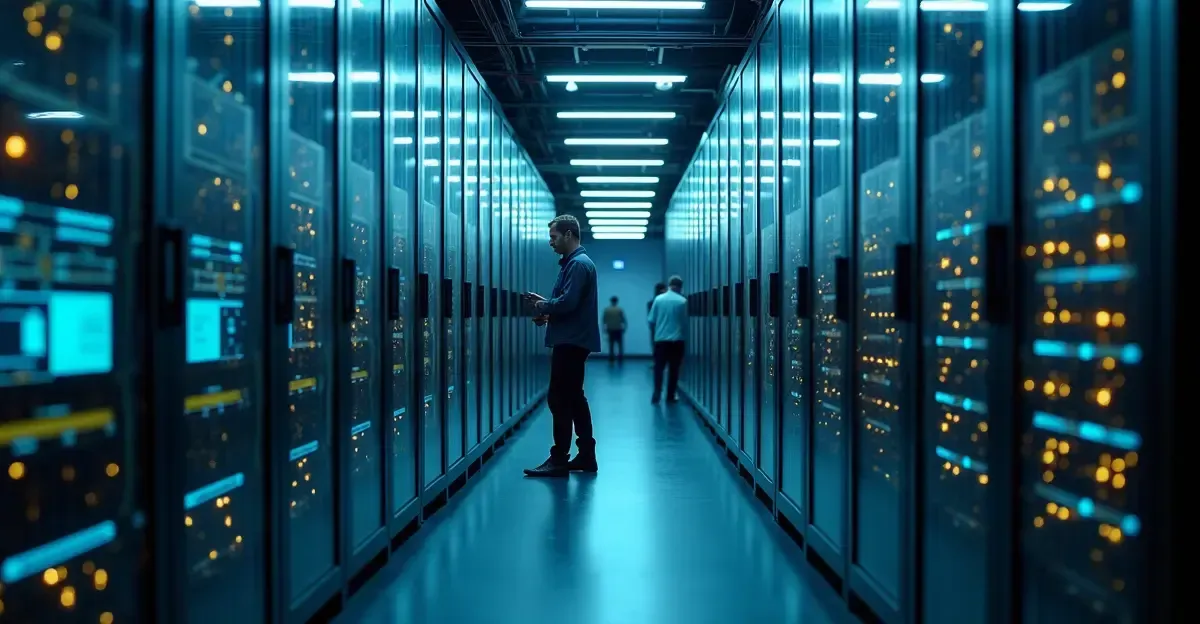
Global data center electricity consumption is on track to more than double between 2023 and 2026, driven almost entirely by the exponential growth of AI workloads. The AI inference explosion—where running trained models consumes far more power than training them—has become the primary driver. A single ChatGPT query uses roughly 10 times the electricity of a standard Google search. By 2026, AI could account for 4-8% of total global electricity use, up from less than 2% in 2022.
The four largest hyperscalers lead consumption: Amazon Web Services (95 TWh/year), Microsoft Azure (72 TWh/year), Google Cloud (64 TWh/year), and Meta AI (28 TWh/year), with all four seeing 29-52% annual growth in power demand. In the United States alone, data center power demand is forecast to reach 74 GW by 2028, creating a potential 49 GW generation shortfall, according to Morgan Stanley. The PJM Interconnection, which serves 65 million people across 13 states, faces a 6 GW reliability gap by 2027, and its capacity market prices have surged nearly tenfold since 2024.
Grid Strain and Rising Costs for Households
The energy crunch is already hitting consumers. U.S. residential electricity prices rose 7.4% year-over-year to about 18 cents per kilowatt-hour by September 2025, and electricity costs have increased 42% since 2019—far outpacing overall inflation of 29%. The Brookings Institution reports that households could see an additional $15-$25 per month in electricity bills as utilities pass down the costs of grid upgrades needed to serve data centers. In 2025 alone, utilities requested $31 billion in rate hikes, with data centers driving $9.33 billion in excess capacity costs.
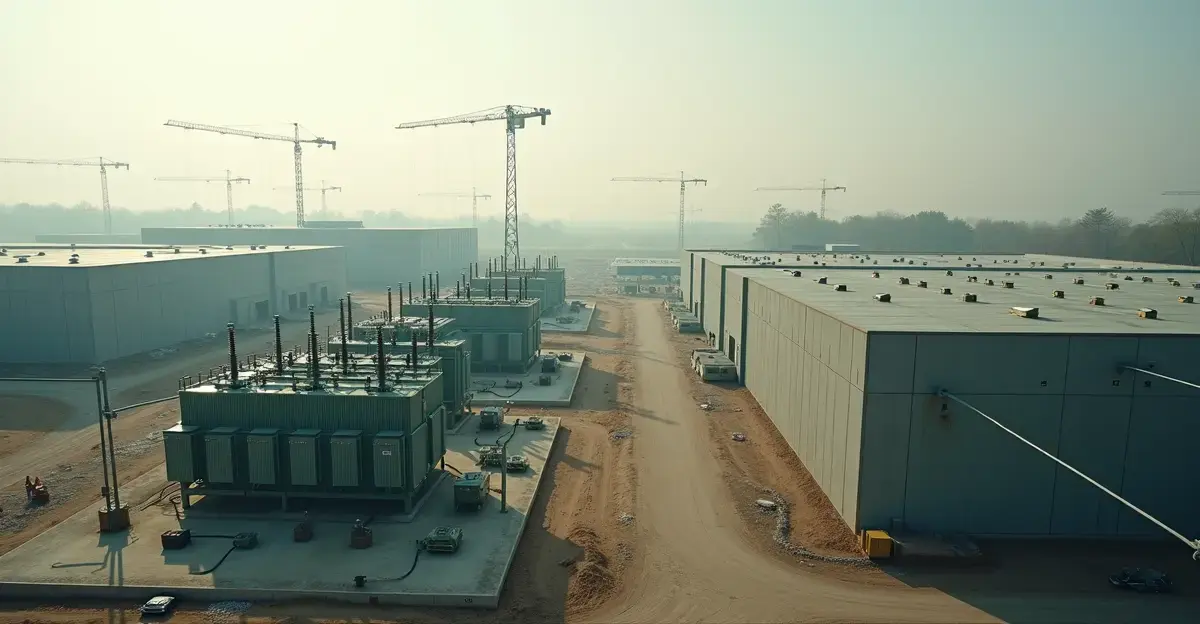
Grid operators are struggling to keep pace. Transformer lead times have stretched to 2-4 years, and several regions have imposed interconnection freezes on new data center connections. The geographic concentration of data centers in Northern Virginia—home to the world's largest concentration of such facilities—has created local grid bottlenecks that threaten reliability for residential customers.
Nuclear Renaissance: From Three Mile Island to SMRs
Faced with these constraints, Big Tech is turning to nuclear power as the only viable source of round-the-clock, carbon-free electricity at the scale required. The most symbolic move came in September 2024, when Constellation Energy announced plans to restart Three Mile Island Unit 1 in Pennsylvania—the site of America's most famous nuclear accident in 1979. Rebranded as the Crane Clean Energy Center, the 835-megawatt reactor will be brought back online by 2027 under a landmark 20-year power purchase agreement with Microsoft. The Trump administration approved a $1 billion federal loan from the Department of Energy in November 2025, moving the restart date forward from 2028. Constellation will invest approximately $1.6 billion to refurbish the plant with new turbines and components, creating an estimated 3,400 jobs and adding $16 billion to Pennsylvania's GDP.
But the restart of existing reactors is only part of the story. Tech giants are also placing massive bets on small modular reactors (SMRs)—advanced nuclear designs with capacities under 300 megawatts that can be factory-built and deployed incrementally. As of May 2026, every major hyperscaler has signed at least one nuclear power deal, with 13 announced projects committing over 9.8 GW of capacity. Meta leads with agreements unlocking up to 6.6 GW across TerraPower's Natrium design (4.0 GW), Oklo's Aurora reactor (1.2 GW), and partnerships with Vistra and Constellation. Amazon invested $700 million in X-energy for up to 12 Xe-100 SMRs, plus a $20 billion AI campus at the Susquehanna nuclear plant. Google signed a 25-year power purchase agreement to restart Iowa's Duane Arnold plant (615 MW) and committed to 500 MW from Kairos Power's fluoride salt-cooled reactors. Oracle announced plans in September 2024 to power a data center with three SMRs totaling approximately 1 GW.
The SMR market for data centers has grown from $6.3 billion in 2024 to a projected $13.8 billion by 2032, with over 22 GW of SMR projects in development globally. However, as of 2026, only China and Russia have operational SMRs; no commercial SMR has been deployed in the United States. The first U.S. SMRs are expected online between 2029 and 2032, meaning existing reactor restarts like Three Mile Island will deliver the fastest relief.
Fossil Fuels Fight Back
While nuclear captures headlines, natural gas is experiencing a parallel resurgence. According to the American Action Forum, planned natural gas capacity for data centers increased from 11.1% of new additions in 2024 to 18.1% in 2026, while non-renewable additions surged 71% from 2025-2026 compared to just 2% growth in renewables. Major projects include Pacifico Energy's 7.7 GW approved gas plant in Texas and NextEra's 10 GW combined plants in Texas and Pennsylvania. Natural gas maintains a cost advantage, with grid-connection costs averaging $24/kW versus $253/kW for solar and $335/kW for offshore wind.
This trend threatens climate goals. The International Energy Agency has warned that without aggressive clean energy deployment, AI-driven demand could lock in fossil fuel infrastructure for decades. The tension between AI growth and climate targets is becoming a central policy debate, with environmental groups pushing back against both gas plants and new nuclear construction.
Expert Perspectives and Political Fallout
"We are witnessing the most significant shift in energy markets since the electrification of the early 20th century," said a senior energy analyst at Morgan Stanley in the firm's April 2026 report. "The market underestimates the AI revolution. Compute demand is growing three times faster than supply, and the power constraints are becoming the binding bottleneck."
The political implications are profound. The WEF's 2026 Global Risks Report warns that geoeconomic confrontation and energy price volatility are now the top near-term business concerns, with half of surveyed leaders expecting turbulent times over the next two years. Rising electricity bills have pushed average overdue balances up 32% since 2022, creating a potential backlash against both tech companies and utilities. Several states are considering legislation to impose grid cost fees on data centers, while community opposition to new power plants—whether gas or nuclear—is intensifying across multiple regions.
FAQ: AI's Energy Crisis
How much electricity will AI data centers consume by 2026?
Global AI data center electricity consumption is projected to exceed 1,000 TWh by 2026, equivalent to the total electricity use of Canada or France.
Why are tech companies turning to nuclear power?
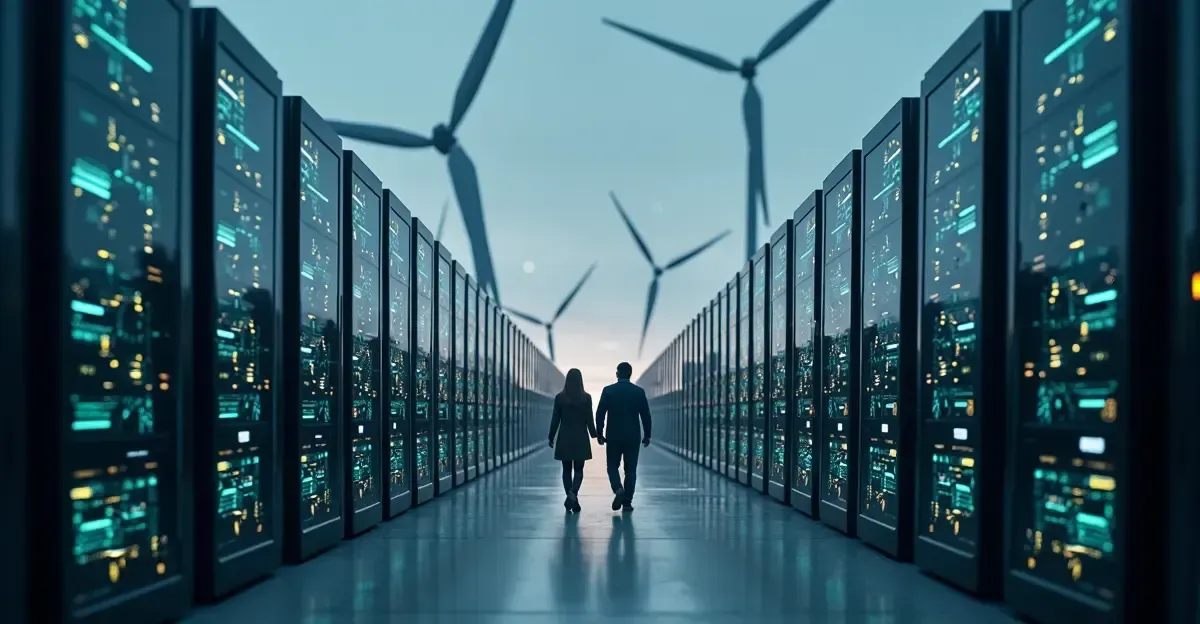
Nuclear provides constant, carbon-free baseload electricity that matches the 24/7 demands of AI data centers, unlike intermittent solar and wind. It also offers price stability and can be co-located with data centers.
What is a small modular reactor (SMR)?
SMRs are advanced nuclear reactors with capacities under 300 megawatts that use modular design for factory construction and scalable deployment. They promise lower costs and faster construction than traditional large reactors.
How will this affect my electricity bill?
U.S. households could see $15-$25 per month in additional electricity costs as utilities invest in grid upgrades to serve data centers. Electricity prices have already risen 42% since 2019.
When will the first SMRs power data centers?
While existing reactor restarts like Three Mile Island will come online by 2027, the first commercial SMRs in the U.S. are not expected until 2029-2032 at the earliest.
Conclusion: A Defining Trade-Off
The AI-energy crunch of 2026 represents a defining moment for global energy policy. The choices made in the next two to three years—whether to accelerate nuclear deployment, expand natural gas, or invest in grid modernization and efficiency—will shape both the trajectory of AI development and the world's ability to meet climate targets. With Morgan Stanley projecting a 55 GW U.S. electricity shortfall by 2028 and the WEF warning of cascading risks, the pressure to act has never been greater. The revival of Three Mile Island and the race to deploy SMRs signal that nuclear power is back on the table as a mainstream solution. Whether it can scale fast enough to meet AI's insatiable demand—without sacrificing affordability or climate progress—remains the central question of the decade.
Sources
- Morgan Stanley, Powering AI: Energy Market Outlook 2026
- World Economic Forum, Global Risks Report 2026
- Constellation Energy, Three Mile Island Unit 1 Restart Announcement, 2024-2025
- U.S. Department of Energy, Loan Programs Office, November 2025
- Monitoring Analytics, PJM State of the Market Report 2025
- Brookings Institution, Confronting Rising Energy Bills Linked to Data Centers, 2025
- American Action Forum, AI Data Center Power Surge: Shifting Trends Toward Natural Gas, 2026
- ZestLab, AI Data Center Energy Crisis 2026
- International Energy Agency, Electricity Market Report 2025

Follow Discussion