


 Deutsch
 English
 Español
 Français
 Nederlands
 Português


 Share
Share




What is the Gulf of Oman Container Ship Incident?
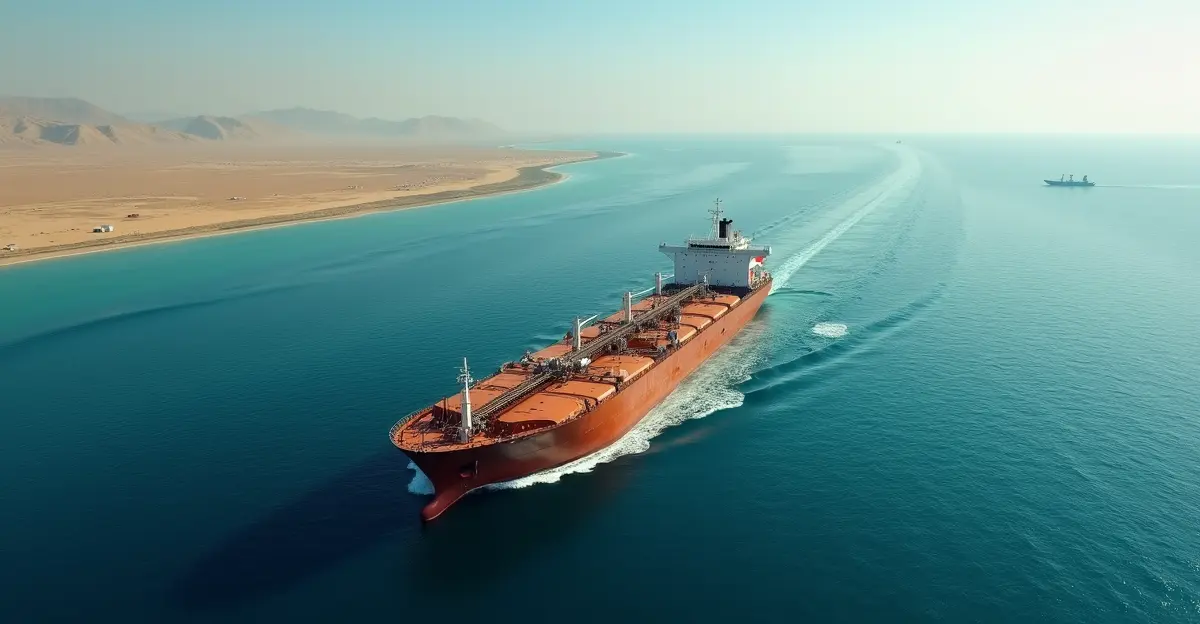
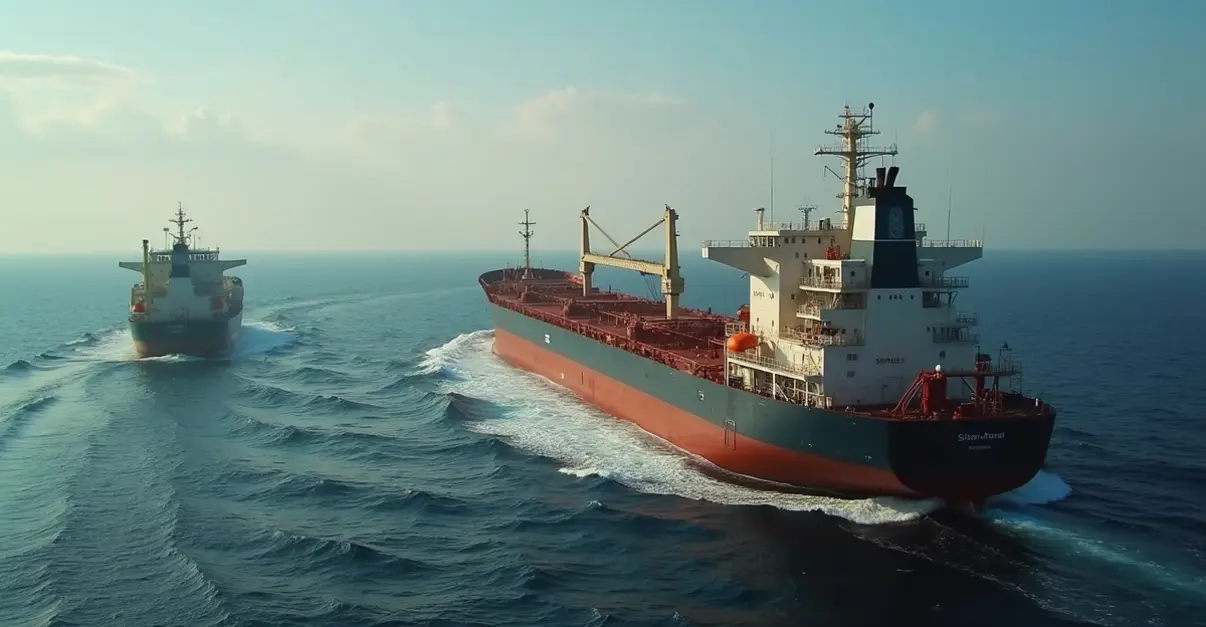
In a dramatic escalation of US-Iran tensions, American military forces fired upon and boarded the Iranian container ship Touska in the Gulf of Oman on April 20, 2026. The nearly 300-meter vessel, which had departed Malaysia eight days earlier, was targeted by US forces after allegedly attempting to circumvent an American naval blockade of Iranian ports. The incident marks one of the most direct confrontations between the two nations since the 2026 Iran war began earlier this year, raising fears of renewed conflict in the strategically vital waterway.
Background: Rising US-Iran Tensions
The Gulf of Oman incident occurs against a backdrop of escalating hostilities between Washington and Tehran. Since President Donald Trump's return to office in 2025, US foreign policy toward Iran has become increasingly confrontational. The current crisis stems from February 2026 when US and Israeli forces launched coordinated airstrikes on Iranian targets, resulting in significant casualties including Supreme Leader Ali Khamenei. Iran responded with missile and drone attacks on US bases and regional allies, leading to a temporary ceasefire brokered by Pakistan that was set to expire just two days after the Touska incident.
The US naval blockade of Iranian ports, implemented in early April 2026, represents Washington's latest economic pressure tactic. American officials claim the blockade aims to prevent Iran from exporting oil and other goods, while Tehran condemns it as illegal maritime aggression. Similar to previous Middle East maritime security crises, the situation has created a volatile environment where miscalculations could trigger broader conflict.
Timeline of the Touska Incident
Initial Warnings and Escalation
According to US Central Command (CENTCOM), the Touska received multiple warnings over approximately six hours before American forces took action. The container ship was en route to Bandar Abbas, Iran's primary port on the Persian Gulf, when it encountered US naval vessels. President Trump stated on social media platform X: "We informed the Touska's crew about the blockade and gave them ample opportunity to comply. When they refused, we took necessary action to enforce international maritime law."
The Attack and Boarding
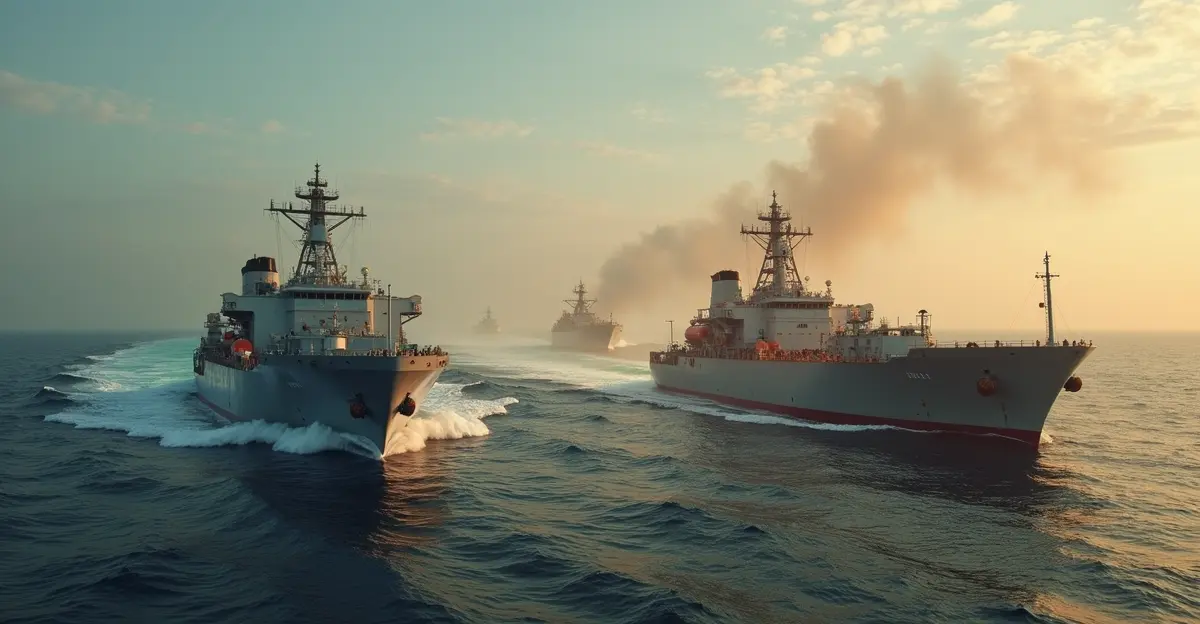
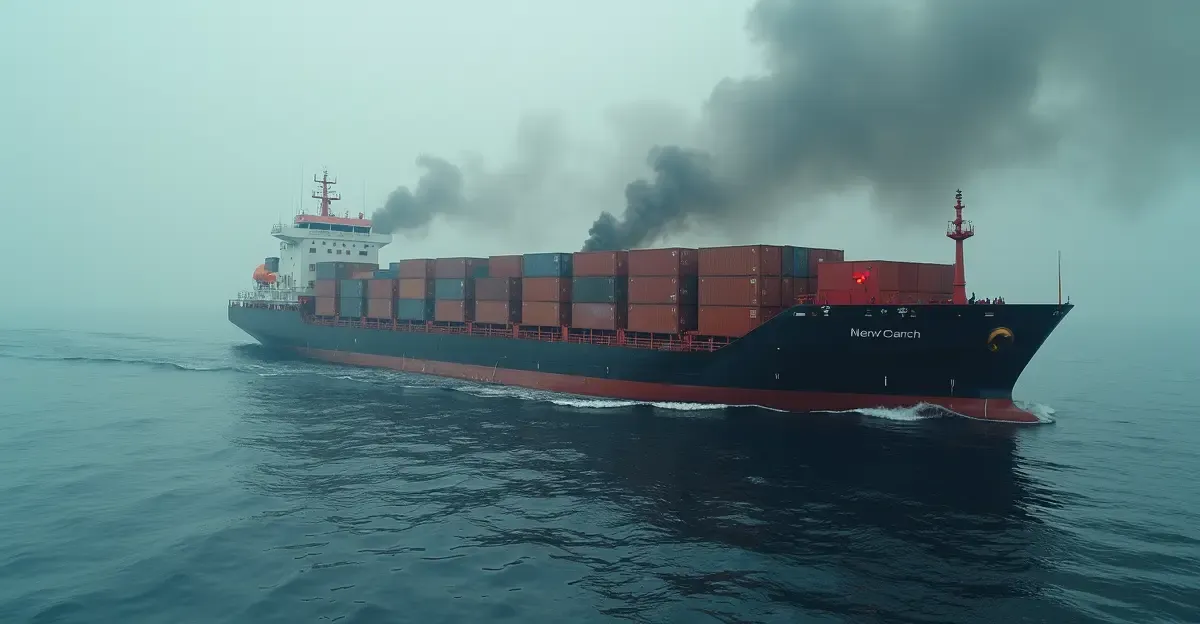
US military forces from the destroyer USS Spruance fired on the Touska's engine room, disabling the vessel. Subsequently, Marine Corps personnel boarded and secured the ship. Video footage released by CENTCOM shows the engagement from the perspective of American forces. The Touska is currently under US control near the Iranian coastal city of Beris, close to the Pakistan border.
Iranian Response and Retaliation Threats
Iran has reacted with fury to what it terms "armed piracy." A spokesperson for Iran's military headquarters declared: "This constitutes a clear violation of the ceasefire agreement. We reserve the right to respond appropriately to this act of aggression." The Iranian statement specifically referenced the impending expiration of the US-Iran ceasefire, suggesting Tehran views the incident as potentially deliberate provocation.
Key Players and Vessels Involved
| Entity | Role | Details |
|---|---|---|
| Touska | Iranian Container Ship | 300-meter vessel, IMO: 9328900, departed Malaysia April 12 |
| USS Spruance | US Navy Destroyer | Arleigh Burke-class, launched 2020, homeported in Bahrain |
| US Central Command | Military Command | Responsible for Middle East operations, based in Tampa, Florida |
| Iranian Military HQ | Iranian Command | Issued retaliation warning, referenced ceasefire violation |
Strategic Implications for Regional Security
The Gulf of Oman represents one of the world's most critical maritime chokepoints, with approximately one-third of global liquefied natural gas and 20% of oil consumption passing through the adjacent Strait of Hormuz. Any disruption to shipping in this region has immediate global economic consequences. The Touska incident occurs just as a US diplomatic delegation led by Vice President JD Vance was scheduled to arrive in Islamabad, Pakistan, for potential negotiations with Iranian representatives.
Iran's state news agency IRNA reported that Iranian leadership refuses to negotiate while the US maintains its naval blockade, creating a diplomatic stalemate. This situation mirrors previous international shipping security challenges in the region, where military actions have complicated diplomatic solutions.
Economic and Global Trade Impact
The 2026 Iran war has already caused significant disruption to global energy markets, with oil prices experiencing volatility since February. The Gulf of Oman incident threatens to exacerbate these challenges. According to economic analysts, prolonged closure of the Strait of Hormuz could trigger the most severe oil supply disruption since the 1970s energy crisis. The US Department of Defense estimated the cost of Middle East military operations at $18 billion by March 2026, with requests for an additional $200 billion in funding.
FAQ: Gulf of Oman Container Ship Incident
Why did the US fire on the Iranian container ship?
The US claims the Touska was attempting to violate its naval blockade of Iranian ports. After multiple warnings over six hours, American forces disabled the ship's engine room before boarding.
What is the current status of the Touska?
The vessel remains under US control near Beris, Iran. Both nations have not disclosed details about conditions aboard or the crew's status.
How has Iran responded to the incident?
Iran has condemned the action as "armed piracy" and violation of the ceasefire agreement, threatening retaliation while refusing to negotiate under blockade conditions.
What are the implications for global shipping?
The Gulf of Oman is a critical maritime corridor. Any escalation could disrupt 20% of global oil consumption passing through the Strait of Hormuz, affecting energy prices worldwide.
Will this affect US-Iran negotiations?
The incident complicates already strained relations. Iran refuses to negotiate while the blockade continues, creating a diplomatic impasse as the ceasefire expiration approaches.
Follow Discussion