


 Deutsch
 English
 Español
 Français
 Nederlands
 Português


 Share
Share




What is the Iran War? US Mixed Signals Create Global Uncertainty
The ongoing conflict between the United States and Iran has entered a critical phase in March 2026, with the American administration sending contradictory signals about the war's duration and objectives. President Donald Trump's recent statements suggesting the conflict could end 'fairly soon' contrast sharply with Defense Secretary Pete Hegseth's assessment that fighting may continue for 'four to five more weeks,' creating confusion among allies, markets, and global observers. This uncertainty comes as the war has already claimed over 1,600 Iranian lives, killed eight American soldiers, and disrupted 20% of global oil supplies through the strategically vital Strait of Hormuz.
Conflicting Messages from Washington
During a press conference in Miami, President Trump painted a picture of a severely weakened Iran, stating: 'They have no navy, no air force, no air defense. Everything is blown up, there's no radar, no telecommunications, and no leadership. We could leave now and call it a huge success.' However, he stopped short of declaring an immediate end to military operations, leaving the door open for continued strikes. This ambiguity stands in stark contrast to Defense Secretary Hegseth's earlier assessment that the conflict was 'only just the beginning' and could extend for several more weeks.
According to American correspondent David Hammelburg, the mixed messaging reflects internal divisions within the administration about how to proceed. 'There's growing pressure from Trump's political base to end the conflict quickly, especially with eight American casualties and rising energy prices affecting voters,' Hammelburg noted. The administration faces competing priorities: achieving military objectives while managing domestic political fallout and global economic consequences.
Military Assessment: What Has Been Achieved?
The US military has conducted approximately 3,000 airstrikes against Iranian targets since Operation Midnight Hammer began in June 2025. According to Pentagon assessments, these strikes have:
- Destroyed 90% of Iran's offensive missile capabilities
- Disabled most of Iran's nuclear infrastructure
- Significantly degraded command and control systems
- Eliminated key military leadership positions
However, experts warn that Iran retains asymmetric capabilities, including drone technology and proxy forces throughout the region. The Middle East conflict escalation has drawn in multiple regional actors, complicating the strategic picture.
Global Economic Impact and Market Reactions
The financial markets have responded dramatically to the shifting signals from Washington. Initially, uncertainty about the conflict's duration pushed the Dow Jones Industrial Average into negative territory, but Trump's suggestion of a possible quick end reversed the trend, with the index closing in positive territory. The oil market has been particularly volatile, with prices peaking at approximately $120 per barrel before retreating to around $85 as of early March 2026.
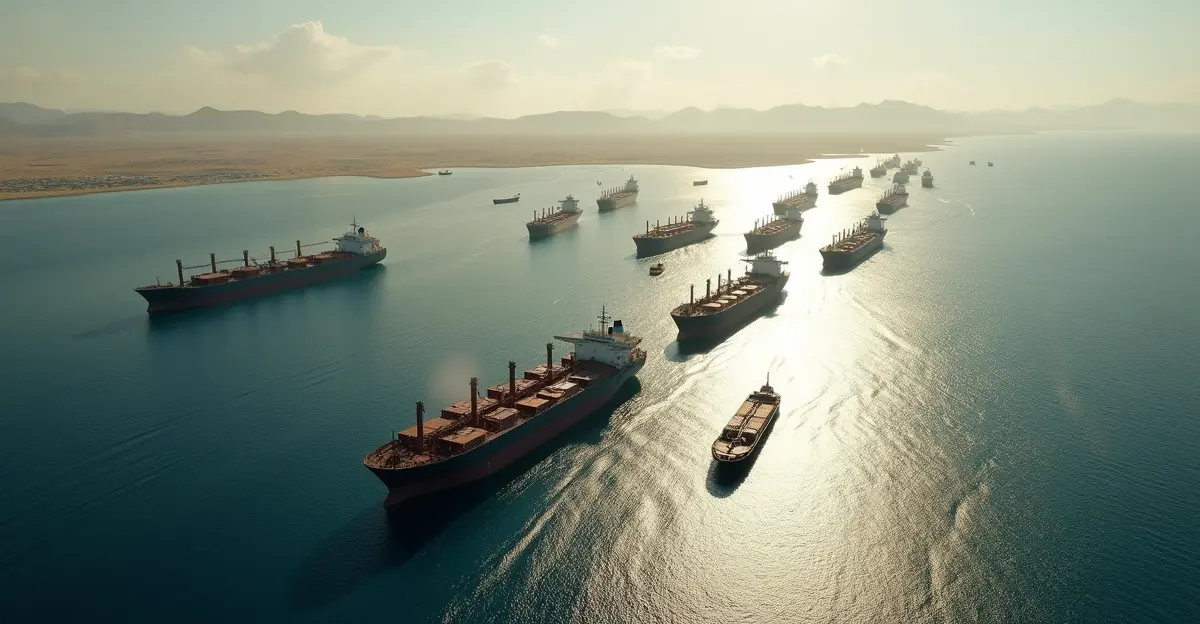
The most significant economic disruption stems from the Strait of Hormuz crisis, where Iran's Revolutionary Guard Corps has effectively closed the vital waterway to commercial shipping. This chokepoint normally handles 20.9 million barrels of oil daily—approximately 20% of global petroleum consumption. Major shipping companies including Maersk, MSC, Hapag-Lloyd, and CMA CGM have suspended operations through the strait, rerouting vessels around Africa's Cape of Good Hope at significant additional cost and time.
US Response to Shipping Crisis
President Trump has announced that the United States will provide naval escorts for oil tankers through the Strait of Hormuz, stating: 'We will not allow a terrorist regime to hold the global oil supply hostage. If necessary, we will use the Navy to protect tankers.' The administration is also considering offering political risk insurance to vessels navigating the Gulf region, though details remain unclear.
This naval protection comes with significant costs and risks. Shipping through convoy procedures will increase transit times by 30-40%, while war-risk insurance premiums have skyrocketed by 500% since the crisis began. The global shipping disruption has already killed at least eight seafarers and damaged multiple vessels, creating what maritime experts call the most dangerous shipping environment since World War II.
Domestic Political Pressure and Casualties
Within the United States, the war faces growing opposition as casualties mount and energy prices rise. Eight American soldiers have been killed in the conflict, primarily in drone attacks on US bases in the region. Domestic gasoline prices have increased by nearly 50 cents per gallon since the conflict intensified, putting pressure on the administration from consumers and political opponents alike.
'Trump promised to end endless wars, and his base is watching closely,' noted political analyst Sarah Chen. 'With midterm elections approaching, the administration needs to show progress or face significant backlash.' The internal pressure mirrors challenges faced during previous US military interventions in the Middle East, where initial public support often wanes as casualties and costs accumulate.
Regional Implications and Nuclear Concerns
While President Trump claims that 90% of Iran's nuclear infrastructure has been disabled, experts caution that the country retains significant technical knowledge and could potentially reconstitute capabilities within months if pressure eases. The conflict has also triggered regional escalation, with:
- Lebanon experiencing cross-border attacks
- Saudi Arabia and Bahrain facing Iranian retaliatory strikes
- Turkey increasing military readiness along its southern border
- Russia providing intelligence support to Iran despite US warnings
The appointment of Mojtaba Khamenei as Iran's new Supreme Leader following his father's death has complicated diplomatic prospects, with Trump expressing displeasure at the succession and ruling out immediate negotiations.
FAQ: Frequently Asked Questions About the Iran War
How long will the Iran war last?
Current estimates range from immediate conclusion to 4-5 more weeks of fighting, depending on which administration official you believe. Defense Secretary Hegseth suggests continued operations, while President Trump hints at possible rapid conclusion.
What is the Strait of Hormuz crisis?
The Strait of Hormuz crisis began on February 28, 2026, when Iran effectively closed the vital waterway following US-Israeli strikes. This has halted 20% of global oil supplies and stranded over 150 ships outside the strait.
How many casualties have occurred?
Approximately 1,600-1,900 Iranians have been killed in US airstrikes, while eight American soldiers have died in retaliatory attacks. Regional casualties exceed 30 across multiple countries.
What is the impact on oil prices?
Oil prices peaked at $126 per barrel before retreating to around $85. If the Strait of Hormuz remains closed for five weeks, prices could reach $100-150 per barrel, according to energy analysts.
Will the US send ground troops to Iran?
Defense Secretary Hegseth has not ruled out ground forces but emphasizes that current operations rely on air power and naval assets. No large-scale ground invasion appears imminent.

Follow Discussion