


 Deutsch
 English
 Español
 Français
 Nederlands
 Português


 Share
Share




What is the Belgian Trailer Rocket Launcher Incident in Iraq?
In a startling discovery that has gone viral across social media platforms, Iraqi security forces have uncovered an improvised rocket launch installation built inside an abandoned Belgian transport trailer in the desert near Basra, Iraq. The incident, which occurred in early March 2026, involves a trailer from the Belgian transport company Van de Poel that appears to have been repurposed by Iran-backed militias for military purposes. This bizarre case highlights the complex weapons trafficking networks operating in conflict zones and raises serious questions about the end-of-life disposal of industrial equipment in Europe.
Background and Discovery
The trailer was discovered by the Iraqi army in a desert area west of Basra, a strategic port city in southeastern Iraq. According to Iraqi news outlet Al-Mirbad, which first published the photos on March 5, 2026, security forces seized "two hidden rocket launch installations" in the operation. The images quickly spread across social media, showing the distinctive blue and white Van de Poel trailer with a makeshift rocket launcher protruding from its modified structure.
Reinhout Bernaerts, operations manager at Van de Poel, confirmed to Belgian broadcaster VRT that the trailer had been out of the company's possession for "decades." "All our old equipment is sold to a buyer; we cannot track where it ends up. It is no longer our business," Bernaerts stated, distancing the company from the incident. The trailer still bore the company's logo and name, making identification straightforward despite its altered state.
Who is Behind the Improvised Rocket Launcher?
Security analysts believe the improvised rocket launcher belongs to a group with ties to Hezbollah, the Lebanese Shia Islamist political party and paramilitary organization that maintains close connections with Iran. This discovery comes amid escalating tensions in the region, with Iran-backed militias intensifying attacks against US, Israeli, and allied targets as retaliation for the ongoing US-Israeli offensive against Tehran.
Hezbollah's Regional Network
Hezbollah, founded in 1982 and inspired by the Iranian Revolution, has established itself as one of the most powerful non-state actors in the world. The group operates an extensive network across the Middle East and has been designated as a terrorist organization by at least 27 countries. The discovery of the Belgian trailer in Iraq suggests the group or its affiliates are utilizing unconventional methods to conceal weapons systems, similar to tactics used by Iranian-backed militias in Syria.
Regional Escalation Context
The incident occurs against the backdrop of a rapidly expanding regional conflict. Since October 2023, Hezbollah has been at war with Israel, and the conflict has intensified significantly in early 2026. On March 2, 2026, Israeli jets bombed Beirut in retaliation for a Hezbollah rocket and drone attack on a military base in Haifa, killing 31 people and injuring 149. Iraq has emerged as a key battleground in this proxy conflict, with militias launching dozens of attacks targeting US bases in Jordan and Iraq.
Technical Analysis of the Improvised System
The improvised rocket launcher discovered in the Belgian trailer represents a sophisticated adaptation of civilian equipment for military purposes. While specific technical details remain classified, the system appears to be designed for launching 122mm artillery rockets, a common weapon used by Iranian-backed groups in the region.
Key Features of the System:
- Concealed Launch Platform: The trailer was modified to hide the launch tubes inside its structure
- Mobile Capability: Being mounted on a trailer allows for rapid relocation after firing
- Civilian Disguise: The Van de Poel branding provides cover as ordinary transport equipment
- Improvised Engineering: The system appears to be locally manufactured or adapted from existing military components
Impact and Implications
The discovery of the Belgian trailer rocket launcher has significant implications for regional security, industrial responsibility, and international arms control efforts.
Security Implications
This incident demonstrates the creativity and resourcefulness of non-state actors in developing asymmetric warfare capabilities. The use of civilian transport equipment as weapons platforms makes detection more difficult for security forces and complicates counter-terrorism operations. Iraq hosts approximately 100,000 Iranian-backed militia members from groups like Kataib Hezbollah, Harakat Hezbollah al-Nujaba, and Asaib Ahl al-Haq, all of which are sanctioned by the US as terrorist organizations.
Industrial Responsibility Questions
The case raises important questions about corporate responsibility in the disposal of industrial equipment. While Van de Poel maintains that it followed proper procedures by selling the trailer to a buyer decades ago, the incident highlights potential gaps in tracking systems for decommissioned industrial assets. This is particularly relevant given the European Union export control regulations that govern dual-use goods.
Regional Stability Concerns
Iraqi Foreign Minister Fuad Hussein has emphasized that "war cannot be a means to solve problems" and urged dialogue to maintain regional stability. However, with the Islamic Resistance in Iraq announcing 16 operations using drones targeting enemy bases in recent weeks, and Iraqi security forces intercepting nine drones in southern provinces, the discovery of the Belgian trailer rocket launcher adds another layer of complexity to an already volatile situation.
FAQ: Belgian Trailer Rocket Launcher in Iraq
What company owned the trailer?
The trailer belonged to Belgian transport company Van de Poel from Herenthout, Belgium, but had been out of their possession for decades before appearing in Iraq.
Where exactly was it discovered?
Iraqi security forces found the trailer in a desert area west of Basra, a major port city in southeastern Iraq near the Kuwait and Iranian borders.
Who is believed to be behind the rocket launcher?
Security analysts attribute the improvised weapon system to groups with ties to Hezbollah, which has close connections to Iran and operates across the Middle East.
Has this type of weapon been used before?
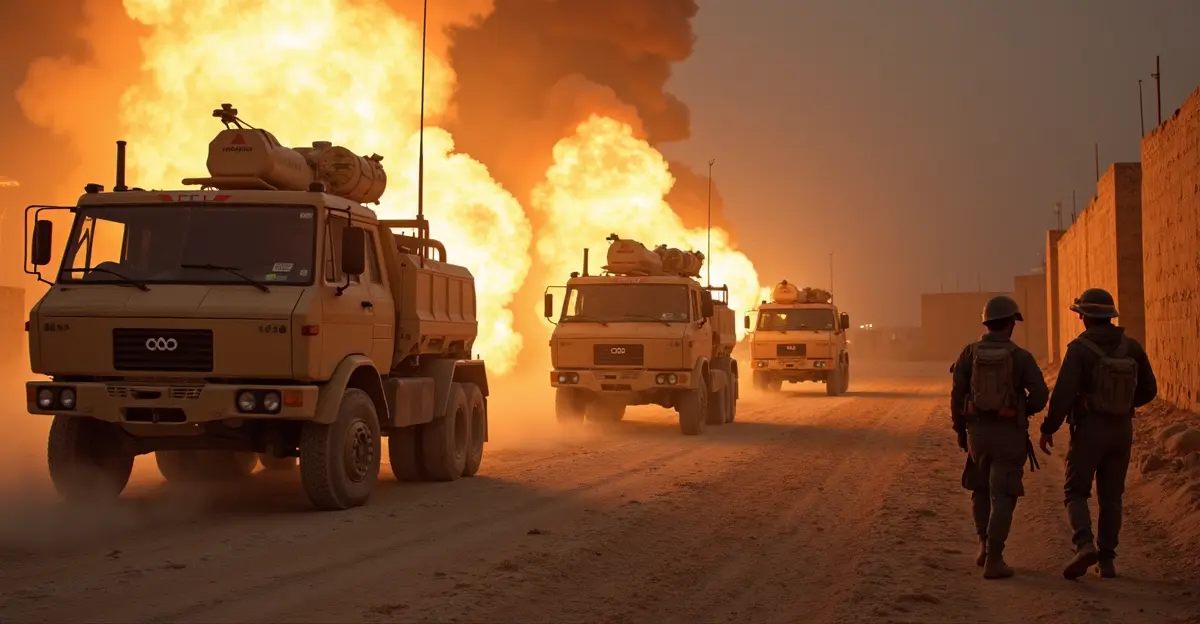
Yes, Iranian-backed militants in Iraq have previously used improvised rocket launchers disguised inside modified civilian vehicles, including fuel tanker trucks, to attack US-led coalition forces.
What are the regional implications?
The discovery highlights Iraq's vulnerability as a battleground in the expanding proxy conflict between Iran-backed groups and US-Israeli alliances, threatening regional stability.


Follow Discussion