


 Deutsch
 English
 Español
 Français
 Nederlands
 Português


 Share
Share




Blue Origin's New Glenn Rocket Explodes During Test at Cape Canaveral
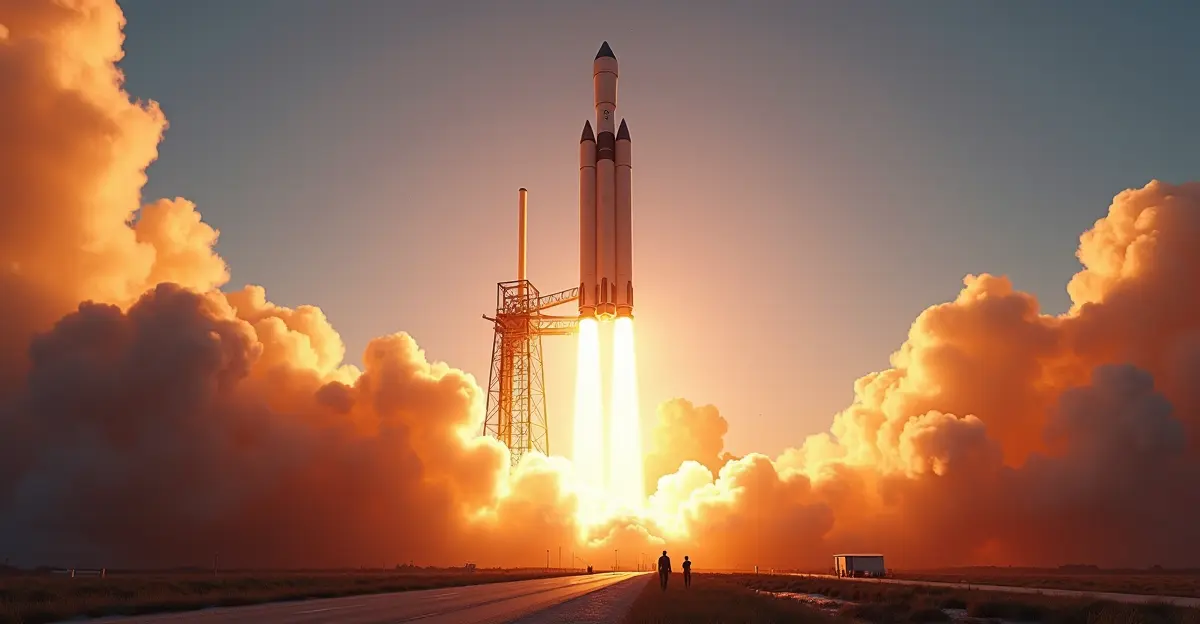
An uncrewed Blue Origin New Glenn rocket suffered a catastrophic explosion during a static fire test at Cape Canaveral Space Force Station on Thursday evening, May 28, 2026. The 320-foot heavy-lift launch vehicle was engulfed in a massive fireball just before 9:00 PM ET, marking the most serious failure in Blue Origin's history and raising immediate questions about the company's role in NASA's Artemis program and the upcoming Moon Base initiative.
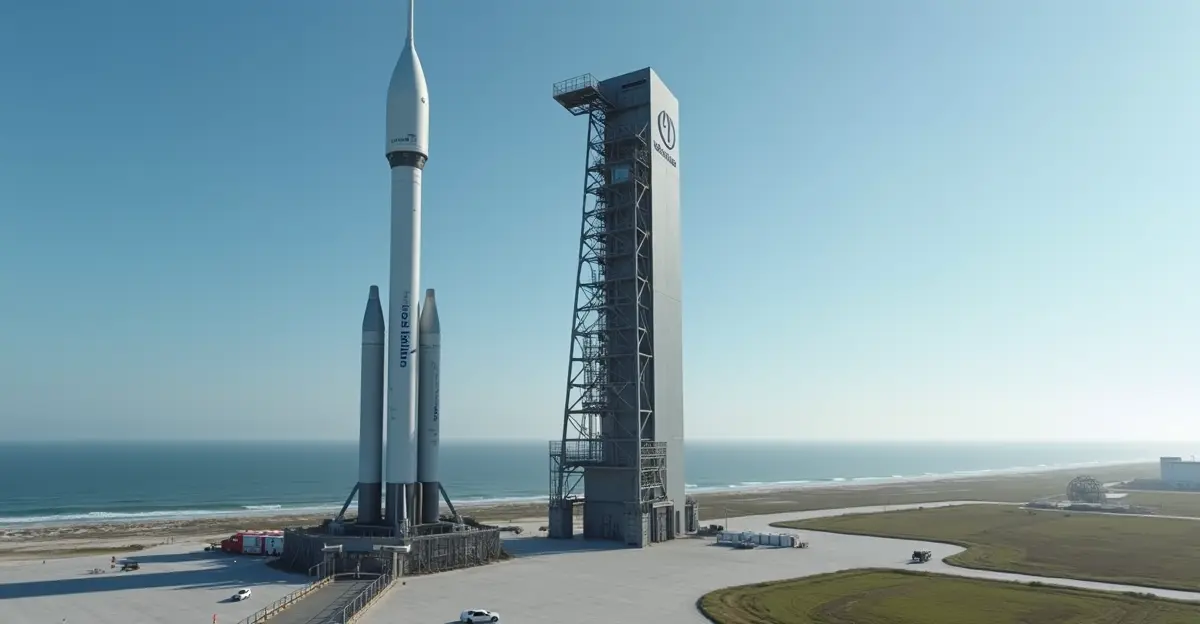
The explosion occurred during a routine pre-launch hot-fire test at Launch Complex 36 (LC-36), designed to ignite the rocket's seven BE-4 engines while the vehicle remained anchored to the pad. Instead, the test ended in a devastating blast that destroyed the rocket and severely damaged launch infrastructure, including the collapse of at least one lightning protection tower. No personnel were injured, and Blue Origin confirmed all employees were accounted for. The payload—a stack of 48 Amazon Leo broadband satellites—was not aboard the rocket at the time of the test.
Context: A Critical Moment for Blue Origin
The explosion comes at a pivotal juncture for Blue Origin, the aerospace company founded by Amazon billionaire Jeff Bezos. The New Glenn rocket had completed three previous flights: a successful maiden voyage in January 2025 (NG-1), a flawless Mars orbiter mission for NASA in November 2025 (NG-2), and a partially successful third flight in April 2026 (NG-3) that suffered a second-stage anomaly but still achieved a booster landing. The NG-4 mission was slated to be the company's first launch for Amazon's Leo broadband constellation, a direct competitor to SpaceX's Starlink, and was expected to lift off as early as June 4, 2026.
The incident also strikes at the heart of Blue Origin's ambitions in the lunar exploration program. Just one day before the explosion, NASA Administrator Jared Isaacman had praised Blue Origin's contributions to the Artemis program and announced a $188 million contract for the company to help build a Moon Base at the lunar south pole. Blue Origin's Blue Moon Mark 1 lander, designed to deliver cargo to the Moon, relies on the New Glenn rocket for launch. A prototype lunar lander was planned for a test flight later this year.
The Explosion: What Happened
Video footage of the incident, widely shared on social media, shows smoke emerging from the base of the rocket before it erupts into a towering fireball that illuminates the night sky across Florida's Space Coast. Residents reported feeling the ground shake from miles away. Blue Origin described the event as an "anomaly" in a brief statement, while Jeff Bezos took to X to address the situation directly.
"It's too early to know the root cause, but we're already working to find it. Very rough day, but we'll rebuild whatever needs rebuilding and get back to flying. It's worth it," Bezos wrote, confirming all personnel were safe.
SpaceX CEO Elon Musk, whose company has experienced its own share of rocket explosions during development, offered a terse response: "Most unfortunate. Rockets are hard."
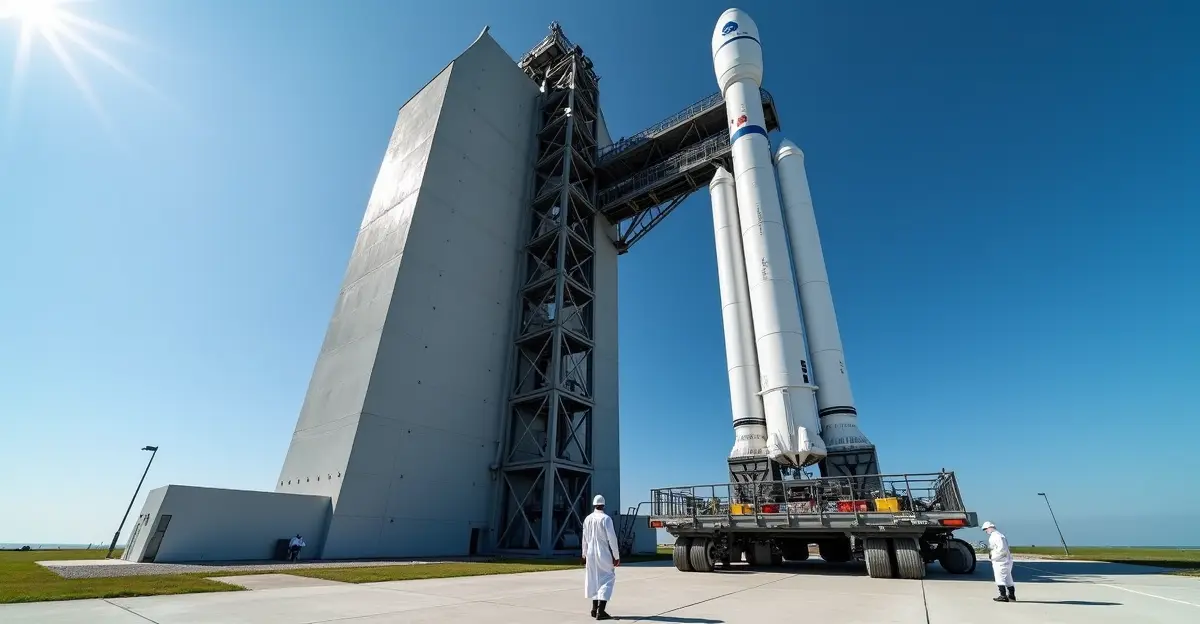
Early assessments suggest the failure originated in the first stage, which is powered by seven BE-4 liquid methane/liquid oxygen engines. The extent of the damage to LC-36 is still being evaluated, but initial reports indicate that the transporter-erector and nearby test facilities may have been compromised, potentially grounding Blue Origin's only operational New Glenn launch pad for an extended period.
NASA Investigates Impact on Artemis and Moon Base Plans
NASA Administrator Jared Isaacman, a former private astronaut who flew on SpaceX's Inspiration4 mission, said the agency would support the investigation and assess consequences for its programs. "Spaceflight is unforgiving, and developing new heavy-lift launch capabilities is extraordinarily difficult. We will provide information about any impacts to our programs as it becomes available," Isaacman stated on X.
The timing could not be worse for NASA's lunar ambitions. The agency's newly announced Moon Base initiative, revealed on May 26, 2026, envisions a three-phase roadmap to establish a permanent human outpost at the Shackleton Connecting Ridge near the lunar south pole by 2036. Blue Origin was awarded a $188 million contract for lunar terrain vehicle deliveries and was expected to play a key role in the first Moon Base mission (Moon Base I), scheduled for fall 2026. The explosion casts doubt on whether that timeline can be met.
The incident also impacts the Artemis II crewed mission schedule. While Artemis II—a crewed flyby of the Moon—does not directly rely on New Glenn, subsequent missions involving cargo delivery and lunar infrastructure deployment were counting on Blue Origin's heavy-lift capability. NASA's broader strategy of leveraging commercial partners for deep space exploration now faces a significant test.
Furthermore, the Pentagon's national security launch program may be affected. New Glenn was in the process of being certified for National Security Space Launch (NSSL) missions, and this failure will likely delay that certification process.
Broader Implications for the Space Industry
The explosion represents a major setback for Blue Origin's efforts to establish itself as a reliable commercial launch provider alongside SpaceX and United Launch Alliance. The company had ambitious plans for up to 12 New Glenn launches in 2026, including missions for Amazon, AST SpaceMobile, Eutelsat, and Telesat. All of those are now on hold pending the outcome of the investigation.
For Amazon's Leo broadband constellation—formerly known as Project Kuiper—the delay is particularly painful. Amazon has reserved 24 New Glenn launches and had hoped to begin phasing in commercial satellite broadband service this summer. With just over 300 satellites currently in orbit, the company faces an uphill battle against SpaceX's Starlink, which already has thousands of satellites operational.
The financial impact is also significant. Blue Origin is privately funded by Jeff Bezos, who has invested billions into the company. While Bezos has repeatedly stated his commitment to space exploration, the cumulative cost of rebuilding the rocket, repairing the launch pad, and absorbing the revenue loss from delayed missions will be substantial.
What Happens Next
Blue Origin has launched an internal investigation, which will be supported by NASA and likely overseen by the Federal Aviation Administration (FAA). The company must identify the root cause, implement corrective actions, and receive FAA clearance before it can resume flights. Given the severity of the damage—both to the vehicle and the launch pad—a return to flight in 2026 appears unlikely.
In the meantime, Blue Origin may accelerate work on the larger New Glenn 9×4 variant, which features nine BE-4 engines on the first stage and a wider payload fairing. However, that vehicle is still in development and would require its own testing and certification process.
Jeff Bezos concluded his statement with a note of resolve: "We'll fix it, learn from it, and come back stronger." Whether that comeback happens in time to meet NASA's lunar deadlines remains an open question.
Frequently Asked Questions
What caused the Blue Origin New Glenn explosion?
The root cause has not yet been determined. Blue Origin and NASA have launched an investigation, with early indications pointing to a failure in the first stage propulsion system during the static fire test.
Were there any injuries?
No. Blue Origin confirmed that all personnel were accounted for and safe. There was no threat to the public.
How does this affect NASA's Artemis program?
NASA is assessing the impact. New Glenn was slated to launch the Blue Moon lander and deliver cargo for the Moon Base initiative. Delays to New Glenn's return to flight could push back the timeline for lunar missions.
What was the payload for the NG-4 mission?
The NG-4 mission was scheduled to carry 48 Amazon Leo broadband satellites into low Earth orbit. The payload was not on the rocket during the test.
When will Blue Origin fly again?
It is too early to say. The company must complete an investigation, implement corrective actions, and receive regulatory approval before resuming flights. A return to flight in 2026 is considered unlikely.
Sources
This article is based on reporting from NOS, CNBC, USA Today, AP News, TechCrunch, Ars Technica, SpaceExplored, New Atlas, Florida Today, and official statements from Blue Origin, NASA, and Jeff Bezos. Video footage and images courtesy of SpaceflightNow and Blue Origin.



Follow Discussion