


 Deutsch
 English
 Español
 Français
 Nederlands
 Português


 Share
Share




What is the Pentagon's AI Risk Designation?
The Pentagon's designation of Anthropic as a 'supply chain risk' represents a landmark conflict between national security priorities and corporate ethical boundaries in artificial intelligence development. In early 2026, the U.S. Department of Defense blacklisted Anthropic, the AI company behind Claude, claiming its technology threatens national security and requiring defense contractors to certify they don't use Claude AI models in military work. This unprecedented move marks the first time an American-owned company has received such a designation, previously reserved for foreign entities like Huawei and ZTE.
Court Battle: Appeals Court Upholds Pentagon's Position
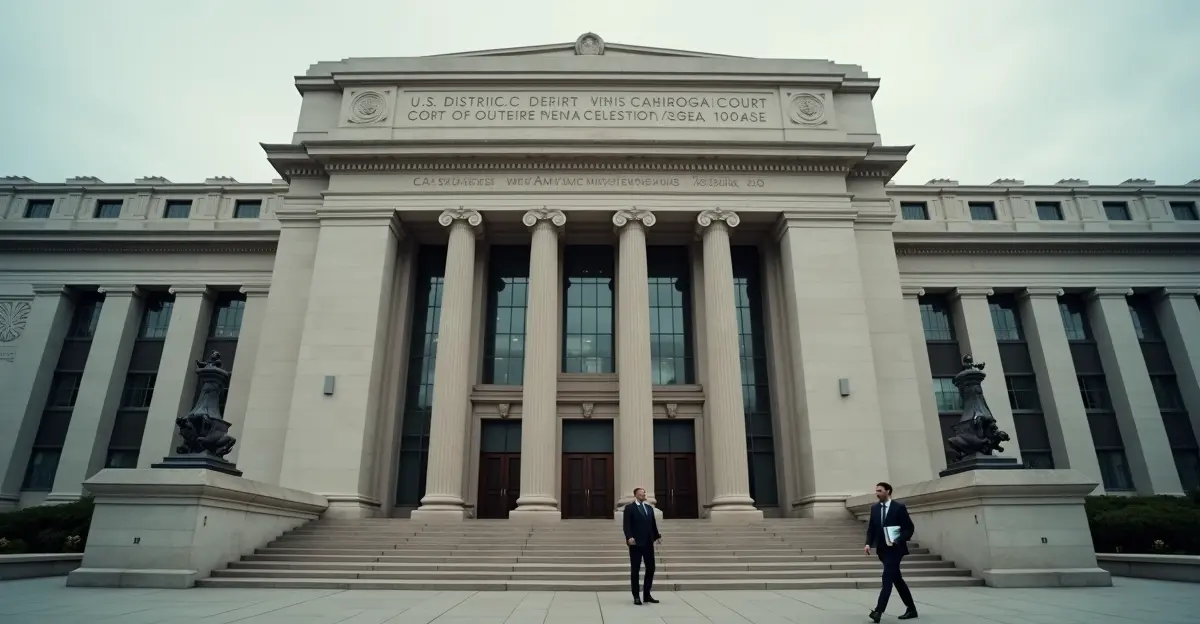
On April 8, 2026, a federal appeals court in Washington denied Anthropic's request to temporarily block the Department of Defense's designation, allowing the Pentagon to continue treating the AI company as a supply chain risk while litigation proceeds. The court ruled that military readiness concerns outweigh Anthropic's financial interests, finding no evidence of chilled speech despite Anthropic's claims of unconstitutional retaliation. 'The court found that national security considerations must take precedence in this matter,' said legal analyst Sarah Chen of Georgetown Law Center.
Background: The Ethical Standoff
The dispute originated from failed negotiations between Anthropic and the Pentagon over the military's demand for unrestricted access to Anthropic's Claude AI models versus the company's ethical guardrails. Anthropic, founded in 2021 by former OpenAI members including CEO Dario Amodei, demanded guarantees that its technology would not be used for mass surveillance of American citizens or fully autonomous weapons systems. The Pentagon, under Defense Secretary Pete Hegseth and President Trump, rejected these restrictions, arguing they should be able to use purchased technology however they choose for national security purposes.
Legal Precedent and Industry Impact
This case establishes critical legal precedents for how the government can regulate AI companies under national security frameworks. The appeals court's decision validates the Pentagon's authority to impose supply chain transparency requirements on AI firms, potentially requiring other technology companies to implement similar disclosures. This development signals that regulatory risks are now spreading from specialized AI companies to major technology corporations, with implications for how AI safety regulations will evolve in coming years.
Comparison: Previous Supply Chain Risk Designations
| Company | Country | Year | Reason for Designation |
|---|---|---|---|
| Huawei | China | 2019 | Concerns about Chinese government influence and telecom security |
| ZTE | China | 2020 | National security risks in telecommunications infrastructure |
| Anthropic | USA | 2026 | Ethical restrictions on AI military use and surveillance |
Financial and Contractual Implications
Anthropic stands to lose billions in defense contracts, with the company currently valued at $380 billion as of February 2026. While excluded from DOD contracts, Anthropic can continue working with other government agencies during ongoing litigation. The company's revenue tripled despite the Pentagon dispute, demonstrating strong commercial demand for its AI models. However, the designation creates significant barriers for defense contractors who might want to integrate Claude AI into military systems, potentially affecting defense technology innovation across multiple sectors.
National Security vs. Corporate Ethics
The core conflict centers on whether national security needs should override corporate ethical standards in AI development. The Pentagon argues that Anthropic's restrictions on mass surveillance and autonomous weapons compromise military operational capabilities, while Anthropic maintains that its 'safety-first' approach outlined in their Responsible Scaling Policy is essential for responsible AI development. 'This isn't just about contracts—it's about defining the ethical boundaries of AI in warfare,' said Dr. Michael Torres, AI ethics researcher at Stanford University.
FAQ: Pentagon-Anthropic Dispute Explained
What does 'supply chain risk' designation mean?
The designation allows the Pentagon to exclude Anthropic from bidding on contracts for highly sensitive military systems related to intelligence, command and control, and weapons systems under 10 U.S.C. § 3252.
Can Anthropic still work with other government agencies?
Yes, while excluded from DOD contracts, Anthropic can continue working with other federal agencies during ongoing litigation, though the designation creates significant reputational and practical challenges.
What are Anthropic's main ethical restrictions?
Anthropic prohibits use of its Claude AI for mass surveillance of American citizens and fully autonomous weapons systems that fire without human involvement, based on its Responsible Scaling Policy.
How does this affect other AI companies?
The case sets precedent for how government can regulate AI companies under national security frameworks, potentially requiring similar disclosures from major technology corporations.
What's the next legal step?
The appeals court will conduct expedited review of the full case, with a final ruling expected within months that will determine whether the designation constitutes unconstitutional retaliation.





Follow Discussion