


 Deutsch
 English
 Español
 Français
 Nederlands
 Português


 Share
Share




What is the Anthropic-Pentagon Legal Battle?
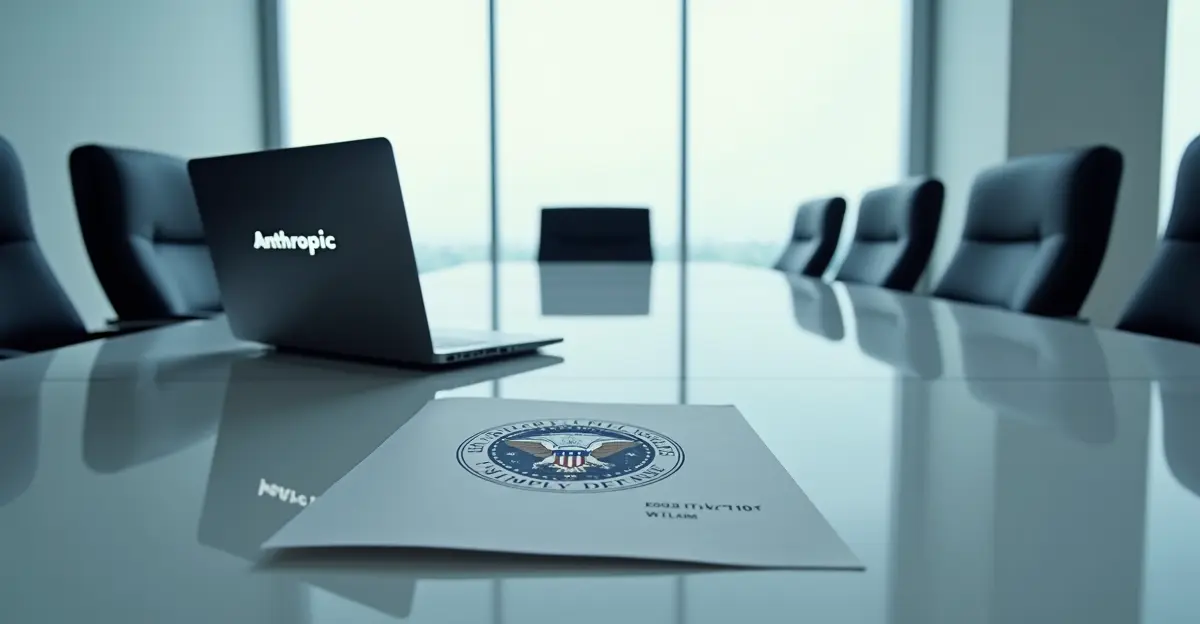
A federal judge has issued a landmark injunction blocking the U.S. government from severing ties with artificial intelligence company Anthropic, marking a significant victory for the AI firm in its high-stakes legal battle with the Pentagon. The ruling by U.S. District Judge Rita Lin on Thursday, March 26, 2026, temporarily suspends both President Trump's executive order banning federal agencies from using Anthropic's technology and the Department of Defense's designation of Anthropic as a 'supply chain risk' to national security.
Background: The Contract Dispute That Sparked a Legal War
The conflict began in early 2026 when the Pentagon demanded unlimited access to Anthropic's Claude AI models for military applications. The government sought to use the technology for 'all lawful purposes,' including potential deployment in autonomous weapons systems and domestic surveillance operations. Anthropic, founded by former OpenAI researchers and operating as a public benefit corporation, refused these terms, insisting on ethical guardrails that would prevent its AI from being used for mass surveillance of American citizens or fully autonomous lethal weapons without human oversight.
In response to Anthropic's refusal, Defense Secretary Pete Hegseth designated the company as a supply chain risk in February 2026, a move typically reserved for foreign adversaries. This was followed by a presidential directive ordering all federal agencies to cease using Anthropic technology. The company, valued at approximately $380 billion, filed for emergency relief, arguing the government's actions constituted illegal retaliation for its ethical stance on AI safety. This case represents a critical test of how the U.S. government regulates AI companies in the national security context.
Judge's Ruling: A Temporary Victory for AI Ethics
Judge Rita Lin's preliminary injunction represents a significant legal setback for the Trump administration's approach to AI regulation. In her 45-page ruling, Judge Lin described the government's actions as 'Orwellian' and 'classic illegal First Amendment retaliation,' finding that the Pentagon's designation appeared designed to 'cripple Anthropic' rather than address legitimate security concerns.
Key Elements of the Injunction
- The Pentagon cannot enforce its 'supply chain risk' designation against Anthropic
- Federal agencies may continue using Anthropic's Claude AI models during litigation
- The presidential ban on Anthropic technology is suspended indefinitely
- Defense contractors may maintain existing relationships with Anthropic
- The government has seven days to appeal the decision
Judge Lin noted that no American company had previously been subjected to the supply chain risk designation, which she found violated Anthropic's due process rights. The ruling allows Anthropic to continue its $200 million partnership with defense contractors while the legal challenge proceeds through the federal court system.
National Security vs. AI Ethics: The Core Conflict
The case highlights the growing tension between Silicon Valley's commitment to AI safety and the government's national security priorities. The Pentagon argues it needs unrestricted access to cutting-edge AI for legitimate defense purposes, while Anthropic maintains that certain applications—particularly autonomous weapons and domestic surveillance—require strict ethical boundaries.
'We support national security work, but we cannot allow our technology to be used for purposes that violate our core ethical principles,' said Anthropic CEO Dario Amodei in a statement following the ruling. 'This case isn't just about Anthropic—it's about establishing clear rules for how AI companies can work with government while maintaining ethical standards.'
The dispute has broader implications for the AI industry's relationship with government, as other major players like OpenAI and xAI have reportedly agreed to less restrictive terms with the Pentagon. The outcome could establish precedent for future government-AI contracting relationships and influence how other nations approach similar regulatory challenges.
Implications for the AI Industry and National Security
The injunction represents more than just a temporary legal victory for Anthropic—it signals potential limitations on government power to compel AI companies to accept unfavorable terms under threat of severe economic consequences. The ruling suggests that the government cannot use national security designations as retaliatory tools against companies that refuse contractual demands.
For the broader AI industry, the case establishes several important precedents:
- AI companies may have legal recourse when facing government pressure to abandon ethical guidelines
- The 'supply chain risk' designation cannot be applied arbitrarily to domestic companies
- First Amendment protections extend to corporate positions on AI ethics and safety
- Courts may intervene when government actions appear designed to punish rather than protect
The Pentagon has not yet commented on the ruling, but legal experts expect an appeal. The case continues to unfold in the U.S. District Court for the Northern District of California, with a final verdict expected in late 2026 or early 2027. The outcome will significantly influence how artificial intelligence regulation evolves in the United States and potentially set global standards for government-AI partnerships.
Frequently Asked Questions
What is Anthropic's position on military AI use?
Anthropic supports national security applications but insists on ethical guardrails preventing use in fully autonomous weapons systems and domestic mass surveillance of American citizens.
How long will the injunction remain in effect?
The preliminary injunction remains in place until the court issues a final ruling on the merits of the case, which could take 6-12 months.
What happens if the government appeals?
If the government appeals to the Ninth Circuit Court of Appeals, the injunction would remain in effect during the appeal process unless specifically stayed by the appellate court.
Does this affect other AI companies?
Yes, the ruling establishes legal precedent that could protect other AI companies facing similar government pressure to abandon ethical guidelines.
What are the national security implications?
The Pentagon argues the ruling could limit access to cutting-edge AI for legitimate defense purposes, while supporters say it protects against government overreach in regulating emerging technologies.





Follow Discussion