


 Deutsch
 English
 Español
 Français
 Nederlands
 Português


 Share
Share




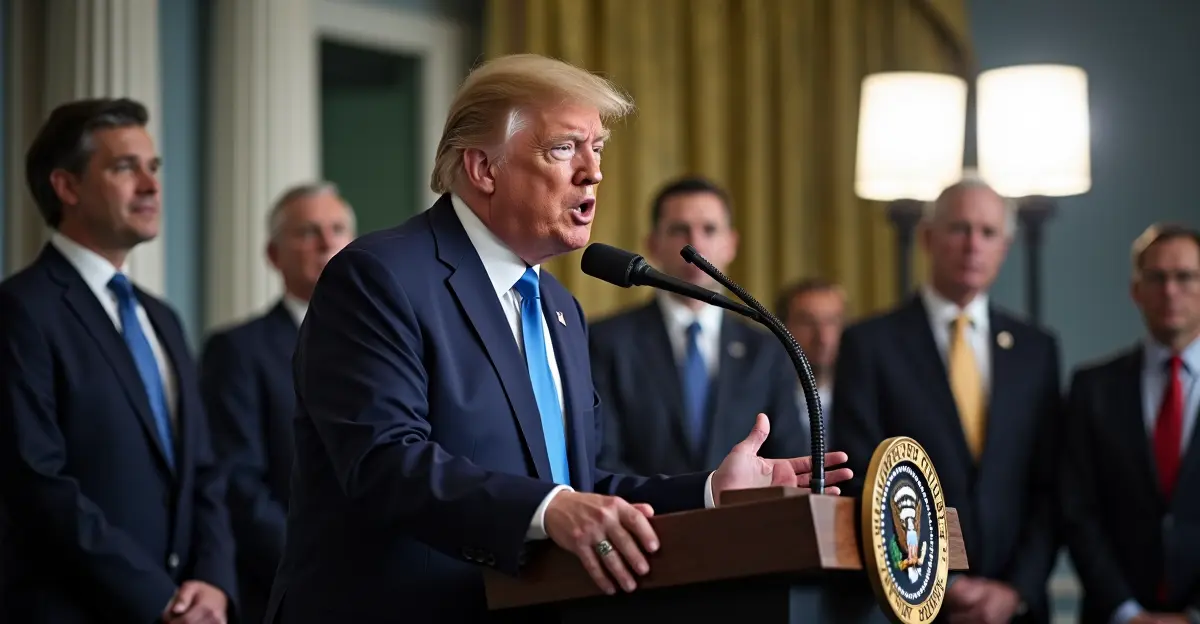
The White House on Monday defended former President Donald Trump after he suggested Iran could “take out” Los Angeles and San Diego, insisting the remark was a warning about the danger of a nuclear-armed Iran rather than an incitement. The comments, made at a Nebraska campaign rally on October 5, 2026, triggered immediate backlash from California Governor Gavin Newsom, who called them “deranged,” and from mayors in both cities, even as Southern California endured a record-breaking October heatwave.
What Did Trump Say and How Did the White House Respond?
At the rally, Trump said Iran “can take out a city... Let them take out Los Angeles, let them take out San Diego,” and described the scenario as “a small price to pay” for keeping the country safe. The crowd cheered. White House communications director Steven Cheung defended the remarks, saying Trump meant that US cities would have been threatened by a nuclear Iran had he not acted, and dismissed the media reaction as “not rooted in reality.” The administration has maintained that its military campaign against Iran has made Americans safer, with Cheung later claiming Iran now has “no nuclear, no navy, no air force, and no money.” The US-Iran nuclear negotiations collapsed in June 2025 and reignited into open conflict in early 2026.
California Leaders and Residents Condemn the Remarks
Governor Gavin Newsom called the comments “deranged and dangerous” and “disgusting and disqualifying,” accusing Trump of flippantly discussing an attack on more than 10 million residents. Newsom directed the State Threat Assessment Center to monitor whether foreign actors treat the remarks as an invitation. Los Angeles Mayor Karen Bass branded them a threat, while San Diego Mayor Todd Gloria said his city “is not collateral damage.” Republican congressional candidate Jim Desmond and State Senator Brian Jones also objected, with Desmond calling the language reckless. Residents in both cities, already coping with extreme heat, described the comments as alarming. The Gavin Newsom response to Trump adds another chapter to a long-running political feud between the two leaders.
Why the Controversy Erupted During a Record Heatwave
The fallout unfolded as Southern California suffered an unprecedented autumn heatwave. According to the Los Angeles Times, downtown Los Angeles hit 104°F on Monday, breaking a 1954 record, and notched a four-day streak of 100°F-plus days—the longest October stretch since record-keeping began in the late 1800s. San Diego reached 100°F, while records also fell in Burbank, Anaheim, Camarillo, Oxnard, Oceanside and Ramona. Temperatures ran 15–22°F above normal, driven by a high-pressure ridge, downslope winds and unusually warm El Niño-fueled ocean temperatures. Extreme heat warnings ran through Thursday, and Los Angeles County opened cooling centers. The Southern California October heatwave left millions of residents without overnight relief, making the incendiary remarks land at a particularly tense moment.
What Does This Mean for US-Iran Tensions?
Trump’s comments came amid a fragile peace process after the 2026 Iran war. Following the assassination of Supreme Leader Ali Khamenei and the signing of the Islamabad Memorandum in June 2026, US and Iranian officials have been attempting to normalize relations. Yet the president has continued to invoke apocalyptic scenarios to justify the conflict. Critics argue that mentioning specific American cities could embolden hostile actors, while supporters say it underscores the stakes of preventing a nuclear Iran. The White House’s public defense signals it will not back away from the rhetoric, keeping US-Iran tensions 2026 at the center of the presidential campaign. The 2026 Iran war remains a defining issue for voters in California, home to Naval Base San Diego and Los Angeles Air Force Base.
Expert Perspectives and Political Fallout
Analysts note that Trump’s framing—that losing Los Angeles or San Diego would be a “small price to pay”—is unusual even for a candidate known for blunt language. “It is one thing to warn about the consequences of a nuclear Iran; it is another to name American cities as acceptable losses,” said a regional security expert who asked not to be named. The controversy is likely to intensify as both cities host major military installations and have large Iranian-American communities. It also provides an opening for Democratic challengers to portray Trump as cavalier about public safety. The US presidential rhetoric on Iran has drawn bipartisan criticism in the past, and this episode appears to be no exception.
FAQ: Trump’s Iran Comments, Explained
What exactly did Trump say about Los Angeles and San Diego?
At a Nebraska rally on October 5, 2026, Trump said Iran could “take out” Los Angeles and San Diego and called it “a small price to pay” for safety.
How did the White House defend the remarks?
White House communications director Steven Cheung said Trump was warning that a nuclear Iran could threaten US cities, and dismissed the criticism as “not rooted in reality.”
What has Gavin Newsom said?
Newsom called the comments “deranged,” “dangerous,” “disgusting and disqualifying,” and directed the State Threat Assessment Center to monitor for possible foreign threats.
Why are Los Angeles and San Diego significant in this context?
Both cities host major US military installations, including Naval Base San Diego and Los Angeles Air Force Base, making them strategically relevant to US-Iran tensions.
What was the heatwave situation when the remarks were made?
Southern California was under an extreme October heatwave with record temperatures, including 104°F in downtown Los Angeles and 100°F in San Diego.
What Happens Next?
The White House has shown no sign of retracting the remarks, and Trump is expected to repeat the message at upcoming rallies. Meanwhile, California officials say they will remain vigilant. As the campaign heats up—both politically and meteorologically—the clash over Iran rhetoric is likely to remain a flashpoint.
Follow Discussion