


 Deutsch
 English
 Español
 Français
 Nederlands
 Português


 Share
Share




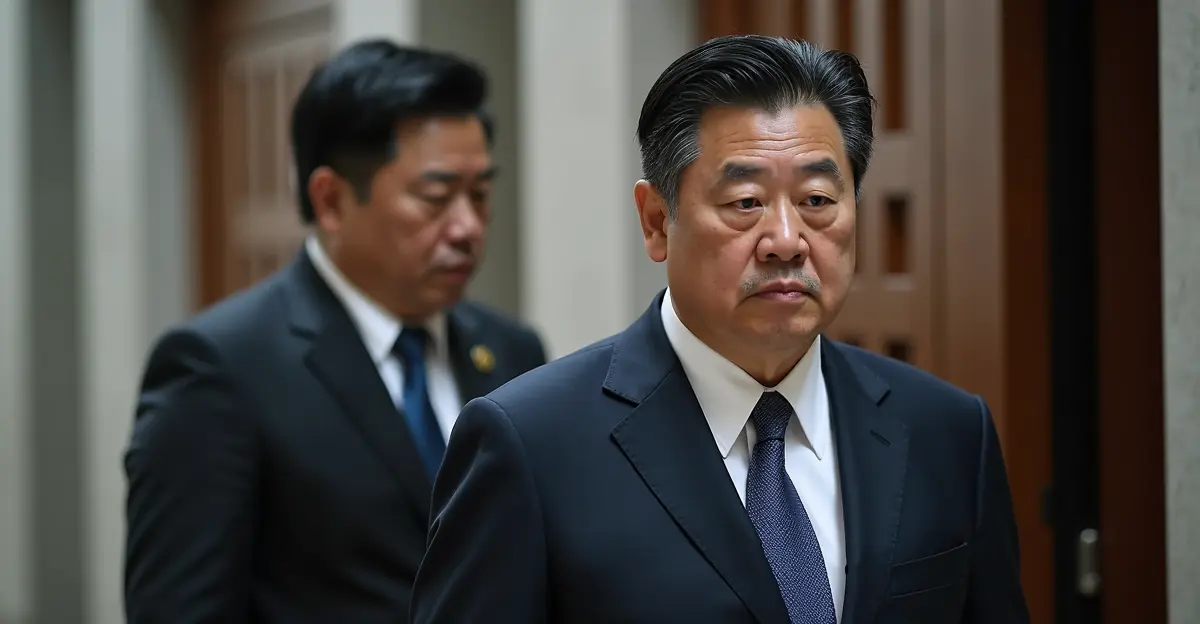
A South Korean court sentenced former Justice Minister Park Sung-jae to 25 years in prison on June 22, 2026, for his pivotal role in former President Yoon Suk-yeol's brief but traumatic martial law declaration in December 2024. The Seoul Central District Court found Park guilty of insurrection and abuse of power, handing down a sentence that exceeded the 20 years sought by prosecutors.
Background: The December 2024 Martial Law Crisis
On December 3, 2024, President Yoon Suk-yeol stunned the nation by declaring emergency martial law, accusing the opposition Democratic Party of 'anti-state activities' and sympathizing with North Korea. It was the first martial law declaration since the 1980 military dictatorship. Within hours, 190 lawmakers defied military blockades to reach the National Assembly and unanimously voted to lift the order, forcing Yoon to rescind it. The failed power grab plunged South Korea into its worst political crisis in decades, leading to Yoon's impeachment on December 14, his arrest in January 2025, and his eventual life sentence for insurrection in February 2026.
The fallout extended deep into Yoon's Cabinet. Former Prime Minister Han Duck-soo was sentenced to 23 years in January 2026, and former Defense Minister Kim Yong-hyun received a 30-year term for leaking classified information. The South Korean political crisis has reshaped the nation's democratic landscape.
Park Sung-jae's Role in the Insurrection
The court determined that Park played a 'key role' in preparing for the martial law declaration. According to evidence presented at trial, Park convened a meeting of senior Justice Ministry officials shortly after Yoon's announcement to coordinate the dispatch of prosecutors to key locations, assess prison capacity to detain opposition politicians, and order travel ban officials to report for duty.
Judge Lee Jin-kwan, presiding over the case, stated that Park 'turned his back on his duty of upholding the Constitution when he came to believe the insurrection could succeed.' The ruling emphasized that Park, as the nation's top legal officer, was expected to defend constitutional order but instead actively facilitated the crackdown.
Park denied all charges, claiming he was merely executing duties appropriate for a 'national emergency.' His defense argued that he acted under presidential orders and did not intend to subvert the constitution. The court rejected this defense, noting that Park's actions went far beyond routine crisis management.
Broader Judicial Reckoning
Park's sentencing is part of a broader judicial reckoning for Yoon's inner circle. The former president himself received a life sentence on February 19, 2026, for leading the insurrection. Additionally, Yoon was sentenced to 30 years in a separate case for ordering drone flights over Pyongyang in October 2024 to fabricate tensions with North Korea as a pretext for martial law. That case also saw former Defense Minister Kim Yong-hyun sentenced to 30 years.
The Yoon Suk-yeol life sentence marked a historic moment, making Yoon the fourth former South Korean president to be criminally convicted. The Constitutional Court had already unanimously upheld his impeachment in April 2025, triggering a snap presidential election won by opposition leader Lee Jae-myung.
Former Prime Minister Han Duck-soo's initial 23-year sentence was reduced on appeal to 15 years in May 2026, though he remains incarcerated. The varying sentences reflect the court's assessment of each official's level of involvement and culpability.
Impact on South Korean Democracy
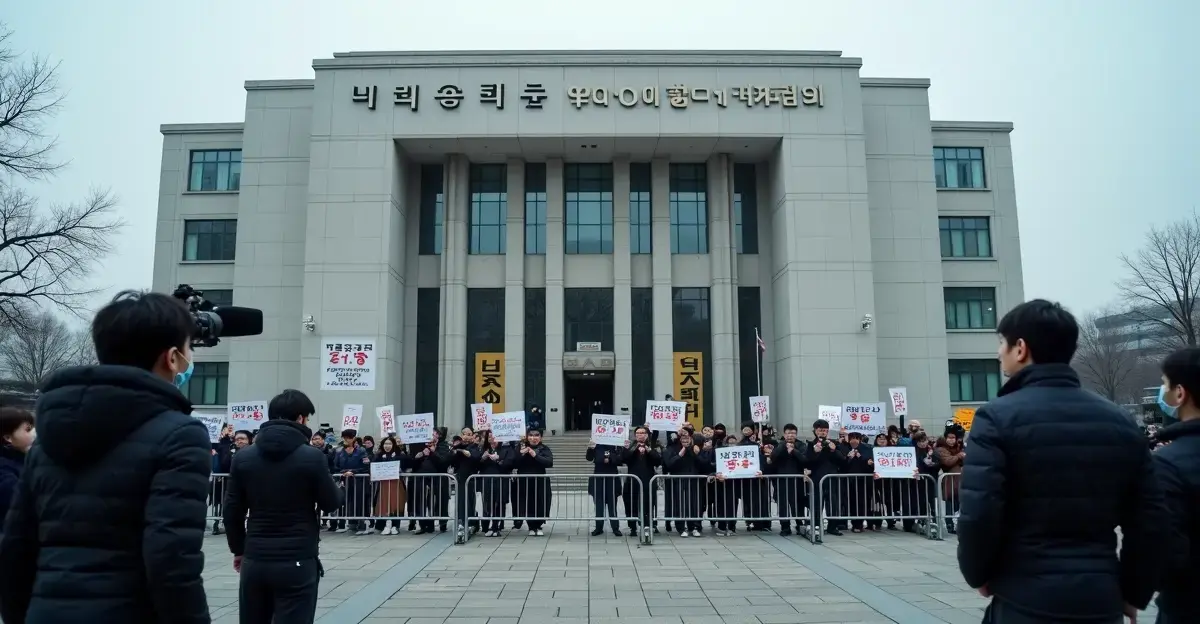
The martial law crisis and subsequent prosecutions have had a profound impact on South Korea's democracy. The South Korea democracy after martial law has been tested, with mass protests both for and against Yoon's impeachment revealing deep societal divisions. However, the swift legislative and judicial response to the coup attempt has been widely praised as a testament to the resilience of South Korea's democratic institutions.
Political analysts note that the crisis has accelerated reforms aimed at preventing future abuses of presidential power. The National Assembly has passed legislation limiting the president's authority to declare martial law and strengthening judicial oversight of emergency powers.
FAQ
What was Park Sung-jae convicted of?
Park Sung-jae was convicted of insurrection and abuse of power for his role in former President Yoon Suk-yeol's December 2024 martial law declaration. He was sentenced to 25 years in prison.
What did Park Sung-jae do during the martial law declaration?
Park convened senior Justice Ministry officials to coordinate prosecutor dispatches, assess prison capacity for detaining opposition figures, and order travel ban enforcement, all to support the martial law crackdown.
How long was Yoon Suk-yeol's martial law in effect?
The martial law declaration lasted only about six hours. The National Assembly voted 190-0 to lift it, forcing Yoon to rescind the order on the morning of December 4, 2024.
What sentences did other Yoon officials receive?
Yoon received life in prison for insurrection plus 30 years for the drone provocations. Former PM Han Duck-soo got 23 years (reduced to 15 on appeal), and former Defense Minister Kim Yong-hyun received 30 years.
Can Park Sung-jae appeal his sentence?
Yes, Park has the right to appeal the verdict. His legal team has indicated they are considering an appeal, though no formal decision has been announced as of June 22, 2026.
Follow Discussion