


 Deutsch
 English
 Español
 Français
 Nederlands
 Português


 Share
Share




What is the Yoon Suk-yeol Life Sentence Case?
Former South Korean President Yoon Suk-yeol has been sentenced to life imprisonment for orchestrating an insurrection through his December 2024 martial law declaration, marking one of the most dramatic political crises in the nation's democratic history. The 65-year-old conservative leader, who served as president from May 2022 until his impeachment in April 2025, was convicted on February 19, 2026, for attempting what prosecutors called a 'self-coup' to establish authoritarian rule. In a surprising development, Yoon issued a public apology on February 20, 2026, expressing 'sincere apologies' for the 'frustration and suffering' caused by his actions while simultaneously criticizing the verdict as 'unfair' and politically motivated.
The 2024 Martial Law Crisis: Timeline of Events
The crisis began on December 3, 2024, when President Yoon Suk-yeol declared martial law, accusing the opposition Democratic Party of 'anti-state activities' and ordering military troops to surround the National Assembly building in Seoul. This unprecedented move suspended parliamentary functions, imposed media restrictions, and authorized arrests of political opponents. 'The court found sufficient evidence to conclude that Yoon wanted to paralyze parliament,' stated the presiding judge in the verdict.
Within hours, 190 legislators defied military blockades and unanimously voted to lift martial law, forcing Yoon to rescind the declaration by 4:30 AM on December 4. The short-lived power grab lasted approximately six hours but triggered massive nationwide protests and immediate impeachment proceedings. This political earthquake led to the resignation of key officials including Defense Minister Kim Yong-hyun, who received a 30-year sentence for his role in planning the operation.
Key Legal Charges and Verdict Details
The Seoul Central District Court convicted Yoon on three major charges:
- Insurrection/Leading Rebellion: The most serious charge, carrying a maximum penalty of death
- Abuse of Presidential Authority: For exceeding constitutional powers
- Obstruction of Justice: Related to attempts to block his own arrest
Prosecutors had sought the death penalty, but the court imposed life imprisonment, noting that while the actions fundamentally damaged South Korea's democracy, the poorly planned power grab did not result in casualties. The verdict represents the first life sentence for a former president since military dictator Chun Doo-hwan in 1996, continuing South Korea's pattern of holding former leaders accountable through the judicial system.
Yoon's Apology and Defense Strategy
In his February 20 statement, Yoon offered what he called 'sincere apologies' to South Koreans for the 'misery and political crisis' caused by his martial law declaration. However, he maintained that his decision was made 'exclusively in the national interest' and criticized the court's verdict as biased. 'The judges were prejudiced and the sentence is revenge from my political opponents,' Yoon declared, expressing little confidence in a successful appeal despite his legal team clarifying that no decision had been made about challenging the verdict.
Yoon's defense argued that his actions fell 'within presidential authority' and were justified by national security concerns. His legal team pointed to similar historical precedents where presidents exercised emergency powers, though none involved surrounding parliament with military forces. The case has drawn comparisons to the 2025 constitutional crisis in Poland, where executive overreach faced judicial scrutiny.
Political Impact and National Division
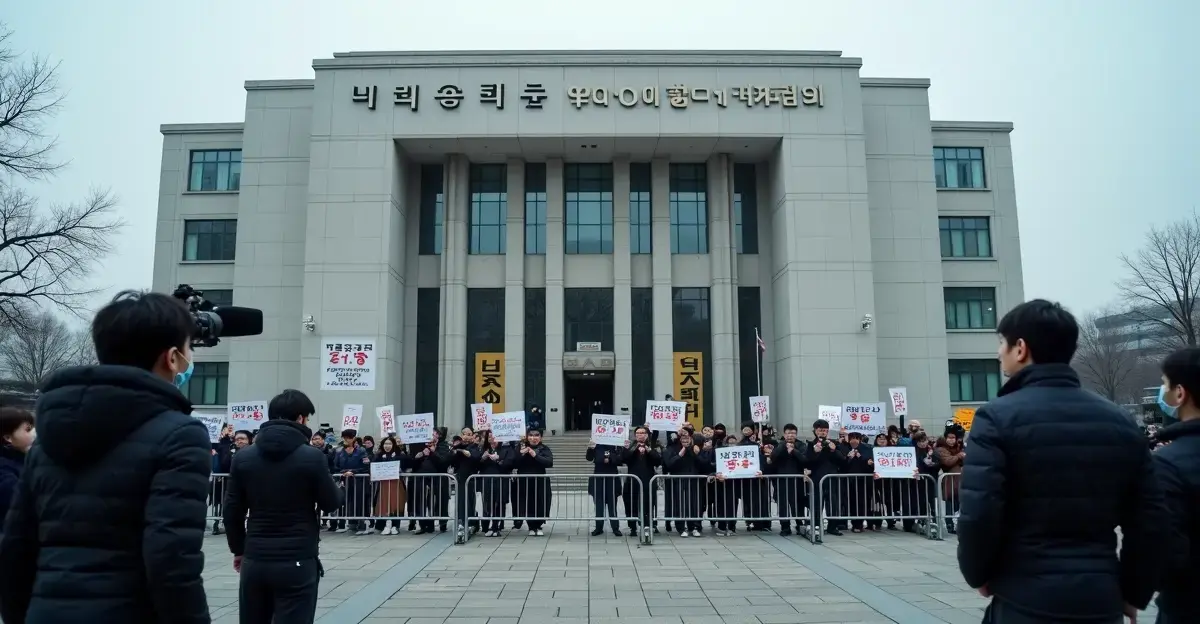
The verdict has deeply polarized South Korean society, with supporters gathering outside the Seoul courthouse holding signs declaring 'the court is corrupt' while anti-Yoon protesters demanded even harsher punishment. The 2024 crisis triggered a snap presidential election in June 2025, won by opposition leader Lee Jae-myung, who now faces the challenge of healing national divisions.
Experts note that this case represents a significant test for South Korea's democratic institutions. 'This verdict demonstrates that no one, not even a sitting president, is above the law in South Korea's democracy,' observed political analyst Park Ji-young. The crisis has also impacted South Korea's international standing, particularly in relations with key allies like the United States and Japan, who have closely monitored the stability of their Asian partner.
The broader implications extend to how future presidents might interpret emergency powers, with constitutional scholars calling for clearer guidelines to prevent similar crises. This case follows a pattern of Latin American presidential impeachments where leaders faced legal consequences for overstepping constitutional boundaries.
What Happens Next: Appeals and Political Fallout
Yoon's legal team has 7 days to file an appeal, which would move the case to the Seoul High Court and potentially to the Supreme Court, a process that could take many months. Meanwhile, Yoon remains detained at the Seoul Detention Center, where he has been held since his arrest in January 2025. He is already serving a separate five-year sentence for abuse of power and obstruction of justice convictions from January 2026.
The political fallout continues to reshape South Korea's landscape, with Yoon's People Power Party facing internal divisions about how to distance themselves from the scandal while maintaining conservative support. The case has also raised questions about presidential immunity and the balance of powers in South Korea's constitutional system, issues that will likely be debated for years to come.
Frequently Asked Questions
What exactly did Yoon Suk-yeol do to get a life sentence?
Yoon was convicted of leading an insurrection by declaring martial law on December 3, 2024, and ordering military troops to surround the National Assembly to paralyze its functions and arrest political opponents.
How long was Yoon president of South Korea?
Yoon served as president from May 10, 2022, until his impeachment was upheld by the Constitutional Court on April 4, 2025 - approximately 2 years and 11 months, making him the shortest-serving directly elected president since 1987.
Can Yoon appeal the life sentence verdict?
Yes, Yoon's legal team can appeal to the Seoul High Court within 7 days of the February 19, 2026 verdict, with potential further appeal to the Supreme Court, though he has expressed little confidence in a successful outcome.
What happened to other officials involved in the martial law declaration?
Former Defense Minister Kim Yong-hyun received a 30-year sentence, former Prime Minister Han Duck-soo got 23 years, and former police chief Kim Chang-yong received 15 years for their roles in planning and executing the martial law operation.
How has this affected South Korea's international relations?
The crisis has raised concerns among allies about political stability but has not fundamentally altered South Korea's key alliances, though it has required diplomatic reassurance from the current administration.
Follow Discussion