


 Deutsch
 English
 Español
 Français
 Nederlands
 Português


 Share
Share




As the world races toward electrification and artificial intelligence, critical minerals geopolitics has become the defining resource contest of 2026. China is projected to supply over 60% of refined lithium and cobalt and roughly 80% of battery-grade rare earths by 2035, prompting Washington and Brussels to scramble for alternative supply chains. The EU has selected 60 Strategic Projects under its Critical Raw Materials Act, while the second Trump administration accelerates domestic production through equity and price support mechanisms.
What Is Critical Minerals Geopolitics?
Critical minerals geopolitics refers to the strategic competition among nations to secure access to minerals essential for advanced technologies, energy transition, and defense. Unlike conventional commodities, these materials—lithium, cobalt, rare earth elements, graphite, nickel, and copper—are characterized by extreme supply concentration and limited substitutability. The International Energy Agency warns that diversification is progressing slowly: the top three producers held an 86% combined market share in 2024, up from 82% in 2020.
China's Grip: The 15th Five-Year Plan and Processing Dominance
China already controls 65% of global lithium processing, over 75% of cobalt processing, and 90% of battery-grade graphite. Its 15th Five-Year Plan (2026–2030) explicitly directs the country to strengthen competitive advantages in rare earths and rare metals, according to Rare Earth Exchanges analysis. State-owned enterprises like Northern Rare Earth Group report record revenues and aggressive capacity expansion. Diversification of raw material supply chains is progressing slowly, despite widespread recognition of its urgency, the IEA notes in its Global Critical Minerals Outlook 2025.
US Counteroffensive: Price Floors, Project Vault, and Equity Support
The Trump administration has proposed a sweeping price-control regime for critical minerals, including a $18,000 per tonne lithium price floor within a preferential trade bloc of over 50 allied nations. Project Vault, a $12 billion strategic stockpiling initiative, would buy excess supply below thresholds. Since January 2025, the administration reports 160 minerals deals totaling nearly $40 billion, and on August 7, 2026, it announced over $2 billion in critical mining projects, including $1.4 billion for Sila Nanotechnologies silicon-carbon battery anodes and $150 million for rare earth-free magnets at Niron Magnetics. The White House also targets a 40% allied processing share by 2030 through partnerships with Australia, Canada, and the African Lobito Corridor. Permitting reforms aim to cut federal approval times from 7–10 years to 24 months.
EU's Critical Raw Materials Act: 60 Strategic Projects
The European Commission selected 60 strategic projects under the Critical Raw Materials Act in 2025—approved for EU projects on 25 March and non-EU projects on 4 June. These cover 14 raw materials including lithium, rare earths, cobalt, graphite, and nickel. The projects benefit from streamlined permitting, coordinated Commission support, and improved access to financing, as detailed on the European Commission CRMA page. A second application call closed on 15 January 2026, signaling continued momentum. The EU aims to reduce reliance on a single supplier and strengthen resilience for e-mobility, renewable energy, defense, and aerospace.
Why This Race Matters for Energy and Defense
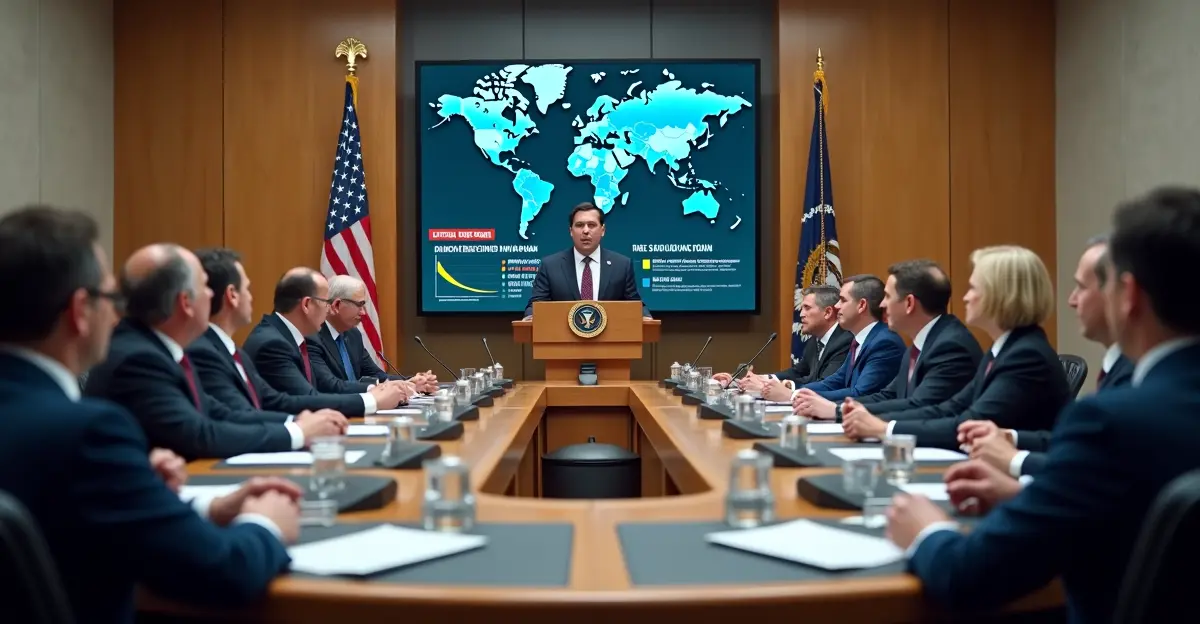
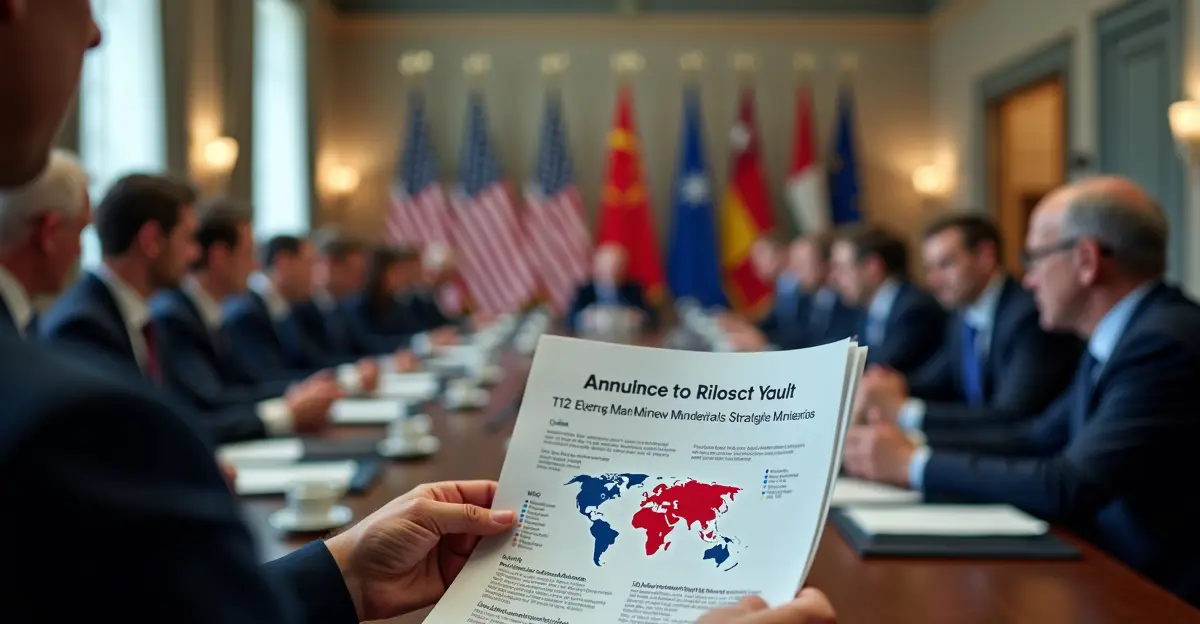
Critical minerals are not only about batteries and wind turbines; they are essential for radar, missile guidance, and drone batteries. The inaugural US Critical Minerals Ministerial in February 2026 brought together 54 countries and the European Commission, launching FORGE (Forum on Resource Geostrategic Engagement) and mobilizing over $30 billion in financing. A $10 billion Export-Import Bank loan supports Project Vault, a US Strategic Critical Minerals Reserve. Analysts warn, however, that processing plants cost $500 million to $1 billion and take 5–7 years to build, while expertise remains concentrated in China. Rising concentration and falling exploration investment threaten future deficits in copper and lithium, according to the IEA. The geopolitical scramble is already reshaping global trade alliances and could delay energy transition timelines if supply bottlenecks emerge.
Expert Perspectives
Analysts caution that past memorandums of understanding often failed to materialize. The West is pouring capital into mines and magnets, but China's edge lies in coordinated mobilization across agencies, provinces, and state-owned enterprises, notes a 2026 rare earth industry analysis. Vice President JD Vance has called China's dominance a national security emergency, framing price floors as essential to counter market manipulation.
Frequently Asked Questions
What are critical minerals?
Critical minerals are raw materials essential for advanced technologies and economic security, including lithium, cobalt, rare earth elements, graphite, nickel, and copper. They power batteries, magnets, semiconductors, and defense systems.
Why is China so dominant in critical minerals processing?
China invested decades in refining capacity, state-led industrial policy, and low-cost production. It now controls 65% of lithium processing, over 75% of cobalt, and 90% of battery-grade graphite, with its 15th Five-Year Plan reinforcing that advantage.
What is the EU Critical Raw Materials Act?
Adopted to secure and diversify the EU's raw materials supply, the CRMA designates strategic projects with streamlined permitting and financing support. The EU selected 60 strategic projects in 2025 covering 14 raw materials.
What is Project Vault?
Project Vault is a $12 billion US strategic stockpiling initiative that buys excess critical minerals below set price floors to stabilize markets and build a national reserve, backed by a $10 billion Export-Import Bank loan.
How does critical minerals competition affect the energy transition?
Supply concentration and processing bottlenecks can raise costs and delay deployment of batteries, wind turbines, and electric vehicles. Diversification efforts aim to prevent shortages, but new mines and plants take years to build.
Conclusion: The Defining Resource Contest of 2026
The scramble for critical minerals has moved from trade policy to the center of national security strategy. With China's dominance projected to persist through 2035, the US and EU are betting on industrial policy, strategic reserves, and allied partnerships. Whether these efforts succeed will determine the pace of the global energy transition and the resilience of defense supply chains.

Follow Discussion