


 Deutsch
 English
 Español
 Français
 Nederlands
 Português


 Share
Share




Introduction: The Strategic Race for Critical Minerals in 2026
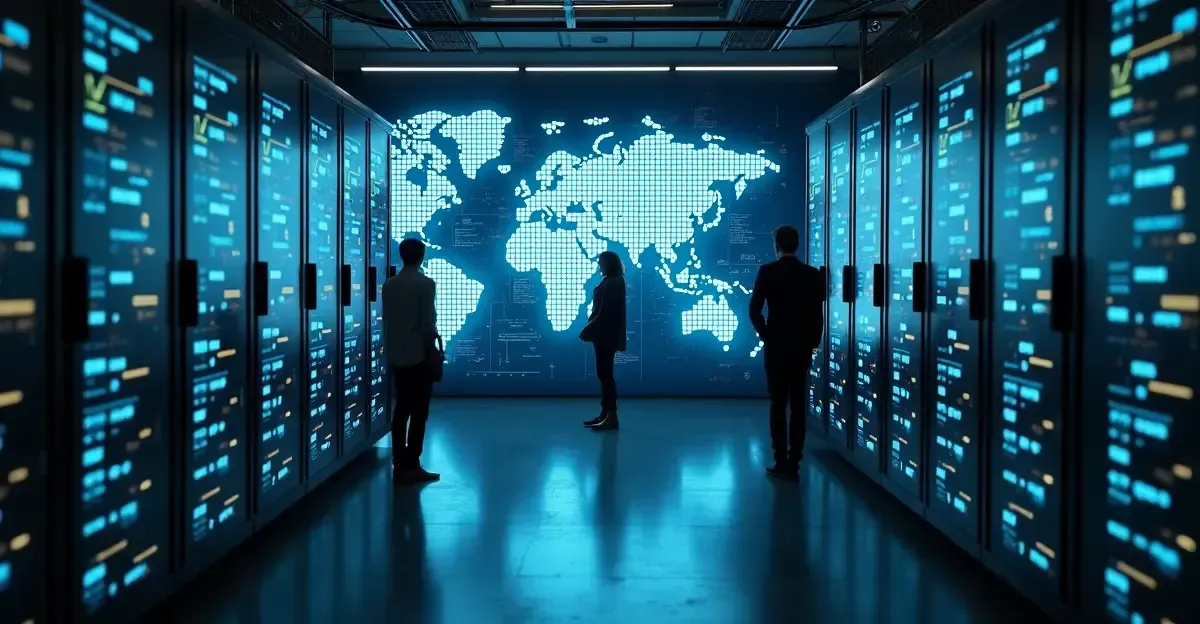
In 2026, the geopolitics of critical minerals has become the defining arena of great-power competition, reshaping alliances, industrial policy, and national security strategies. As China's 15th Five-Year Plan tightens its grip on rare earth and battery mineral supply chains—projected to control over 80% of global processing capacity by 2035—the United States and European Union are racing to counter with domestic production subsidies, strategic stockpiles, and bilateral partnerships. This article analyzes four converging dynamics that are redrawing the global power map: US industrial policy acceleration, EU's Critical Raw Materials Act implementation, China's strategic consolidation, and the rising leverage of producer countries in the Global South. The outcome will determine not just energy transition timelines but also digital infrastructure, defense manufacturing, and the broader architecture of great-power competition.
US Industrial Policy Acceleration: Project Vault and FORGE
The second Trump administration has made critical minerals a cornerstone of its economic and national security agenda. On February 4, 2026, the U.S. Department of State hosted the 2026 Critical Minerals Ministerial, led by Secretary of State Marco Rubio and Vice President JD Vance, with representatives from 54 countries and the European Commission. The event marked the most ambitious U.S. effort to date to reshape global critical mineral supply chains.
Project Vault: A $10 Billion Strategic Reserve
President Trump announced Project Vault, a $10 billion Export-Import Bank (EXIM) initiative to establish a domestic strategic reserve for critical minerals. Backed by the largest loan in EXIM history and $7.5 billion in congressional appropriations, the project involves institutional investors like Hartree Partners and OEMs including Boeing, GM, and GE Vernova. Minerals will be stored in secure U.S. facilities with predefined market-disruption release triggers. According to the Geopolitical Monitor, this is the most aggressive U.S. strategic stockpiling initiative since the Korean War.
FORGE: A New Multilateral Framework
Secretary Rubio announced the creation of FORGE (Forum on Resource Geostrategic Engagement) as the successor to the Minerals Security Partnership, chaired by South Korea. The U.S. signed 11 new bilateral critical minerals frameworks or MOUs with nations including Argentina, Morocco, the UAE, and the UK. The administration also mobilized over $30 billion in letters of interest, investments, and loans for strategic mineral projects. The Pax Silica framework further aims to secure end-to-end supply chains through private-sector partnerships.
EU's Critical Raw Materials Act: Ambition vs. Reality
The European Union's Critical Raw Materials Act (CRMA), which entered into force in May 2024, sets ambitious 2030 benchmarks: 10% extraction, 40% processing, and 25% recycling of critical minerals, with no more than 65% reliance on any single country. In 2026, the EU adopted the ReSourceEU Action Plan, announcing up to €3 billion ($3.5 billion) in funding to accelerate implementation.
Strategic Projects and Financing Gaps
The EU has selected 60 Strategic Projects under the CRMA, including Vulcan Energy's German lithium project (backed by €250 million in EIB funding) and Greenland Resources' molybdenum mine. However, according to ODI analysis, financing volumes still fall short of needs. New export restrictions on scrap permanent magnets and aluminium took effect in early 2026, and a prohibition on lithium-ion battery waste exports to non-OECD countries begins in September 2026. The European Commission will also establish a European Critical Raw Materials Centre, modeled on Japan's JOGMEC, for joint purchasing, stockpiling, and project financing.
China's 15th Five-Year Plan: Strategic Consolidation
China's 15th Five-Year Plan (2026-2030), unveiled in March 2026, reaffirms Beijing's dominance in critical minerals. Premier Li Qiang's Government Work Report emphasizes enhancing energy and resource supply security, targeting 5.8 billion tons of standard coal in comprehensive energy production capacity. The plan focuses on upgrading traditional industries, strengthening industrial chain autonomy, and advancing high-value-added processing of rare earths and strategic minerals.
Projected Dominance Through 2035
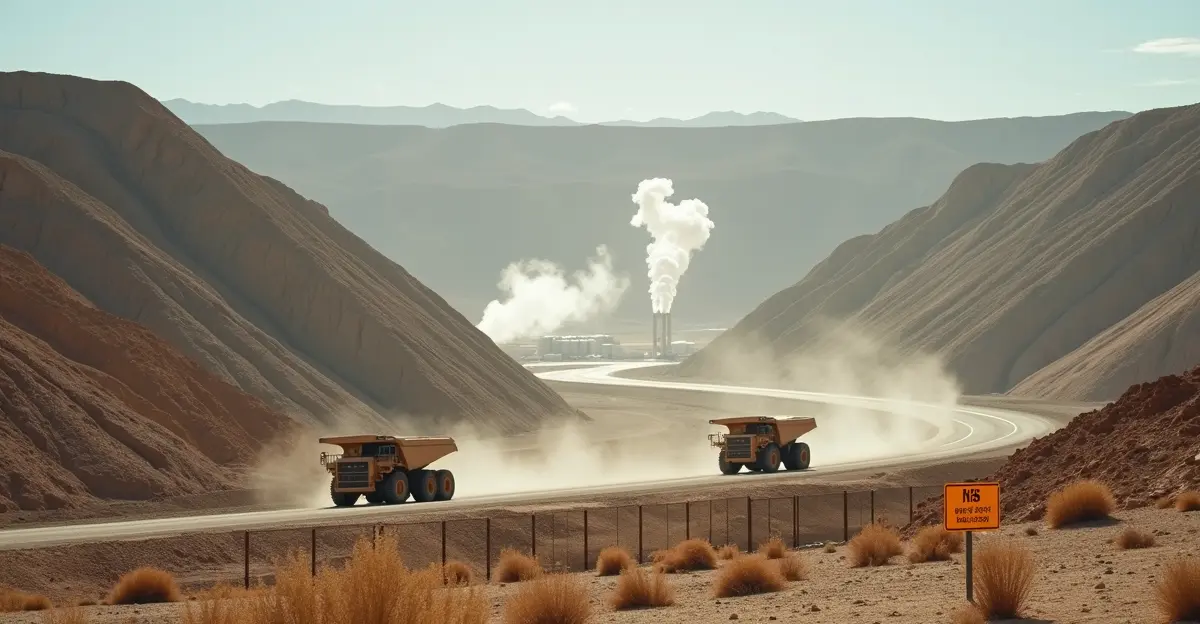
According to the International Energy Agency, China is projected to supply over 60% of refined lithium and cobalt, and approximately 80% of battery-grade graphite and rare earths by 2035. China currently controls about 90% of global rare earth refining capacity and 70% of strategic mineral processing tracked by the IEA. Resource-rich provinces like Guangxi, Jiangxi, and Guizhou have set ambitious local targets. However, analysts warn that massive overcapacity across EVs, steel, and clean-tech threatens to saturate markets and erode profitability, creating a potential surplus crisis. The China rare earth export controls imposed in April 2025, though partially softened by a June agreement, signal Beijing's willingness to weaponize its supply chain dominance.
Global South Leverage: Producer Countries Rise
Resource-rich nations in the Global South are increasingly leveraging their critical mineral endowments to extract greater value and geopolitical influence. Countries like the Democratic Republic of Congo (cobalt), Chile and Argentina (lithium), Indonesia (nickel), and several African nations are demanding local processing, higher royalties, and technology transfer agreements. The U.S. and EU are competing to offer infrastructure investment and trade deals in exchange for access. The UAE and Saudi Arabia have also emerged as competitive players, investing in mineral assets globally.
Impact on Energy Transition and Defense Manufacturing
The outcome of the critical minerals race will directly affect the pace of the energy transition. Electric vehicle batteries, wind turbines, and solar panels all depend on secure supplies of lithium, cobalt, rare earths, and graphite. Defense manufacturing—including advanced electronics, missile guidance systems, and permanent magnets for military hardware—also relies on these materials. A supply disruption could delay renewable energy deployment and compromise national security. The energy transition supply chain risks are particularly acute for Europe, which imports 97% of its magnesium from China.
Expert Perspectives
The competition for critical minerals is no longer just an economic issue—it is the central front in the geopolitical struggle of the 2020s, said a senior analyst at the International Institute for Strategic Studies. FORGE and Project Vault represent a significant shift from transactional deals to a more rules-based multilateral approach, but the scale of China's entrenched advantage means the West must sustain investment for a decade or more to achieve meaningful diversification.
At the Chatham House, experts caution that the Trump administration's commitment problem—the risk that policy reversals could undermine long-term investor confidence—remains a key vulnerability. Meanwhile, Chinese state media have framed the 15th Five-Year Plan as a blueprint for self-reliance and technological sovereignty, signaling that Beijing will not cede its advantage without a fight.
Frequently Asked Questions
What are critical minerals?
Critical minerals are raw materials essential for advanced technologies, clean energy, and defense, including rare earth elements, lithium, cobalt, nickel, graphite, and tungsten. They are characterized by high economic importance and supply chain vulnerability.
Why is China dominant in critical mineral processing?
China's dominance stems from decades of industrial policy, technical expertise, established processing infrastructure, cheap coal power, and lax environmental standards. It controls approximately 90% of rare earth refining and 70% of strategic mineral processing capacity globally.
What is Project Vault?
Project Vault is a $10 billion U.S. Export-Import Bank initiative announced in February 2026 to establish a domestic strategic reserve for critical minerals, representing the most aggressive U.S. stockpiling effort since the Korean War.
How is the EU responding to critical mineral dependence?
The EU's Critical Raw Materials Act sets 2030 targets for domestic extraction (10%), processing (40%), and recycling (25%), while limiting reliance on any single country to 65%. The ReSourceEU Action Plan provides €3 billion in 2026 funding for strategic projects.
What role do Global South countries play?
Resource-rich nations in Africa, South America, and Asia are leveraging their mineral endowments to demand local processing, higher royalties, and technology transfer, reshaping global supply chain dynamics and attracting competing offers from the U.S., EU, and China.
Conclusion: The Decisive Decade
The critical minerals race in 2026 has entered a decisive phase. With the U.S. deploying Project Vault and FORGE, the EU accelerating its Critical Raw Materials Act, China consolidating its dominance through the 15th Five-Year Plan, and producer countries in the Global South asserting greater leverage, the next five years will determine the geopolitical architecture for the rest of the decade. Success will require sustained investment, multilateral coordination, and credible policy signals to mobilize private capital. The stakes could not be higher: the outcome will shape not only the energy transition but also digital infrastructure, defense manufacturing, and the broader balance of global power.



Follow Discussion