


 Deutsch
 English
 Español
 Français
 Nederlands
 Português


 Share
Share




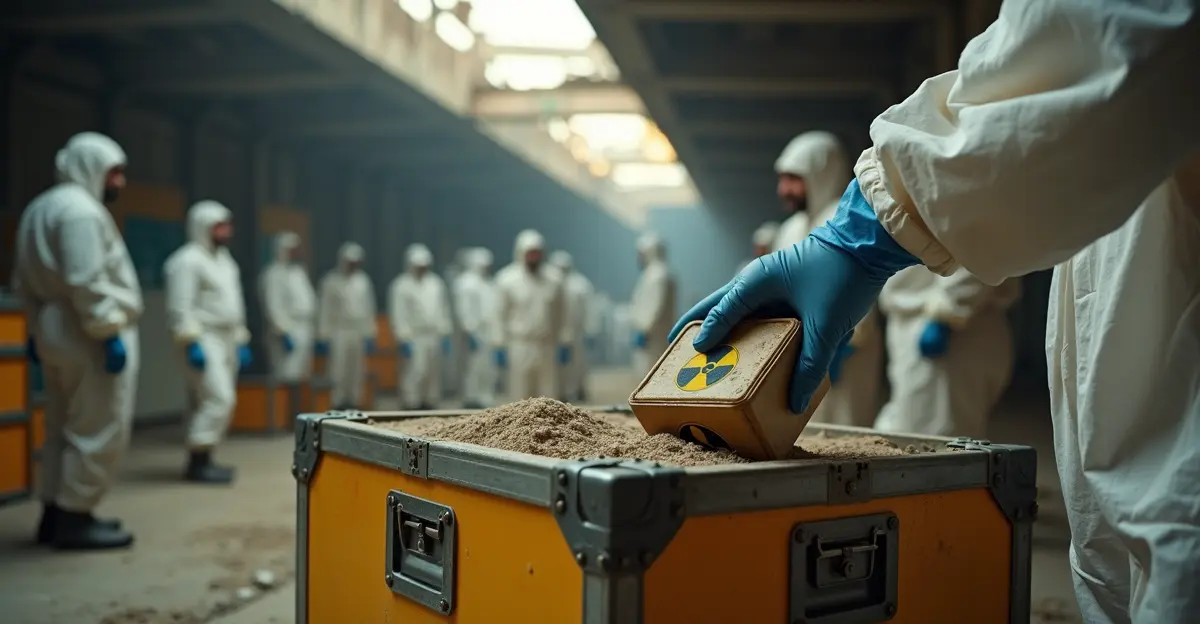
The International Atomic Energy Agency (IAEA) has uncovered multiple tonnes of nuclear material in Syria, providing the clearest evidence yet of former President Bashar al-Assad's secret atomic programme. On 18 August 2026, IAEA Director General Rafael Grossi confirmed that inspectors found several tonnes of natural uranium at an unspecified location outside Damascus, material he said could be used for bad purposes.
Background: Assad's covert nuclear programme and the 2007 strike
For almost two decades, the Al Kibar reactor strike has remained one of the most closely guarded chapters of Syria's weapons history. The Deir el-Zour site, also known as Al Kibar, was a nuclear reactor allegedly built with North Korean assistance. On 6 September 2007, Israeli warplanes destroyed the facility in an operation known as Operation Outside the Box. The Assad regime denied the site was a reactor and refused IAEA access to the rubble, stalling international verification for 17 years.
What IAEA inspectors found in Syria
Grossi's visit marks a turning point. Under Syria's new president, Ahmed al-Sharaa, inspectors were granted access to three suspected locations. Key discoveries include:
- Multiple tonnes of natural uranium at a site outside Damascus
- Traces of uranium at one of three sampled sites linked to the former reactor
- Large quantities of graphite in a storage facility, a material used in uranium enrichment
Discovery summary at a glance
| Material | Location | Significance |
|---|---|---|
| Natural uranium (several tonnes) | Outside Damascus | Can be enriched for fuel or weapons |
| Uranium traces | One of three sampled sites | Links site to nuclear activities |
| Graphite (large quantities) | Storage facility | Used in uranium enrichment reactors |
Why natural uranium and graphite matter
Natural uranium can be enriched for fuel or weapons, while graphite moderates nuclear reactions in certain reactor designs. The nuclear nonproliferation community has long warned that unsecured stockpiles could be smuggled or used to build a dirty bomb. Syrian Foreign Minister Asaad Hassan al-Shaibani said the material found was tested and deemed harmless, but the IAEA will now secure and monitor the stockpile.
Why Syria is cooperating with the IAEA now
The fall of the Assad regime in December 2024 opened the door to inspections that were impossible for years. Shaibani and Grossi held a joint press conference in Damascus, where the minister reiterated Syria's ambition to use nuclear energy for peaceful purposes. This is an important step in cooperation between Syrian authorities and the IAEA, both officials said. The Syria nuclear inspections are being conducted in partnership with the current government, with several sites being excavated.
Impact and implications for regional security
The discovery resolves a long-standing mystery but raises new questions about how much material remains unaccounted for. Israeli officials have previously expressed suspicion that Syrian authorities might try to access material at Site 99, possibly with Turkish assistance. The IAEA's unrestricted access, confirmed six months after Assad's overthrow, is expected to reduce nuclear smuggling risks and clarify the full scope of the Assad-era nuclear material programme.
Frequently asked questions
What nuclear material did the IAEA find in Syria?
Inspectors found multiple tonnes of natural uranium outside Damascus, traces of uranium at one of three sampled sites, and large quantities of graphite linked to the Deir el-Zour reactor.
Why was the Deir el-Zour reactor destroyed?
Israel bombed the Al Kibar reactor in September 2007 because intelligence indicated it was a secret nuclear facility with a military purpose, built with North Korean help.
Why didn't the IAEA inspect these sites earlier?
The Assad regime denied IAEA access for 17 years. After Assad's fall in December 2024, the new Syrian government under Ahmed al-Sharaa granted inspectors access.
Is the found nuclear material dangerous?
Syrian Foreign Minister Shaibani said the material was tested and found harmless. The IAEA will still secure and monitor the natural uranium stockpile.
Does Syria want nuclear weapons?
Syrian officials say they want nuclear energy only for peaceful purposes. The IAEA is now working with Damascus to verify that no undeclared nuclear activities remain.
Follow Discussion